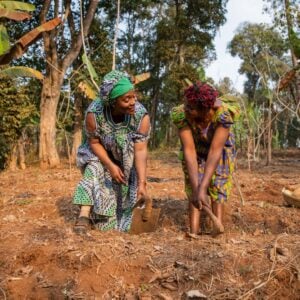
Johannesburg, South Africa: The Food and Agriculture Organization of the United Nations (FAO), in collaboration with the Government of Mozambique and the European Union, is helping smallholder farmers transition from subsistence farming to inclusive agribusiness through the PROMOVE Agribiz programme. Implemented in Nampula and Zambézia provinces, the initiative strengthens rural resilience and food security by equipping farmers with technical knowledge, financial tools, and market access. The programme’s stepwise model—guiding farmers from learning to entrepreneurship—is reshaping Mozambique’s agricultural landscape and offers a scalable approach to rural development.
PROMOVE Agribiz addresses long-standing challenges faced by smallholders, including low productivity, limited market access, and scarce business opportunities. The programme guides farmers through a structured pathway: starting with Farmer Field Schools to enhance agricultural skills, progressing to Farmer Business Schools to develop entrepreneurial capabilities, and culminating in the formation of agribusiness associations. This stepwise process is complemented by competitive microgrants, inclusive value chain development, and partnerships with financial institutions and agrifood companies, with a strong focus on empowering women at every stage.
The innovation of the programme lies in integrating technical training, financing, and market access into a continuous support system that transforms farmers into agripreneurs. By combining agricultural extension services with financial empowerment and cooperative formation, PROMOVE Agribiz enables smallholders to build sustainable businesses that generate income, improve market connectivity, and contribute to broader rural economic growth.
The initiative’s impact is evident in its reach and inclusivity. A total of 413 Farmer Field School groups have engaged 10,742 members—nearly half of whom are women—while 183 Farmer Business School groups have trained 4,735 members, with women constituting 51 percent. Additionally, 38 agribusiness associations involving 1,091 members, 58 percent women, have been created. These achievements demonstrate that equipping farmers with knowledge and financial resources fosters sustainable business growth, attracts private investment, and strengthens national food security.
Looking ahead, FAO and partners aim to scale the stepwise model by integrating it into national agricultural strategies, expanding access to finance, and deepening public-private partnerships. PROMOVE Agribiz serves as a blueprint for transforming agriculture into a driver of inclusive development, resilience, and sustainable rural livelihoods in Mozambique.