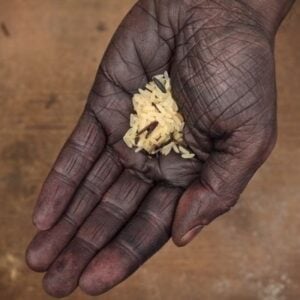
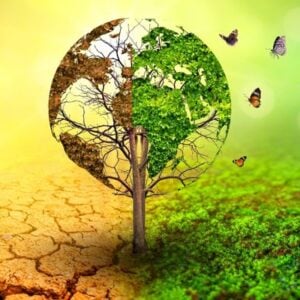
The latest State of Food and Agriculture (SOFA) 2025 report by the Food and Agriculture Organization (FAO) reveals that approximately 1.7 billion people worldwide live in areas where crop yields are declining due to human-induced land degradation. This escalating crisis is silently undermining agricultural productivity and threatening ecosystem health, with profound implications for global food security and rural livelihoods. Released during an event at FAO headquarters in Rome, the report emphasizes that land degradation is not only an environmental concern but a major obstacle to sustainable agriculture and poverty reduction.
SOFA 2025 provides the most comprehensive global assessment to date of how human activities are damaging productive lands. It identifies the regions most vulnerable to yield losses, linking these to rising hunger and malnutrition. Drawing on extensive global datasets, the report outlines practical solutions, including sustainable land-use policies and integrated management strategies designed to prevent, reduce, and reverse degradation while improving productivity and resilience. FAO Director-General QU Dongyu stressed that sustainable land management requires long-term investment, innovation, and stewardship to secure both livelihoods and food systems.
FAO defines land degradation as a long-term decline in a land’s capacity to provide essential ecosystem services. The report attributes this mainly to deforestation, overgrazing, and unsustainable farming and irrigation practices, which exacerbate natural processes such as erosion and salinization. Using advanced modeling and environmental data, the report estimates that crop yields in degraded areas are 10 percent lower than they would be without human interference, directly affecting the food security of 1.7 billion people, including 47 million children under the age of five who are stunted. The problem is particularly severe in Asia due to high population density and accumulated soil degradation.
Despite the alarming trends, the report highlights a path forward. Reversing just 10 percent of degraded croplands through sustainable techniques—such as crop rotation, cover cropping, and soil conservation—could produce enough food to feed 154 million additional people each year. Such interventions can strengthen food security, preserve biodiversity, and build more resilient agrifood systems. The report urges governments to adopt integrated land-use strategies, combine regulations like deforestation controls with incentive-based programs, and tailor policies to the specific needs of smallholder and large-scale farmers alike.
FAO plays a central role in tackling land degradation through global data systems, technical guidance, and partnerships. Over 130 countries have already pledged to achieve Land Degradation Neutrality under the UN Convention to Combat Desertification (UNCCD). Through initiatives like the Global Agro-Ecological Zoning (GAEZ v5) and the Global Soil Organic Carbon Map, FAO continues to provide the evidence base needed for informed decision-making. Reaffirming its commitment in 2025, FAO emphasized that combating land degradation is critical for securing a sustainable, food-secure future for billions of people worldwide.