
The BFI National Lottery Innovation Challenge Fund has awarded £200,000 to the British Screen Forum, in partnership with the University of Exeter and Goldsmiths, University of London, to develop sustainable solutions addressing persistent data gaps in the UK independent film sector. The project aims to provide more robust insights into the industry, ultimately boosting investment… [Read More]
Mentoring Charity Expands in Scotland with £1 Million Boost

MCR Pathways is set to expand its award-winning mentoring programme across Scotland, following a £1 million investment from the Scottish Government. Since its launch in 2007, the charity’s volunteer mentors have supported young people in overcoming challenges and creating sustainable pathways for their futures. The programme currently operates in 163 secondary schools, further education and… [Read More]
New Spacehive Fund Supports Local Community Initiatives

The London Borough of Havering has launched ‘Havering Together’, a new community crowdfunding programme in partnership with Spacehive, aimed at enabling residents, voluntary groups, and community organisations to bring local ideas to life. The scheme focuses on supporting projects that improve neighbourhoods, strengthen communities, and deliver positive local impact. Using Spacehive’s established crowdfunding platform, groups… [Read More]
Glasgow 2026 Festival Fund Awards £1.25M to Community Groups
The Glasgow 2026 Festival, running from 23 May to 9 August, will celebrate sport, culture, and community alongside the Commonwealth Games, featuring hundreds of community-led events across the city. Following over 400 applications, the Glasgow 2026 Festival Fund was expanded from an initial £250,000 to £1.25 million thanks to backing from Glasgow 2026, Commonwealth Sport,… [Read More]
Tanzania’s Push for Clean Cooking Financing

Progress toward universal access to clean cooking, a key aspect of United Nations Sustainable Development Goal 7, remains slow, particularly in Africa, where 900 million people still rely on traditional fuels. This reliance negatively affects health, social and economic development, and the environment. Limited access to finance is a major barrier, with existing datasets lacking… [Read More]
JPMorgan Chase Pledges €2.8M to Boost Small Businesses Nationwide

JPMorganChase has announced €2.8 million in new philanthropic funding to expand its support for small businesses across France. This investment builds on the firm’s $70 million business and philanthropic commitment made in 2023 and aims to enhance access to capital and resources for entrepreneurs, particularly those from underserved communities. The firm is allocating €1.8 million… [Read More]
Canada Invests $3M to Boost Primary Care Research
The Canadian Institutes of Health Research (CIHR) has announced a $3 million investment to enhance access to primary care in Canada. Despite ongoing efforts to strengthen the health system, many Canadians still face challenges in accessing basic health care, with 17% of adults and 11% of children and youth lacking a regular health care provider… [Read More]
Marine Pollution Training Reaches Solomon Islands’ Coastal Areas

Coastal communities in Guadalcanal, Western, and Central provinces of the Solomon Islands have strengthened their capacity to protect livelihoods, food security, and health from marine pollution through a community-led training programme. Delivered via the UK’s Sustainable Blue Economies Technical Assistance Platform (SBE) in partnership with the Solomon Islands Maritime Authority (SIMA) and local partners, the… [Read More]
Minister Foley Launches 2026 LGBTIQ+ Funding Call

The Minister for Children, Disability and Equality, Norma Foley, has announced that applications are now open for the 2026 LGBTIQ+ Community Services Fund, running from 23 March to 30 April 2026. A total of €1.5 million is being made available to support national, regional, and local organisations that provide services, promote visibility, and foster inclusion… [Read More]
Rising Gang Violence in Haiti Amid Allegations Against Police

Haiti is facing a severe surge in gang violence, with at least 26 gangs operating in Port-au-Prince and surrounding areas, forcing 1.4 million people to flee and causing thousands of deaths. Gangs have expanded beyond the capital into the Artibonite and Centre departments, controlling key maritime and overland routes that sustain their operations and financing…. [Read More]
Drone Attacks Surge in Sudan as Hospital Is Struck

In East Darfur’s capital, Al Deain, the Teaching Hospital was struck late Friday, marking a severe escalation in the ongoing conflict between the Sudanese Armed Forces (SAF) and the paramilitary Rapid Support Forces (RSF) that began in April 2023. The UN World Health Organization (WHO) reported 70 fatalities, including seven women, 13 children, and three… [Read More]
Global Update: Ukraine Strikes, Refugee Returns, Emergency Aid
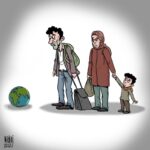
Recent global developments highlight escalating crises and urgent humanitarian needs across multiple regions. In Ukraine, airstrikes have struck residential areas, pre-schools, and shops, prompting humanitarians to provide first aid, psychosocial support, repair materials, and other emergency assistance. The Zaporizhzhya Nuclear Power Plant, under Russian control since March 2022, lost connection to a major power line,… [Read More]
New Joint Programme Boosts Green Jobs and Social Protection in Bosnia

Bosnia and Herzegovina has launched a new joint programme, financed by the Joint SDG Fund, to build a more resilient, inclusive, and climate-responsive labour market and social protection system. The initiative, titled Managing the Labour Market and Just Climate Transition in Bosnia and Herzegovina, brings together the Federal Ministry of Labour and Social Policy, the… [Read More]
How Cameroon Is Transforming Its Food Systems at Scale

Cameroon has successfully turned its 2021 National Food Systems Transition Roadmap into tangible results, demonstrating how political leadership, coordinated governance, and strategic financing can drive food systems transformation at scale. By establishing a National Convenor for Food Systems Transformation and creating inter-ministerial platforms, Cameroon has aligned multiple government agencies around national priorities, embedding food systems… [Read More]
1 Million Displaced, 130K Cross Borders Amid Regional Conflict – IOM

Geneva — Since early March 2026, more than 1 million people have been displaced inside Lebanon and over 130,000 have crossed into the Syrian Arab Republic due to escalating conflict in the Middle East, according to the International Organization for Migration (IOM). These movements are placing additional strain on vulnerable communities and increasing humanitarian needs,… [Read More]
Supporting Civil Society for Inclusive Employment in Türkiye

ANKARA — The ILO Office for Türkiye organized a two-day training programme on 12–13 March 2026 for disability associations to support the implementation of international labour standards and promote disability inclusion in the world of work. Funded by the European Union Delegation to Türkiye under the project Strengthening Social Partners and Civil Society Capacities on… [Read More]
World Bank Backs Uzbekistan’s Transport Modernization and Reforms

WASHINGTON — The World Bank has approved a $200 million project to modernize transport infrastructure in Uzbekistan’s Surkhandarya region and support comprehensive reforms in the transport sector. The project aims to reconstruct a 91-kilometer section of the M41 regional road corridor, expanding it from two lanes to four, improving road safety, bridges, drainage systems, and… [Read More]
Barbados Upgrades Early Education with World Bank Support

Washington, DC — The World Bank has approved a US$50 million program to strengthen foundational learning skills in Barbados’ pre-primary and primary education and improve access to climate-resilient, inclusive learning environments. Implemented by the Ministry of Education Transformation, the Barbados Education Sector Transformation program aims to address early literacy and numeracy deficits and enhance teaching… [Read More]
Asia-Pacific Economies to Receive ADB Aid for Middle East Crisis Impact
MANILA, PHILIPPINES — The Asian Development Bank (ADB) has announced a financial support package to help its developing member countries (DMCs) manage the economic and financial impacts of the Middle East conflict. ADB President Masato Kanda highlighted that the assistance will be rapid, flexible, and scalable, including fast-disbursing budget support and trade and supply chain… [Read More]
ADB Approves $100M Aid for Sri Lanka Amid Global Economic Challenges

COLOMBO, SRI LANKA — The Asian Development Bank (ADB) has announced an additional $100 million in budget support for Sri Lanka, bringing its total planned assistance for 2026 to $480 million. The aid is aimed at helping the country manage economic pressures from the Middle East conflict, including rising oil prices, supply chain disruptions, and… [Read More]
Linux Foundation Launches $12.5M Grants to Boost Open Source Innovation
The Linux Foundation, a nonprofit organization driving innovation through open source, has announced $12.5 million in grants from Anthropic, AWS, GitHub, Google, Google DeepMind, Microsoft, and OpenAI to strengthen the security of the open source software ecosystem. The funding will be managed by Alpha-Omega and the Open Source Security Foundation (OpenSSF), two trusted security initiatives… [Read More]
Proposed NGO Funding Bill in Uganda Sparks Civil Society Backlash
Uganda’s civil society organizations have strongly rejected the government’s proposed NGO Funding Bill 2026, which introduces state oversight of foreign funding and accreditation, warning that it threatens constitutional freedoms of association and expression ahead of the 2026 elections. Activists emphasized that NGOs play a critical role in bridging service delivery gaps and should not face… [Read More]
NGOs Driving Change: Closing India’s Rural-Urban Education Divide

India has seen significant improvements in children’s education in recent years, yet the rural-urban education gap remains a pressing concern. While the Right to Education framework guarantees schooling for children aged 6 to 14, many rural schools still face challenges such as poor infrastructure, social biases, limited access to digital learning, and shortages of academic… [Read More]


