
ClimaTech Connect is a European programme supporting start-ups with networking, mentoring, training, and financing opportunities, focusing on digital solutions that address climate change. The initiative has already supported 35 early-stage innovators across the EU, with four winning teams receiving grants of up to €25,000. Data centres, which power global digital activity, consume enormous amounts of… [Read More]
A Human Rights Day Call to End Gender-Based Violence Globally
International Human Rights Day is a moment to reflect on the commitments made to uphold the rights and dignity of all people, acknowledge progress, and recognize injustices that still demand urgent attention. Among the most pressing of these issues is female genital mutilation (FGM/C), a harmful practice affecting 230 million girls and women worldwide, violating… [Read More]
How Women Human Rights Defenders Are Driving Climate Action

Across the globe, women environmental defenders play a pivotal role in advancing climate justice, protecting forests and ecosystems, challenging extractive industries, and advocating for policies that prioritize people and the planet. Their leadership, however, comes with significant risks, including heightened exposure to digital violence, discrimination, and limited access to justice, funding, and decision-making spaces. These… [Read More]
Empowering Women and Youth Against Online Gender-Based Violence

Gender-based violence (GBV) remains a widespread and urgent issue worldwide, fueled by inequality, silence, and systemic underinvestment. Globally, nearly one in three women—approximately 736 million—have experienced physical or sexual violence in their lifetime, with little progress over the past decade. In Turkmenistan, 12% of women aged 18–59 report experiencing violence from a spouse or partner,… [Read More]
Empowering Rural Afghanistan: How Awaaz Brings Back Essential Services
In western Afghanistan, a woman named Fatima (name changed for confidentiality) experienced both relief and loss when she received urgent cash assistance in March 2025. The support, totaling approximately 14,700 AFN ($200), provided a critical lifeline for her and other vulnerable families struggling under economic pressures. However, within a day, two self-appointed community leaders forcibly… [Read More]
Key Actions by Slovakia’s Government on Media, NGOs, and Rule of Law
Slovakia’s parliament has recently approved the elimination of the country’s whistleblower protection office, a move by Prime Minister Robert Fico’s leftist-nationalist government that has raised concerns about the state of the rule of law in the EU member country. Critics argue that these measures, while framed as improving accountability and correcting previous government abuses, are… [Read More]
Child Poverty Strategy and Food Security: Will It Deliver Results?
The UK Government’s newly-published Child Poverty Strategy consolidates a range of measures aimed at supporting children and families facing food insecurity, combining previously announced initiatives with the continuation of existing policies. The strategy places nutritional safety nets at its core, showing potential to improve conditions for the 15% of households with children currently experiencing food… [Read More]
The Lost Opportunities of Ukraine’s Post-War Reconstruction
The annual ReBuild Ukraine 2025 fair in Warsaw highlighted a critical gap in the readiness of many Ukrainian cities and towns to access investment and drive their own recovery. Despite a strong international presence of investors, donors, and technology providers, fewer than 100 hromadas attended—less than 10% of Ukraine’s total—and even those present often lacked… [Read More]
New IUCN Platform Strengthens Knowledge on Latin America’s Savannahs and Grasslands
Quito, Ecuador, 9 December 2025 – The IUCN Forest and Grasslands Team, together with IUCN’s South America Regional Office, has launched a new regional Knowledge Platform for Grasslands and Savannahs. The initiative aims to strengthen collaboration, learning, and action across Latin America’s critical grassland and savannah ecosystems, integrating diverse experiences and tools to support sustainable… [Read More]
Improving Mental Health Services for Children and Young People: Proposed Measures for Better Access

The Education Committee of the Chamber of Deputies, the Romanian Angel Appeal Foundation, and UNICEF held a conference in Bucharest on December 9, 2025, to present the results of the project “Romania for Every Child. Emotional Balance”, implemented between 2023 and 2025. The event brought together policymakers, experts, NGOs, and children, highlighting a multisectoral approach… [Read More]
WFP Receives Australian Aid to Assist Communities Devastated by Cyclone Ditwah in Sri Lanka

The United Nations World Food Programme (WFP) has intensified its emergency response in Sri Lanka following Cyclone Ditwah, supported by a AUD 1.5 million contribution from the Government of Australia. This funding allows WFP to provide life-saving fortified food and cash assistance to families most affected by the disaster. The first airlift of fortified biscuits… [Read More]
$400 Million ADB Loan to Boost Business Environment and Competitiveness in the Philippines

The Asian Development Bank (ADB) has approved a $400 million policy-based loan to support government reforms aimed at improving the ease of doing business and positioning the Philippines as a leading investment destination in Asia and the Pacific. The Business Environment Strengthening with Technology Program (BEST) Subprogram 1 focuses on private sector development reforms that… [Read More]
Boosting Productivity in Indonesia: ADB Invests in Human Capital Development
The Asian Development Bank (ADB) has approved a $500 million policy-based loan to support Indonesia’s human capital development reforms in education, skills development, health, and social protection systems. This funding represents the third subprogram of the Boosting Productivity through Human Capital Development Program, which focuses on institutionalizing reforms initiated under the previous two subprograms approved… [Read More]
$60 Million ADB Loan to Boost Malaysia’s Paper Recycling and Circular Economy Initiatives

The Asian Development Bank (ADB) and Jingxing Holdings Malaysia Sdn Bhd, a subsidiary of Zhejiang Jingxing Paper Joint Stock Co., Ltd., have signed a $60 million financing package to expand Jingxing’s advanced wastepaper recycling and packaging paper facility in Selangor, Malaysia. The loan will support the installation of a state-of-the-art recycling and packaging paper line… [Read More]
16 Days of Activism: AfDB Strengthens Gender Equality and Governance in South Sudan, The Gambia, and Guinea-Bissau

The African Development Bank Group has approved approximately $3.7 million to launch a new governance and gender equality initiative in South Sudan, The Gambia, and Guinea-Bissau. The Building Resilience and Inclusive Development through Governance and Equality (BRIDGE) project aims to address governance gaps that allow gender-based violence and discrimination to persist by strengthening justice institutions,… [Read More]
$22.9 Million AfDB Grant to Revitalize Malawi’s Critical Hydropower Sector
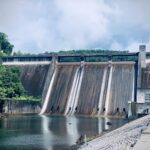
The African Development Fund’s Board of Directors has approved a $22.9 million grant for the rehabilitation of Malawi’s Kapichira and Nkula B hydropower plants, representing a transformative investment in the country’s energy sector. The broader $118.7 million initiative, with co-financing opportunities, will upgrade two critical power generation facilities: Kapichira I (64 MW), serving the southern… [Read More]
$10 Million AfDB Grant to Accelerate Namibia’s Large-Scale Green Hydrogen Initiative

The African Development Bank’s Board of Directors has approved a $10 million loan to Hyphen Hydrogen Energy, a Namibian green hydrogen company, to support a green ammonia project valued at over $10 billion. The initiative has the potential to position Namibia as a leader in the global green hydrogen economy. The loan, sourced from the… [Read More]
$7.5 Million Nigeria Trust Fund Grant to Strengthen São Tomé and Príncipe’s Economy

The African Development Bank Group Board of Directors has approved a $7.5 million supplemental financing grant from the Nigeria Trust Fund to support São Tomé and Príncipe’s economic reform programme, bringing total Bank support for the initiative to approximately $20 million over two years. The grant aims to close a critical financing gap in the… [Read More]
Early Action Saves Lives: Red Crescent Volunteers Protect Yemeni Families from Floods
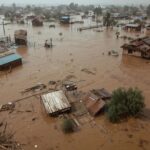
In August, heavy rains swept through Abs district in Yemen’s Hajjah governorate, severely impacting thousands of internally displaced families living in fragile shelters. Tents collapsed, roofs made of lightweight materials disintegrated, and families woke to rising water and mud with little protection. For many, the night was terrifying and, for some, life-threatening. Hadi Mohammed Shaer… [Read More]
Left Behind in South Sudan: How Violence and Healthcare Collapse Devastate Communities

Médecins Sans Frontières’ (MSF) report, Left Behind in Crisis: Escalating Violence and Healthcare Collapse in South Sudan, highlights the growing barriers to healthcare amid a deteriorating humanitarian situation. Preventable deaths, particularly among women and children, are increasingly common. The report draws on MSF’s direct observations, routine medical data, and testimonies from patients and staff in… [Read More]
Kazakhstan’s Young Innovators Lead the Charge on Climate Resilience

Urban resilience is often described through infrastructure and policy frameworks, but the recent Urbathon in North Kazakhstan demonstrated that youth-led innovation can expose overlooked gaps and generate practical solutions. Working with limited resources yet deep local understanding, young participants showed how community-based insights can enrich formal climate resilience planning. Over two days, forty teams focused… [Read More]
Aridity in Asia-Pacific: A Growing Slow Disaster With Increasingly Visible Impacts
Aridity is a slow-moving but deeply disruptive climatic condition marked by long-term dryness that gradually erodes ecosystems and landscapes. Unlike sudden disasters such as floods or cyclones, aridity develops quietly—through declining rainfall, drying soils, shrinking rivers, and a steady loss of environmental resilience. Global data shows that more than 77% of Earth’s land became drier… [Read More]
ADB Report: Asia-Pacific Advances on Water Security for 2.7 Billion, Yet Ecosystem Loss Looms

More than 60% of people in Asia and the Pacific—around 2.7 billion individuals—have moved out of extreme water insecurity over the last twelve years, according to the Asian Water Development Outlook (AWDO) 2025. The report credits this progress to stronger political commitment, targeted investments, and governance reforms since 2013. However, it warns that rapid environmental… [Read More]


