The International Labour Organization (ILO), in partnership with UNICEF and Oman’s Social Protection Fund (SPF), conducted the first training workshop in the Gulf Cooperation Council (GCC) region on monitoring and evaluation (M&E) of social protection systems. Held in Muscat from 2–5 November 2025, the workshop strengthened the capacities of 26 SPF officials and other national… [Read More]
Improving Working Conditions for Agricultural Wage Workers in Mexico: New Initiatives
The Government of Mexico and the United Nations have launched the Steering Committee for the joint programme “Transformation of Agrifood Systems in Mexico: Towards Comprehensive Social Protection and Decent Rural Employment.” Supported by the Joint SDG Fund, the initiative aims to improve the working and living conditions of agricultural wage workers while strengthening their access… [Read More]
Sudan Conflict: Kordofan’s El-Obeid ‘One or Two Steps’ from Attack
Mohamed Refaat, IOM Chief of Mission in Sudan, has highlighted the severe humanitarian crisis unfolding across the country, emphasizing that civilians are fleeing not by choice but in search of safety. Speaking from Port Sudan, he urged international support to ensure protection for those affected by the ongoing conflict. Recent reports indicate that the paramilitary… [Read More]
UN Reports Gaza Famine Averted, Yet Millions Still Face Hunger and Malnutrition
The latest Integrated Food Security Phase Classification (IPC) report indicates that no areas of Gaza are currently classified as being in famine (IPC Phase 5), following improved humanitarian and commercial access after the 10 October ceasefire. Despite this progress, nearly the entire Gaza Strip remains in emergency conditions (IPC Phase 4), with hundreds of thousands… [Read More]
UN Security Council Renews DR Congo Peacekeeping Mission Amid M23 Offensive in Eastern Regions

The UN Security Council has renewed the mandate of the UN Organization Stabilization Mission in the Democratic Republic of the Congo (MONUSCO) until 20 December 2026 under Resolution 2808 (2025). The resolution maintains an authorized troop ceiling of 11,500 military personnel, 600 military observers and staff officers, 443 police personnel, and 1,270 formed police unit… [Read More]
Minister Patrick O’Donovan Announces €987,498 Funding Under Artist Workspaces Scheme

The Minister for Culture, Communications and Sport, Patrick O’Donovan TD, has announced arts capital grant awards totaling €987,498 to five Local Authorities for the development of up to 22 new artist workspaces. This funding is provided under the Artist Workspaces Scheme, a €6 million capital investment initiative designed to increase the availability and capacity of… [Read More]
UK Imposes Sanctions on Perpetrators of Violence Against Civilians in Syria

The United Kingdom has imposed sanctions on individuals and organisations involved in violence against civilians in Syria, targeting both recent coastal violence and historic atrocities committed during the Syrian Civil War. Announced by Foreign Secretary Yvette Cooper, the measures form part of the UK’s ongoing commitment to hold perpetrators of human rights abuses accountable and… [Read More]
UK–Italy Young Leaders Programme: Leadership Opportunities for Emerging Leaders
The UK–Italy Young Leaders Programme brings together a diverse group of professionals who share a strong commitment to leadership and a passion for strengthening ties between the United Kingdom and Italy. Launched in 2023 by the British and Italian Prime Ministers, the programme is designed to deepen mutual understanding, encourage long-term collaboration, and foster high-level… [Read More]
Government of Canada Helps Alberta Businesses Adapt to New Trade Realities and Grow

The Government of Canada has announced a federal investment of $1 million to support Core Design Ltd., an Alberta-based manufacturer, in adapting to shifting global trade conditions and expanding into new markets. The investment, delivered through Prairies Economic Development Canada under the Regional Tariff Response Initiative, is intended to help strengthen business resilience, reduce reliance… [Read More]
Government of Canada Begins Engagement to Strengthen Industrial Carbon Pricing and Secure Clean Energy Investments

Environment and Climate Change Canada has launched a national engagement process on proposed changes to the minimum national stringency standards for industrial carbon pricing, known as the federal benchmark criteria. Input gathered through this engagement will inform updates to the benchmark in 2026, with the aim of ensuring that industrial carbon pricing systems across Canada… [Read More]
Pakistan Receives World Bank Support to Strengthen Fiscal Systems and Improve Service Delivery

The World Bank’s Board of Executive Directors has approved US$700 million in financing for the Pakistan Public Resources for Inclusive Development – Multiphase Programmatic Approach, a multi-year initiative designed to support macroeconomic stability and strengthen public service delivery across the country. The program supports coordinated federal and provincial reforms aimed at mobilizing domestic revenue, improving… [Read More]
World Bank Expands Support for Sustainable Energy Sector Development in Argentina

The World Bank Board of Directors has approved an additional US$300 million in financing to support Argentina’s efforts to strengthen institutional capacity in the energy sector, with a focus on improving the targeting of gas subsidies, protecting vulnerable households, and promoting fiscal and environmental sustainability. The operation aims to ensure that energy subsidies are more… [Read More]
World Bank Group Provides Financial Support to Boost Fiscal Sustainability in Panama

The World Bank’s Board of Executive Directors has approved an innovative financing operation for Panama aimed at strengthening fiscal sustainability while facilitating the mobilization of private investment to support economic growth and job creation. By combining multiple World Bank Group instruments, the operation is designed to improve public financial management and enhance investor confidence in… [Read More]
World Bank Supports Climate-Resilient Rural Development and Job Creation for Family Farmers in Paraíba

The World Bank has approved the Paraíba Sustainable Rural Development Project – Phase II to promote more inclusive and climate-resilient growth in rural areas of Paraíba, in Brazil’s Northeast. The project aims to help family farmers increase their incomes, strengthen their resilience to climate shocks, and gain improved access to infrastructure and essential rural services,… [Read More]
Energy Project in Larimaat Spurs Social, Economic, and Environmental Transformation

In the remote community of Larimaat, Eastern Central Pentecost, women have emerged as central agents of resilience and empowerment, demonstrating how access to electricity can transform lives beyond infrastructure. After a failed pilot electrification project years ago, a new initiative—funded by the Government of Japan under UNDP’s Pacific Green Transformation Project and Vanuatu Green Transformation… [Read More]
Sustainable Agriculture in India’s High-Biodiversity Landscapes: Strategies and Insights

Agriculture and biodiversity are deeply interconnected, each influencing the productivity, resilience, and health of the other. Sustainable food and agricultural systems support thriving ecosystems, while intact natural landscapes enhance farm productivity and climate resilience. However, this interdependence is increasingly threatened by unsustainable agricultural and livestock practices, which IUCN’s Vision 2045 identifies as major global drivers… [Read More]
Urban Sustainability in Focus: Key Lessons from the 2025 Trans-Pacific Dialogue
The fourth annual Trans-Pacific Sustainability Dialogue (TPSD) brought together stakeholders from national and local governments, private sector, civil society, development organizations, and academia to discuss sustainable urban development across the Asia-Pacific region. Hosted in Manila, Philippines, by the Walter H. Shorenstein Asia-Pacific Research Center and the Ban Ki-moon Foundation for a Better Future, the dialogue… [Read More]
Bridging Divides: Peace Initiatives in Yemen, Libya, and Sudan
Yemen, Libya, and Sudan are experiencing prolonged armed conflicts that have weakened state institutions and fragmented central authorities. International peace efforts over the past decade have largely failed to resolve these crises, highlighting the importance of local mediation mechanisms. These grassroots initiatives have shown potential in managing and resolving domestic conflicts where national and international… [Read More]
Flexible Support in Crisis: The Role of Cash-Based Interventions in Mobility and Protection
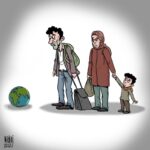
Over the past decade, cash-based interventions (CBI) have become a widely recognized method for delivering humanitarian aid, valued for their cost-effectiveness, flexibility, and ability to give recipients agency over their own needs. While CBI has long been used to support refugees and internally displaced persons, its application within broader migration contexts remains inconsistent. Humanitarian practitioners… [Read More]
Organic Farming Insights: What the Plains Teach About Sustainable Agriculture
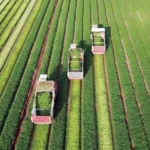
At the Transitioning to Organic Farming Conference held at the Eastern Nebraska Research, Extension, and Education Center in Ithaca, Nebraska, experienced farmers shared insights on the benefits and challenges of organic agriculture. Tom Schwarz, a fifth-generation farmer from southern Nebraska, emphasized how organic farming has allowed his family to reinvest in their own future rather… [Read More]
Fossil Fuel Ban in Costa Rica at Risk: What’s Next for the Country’s Green Policy
For over twenty years, Costa Rica has maintained a ban on oil and gas exploration and production, set to run until 2050. However, this moratorium is based on a presidential decree, making it legally fragile, as any president can revoke it without parliamentary approval. Recognizing this vulnerability, the former government pledged in 2020 to codify… [Read More]
Refugee Rights and Justice: Protecting Lives in Crisis
Globally, crises such as wars, persecution, and natural disasters have forced millions from their homes, with the latest UNHCR report noting that 117.3 million people are displaced worldwide, including nearly 42.5 million refugees. For those uprooted, access to justice is crucial, providing protection against exploitation, statelessness, and violence while helping them secure housing, identity, and… [Read More]
UNDP Brings Solar Energy to Buin, Empowering Nurses and Healthcare Services

The Buin District Health Centre, a level 3 medical facility serving around 200 patients monthly, has long been a crucial lifeline for residents of Southern Bougainville. Built in the 1960s, the centre provides essential health and ambulatory care but has faced persistent challenges, particularly frequent power outages that disrupt daily operations, water supply, cold storage… [Read More]


