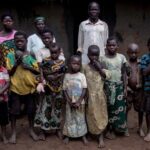
Nearly one in three people in Sudan has been displaced, either within the country or across borders, over the past one thousand days since the outbreak of the conflict. This crisis has devastated lives, uprooted communities, and triggered the largest displacement emergency in the world, with an average of five displacement-triggering events occurring every week… [Read More]
AfDB Welcomes OPEC Fund and TDB into Alliance for Special Agro-Industrial Processing Zones
The OPEC Fund for International Development and the Trade and Development Bank Group have joined the Alliance for Special Agro-Industrial Processing Zones, reinforcing efforts to accelerate agro-industrialisation across Africa. Launched at the 2023 Africa Investment Forum in Marrakech, Morocco, the Alliance combines financing, technical expertise, and private sector engagement to scale agricultural value-chain development throughout… [Read More]
Scaling Diversification in Rice Systems: Key Insights and Lessons from 2022–2025

Rice production in Mali is increasingly threatened by climate-related stresses such as unpredictable rainfall, droughts, flooding, and a higher incidence of pests and diseases. These challenges exacerbate the vulnerability of rice monoculture systems, which depend on consistent water supply and fertile soils, leading to declining soil health, increased production risks, and greater reliance on agricultural… [Read More]
Digital Solutions for Inclusive Climate Adaptation: Insights from Mali, 2022–2025
Rice is the primary staple in Mali, forming the backbone of livelihoods for rural farm households who rely on rice farming for food security and income. However, the country is highly vulnerable to extreme weather events, including droughts, floods, irregular rainfall, and heatwaves, which have increasingly threatened rice production. In 2025, severe flooding in key… [Read More]
Project Lemon Aid: Engaging Students in Hands-On Shark Research
Project Lemon Aid brings shark science out of the field and into classrooms across the Turks & Caicos Islands, transforming research into engaging, hands-on learning experiences. While the team collects data on lemon sharks in mangroves and sandy flats, these real-world findings are translated into lessons that help students understand shark biology, local marine ecosystems,… [Read More]
How Local Communities Are Driving Scalloped Hammerhead Shark Conservation in Benin
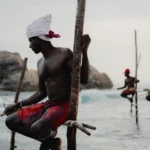
After reconnaissance surveys supported by the Save Our Seas Foundation, intervention sites were identified in three coastal municipalities in Benin: POPAC in Cotonou, Ahouandji in Ouidah, and Agoué in Grand-Popo. The project team, assisted by trained enumerators, conducted surveys with 300 respondents, including fishermen and fishmongers, to assess knowledge of the Scalloped Hammerhead Shark, awareness… [Read More]
Inspiring Ocean Conservation Through Marine Science Education

Seychelles is celebrated for its turquoise waters, vibrant marine life, and tropical landscapes, yet its fragile ecosystems face increasing threats from climate change, coral bleaching, rising sea levels, and coastal erosion. Protecting these environments requires more than policies; it demands educational initiatives that inspire young people to become stewards of the ocean. In Seychelles, the… [Read More]
Shaping AI: Lessons from Leading Faculty in Policy and Practice

Artificial intelligence (AI) is now deeply embedded in everyday decision-making, from determining loan approvals to managing traffic flow and prioritizing medical interventions. In this context, AI education requires instructors who go beyond theory, providing students with practical insights from real-world experiences in deploying AI systems, shaping policy, and managing ethical and operational tradeoffs. Practitioner faculty,… [Read More]
$16.5M Federal Funding Now Available to Support Workplace Equity and Safety in Canada

The federal government of Canada is inviting proposals for projects that aim to enhance equity and prevent harassment in federally regulated workplaces, with a total of $16.5 million in funding available over the next three years. Employment and Social Development Canada, in collaboration with the Privy Council Office, launched two calls for proposals targeting employers… [Read More]
How Solar Water Systems Are Changing Lives in Masspara Village

Masspara village, situated in Badapaktari Panchayat, Jharkhand, faced severe challenges in accessing clean and reliable water before 2025. Residents relied on a nearby spring well located at a lower elevation, which required women and children to walk long distances daily, carry heavy pots of water, and climb back uphill. This task consumed several hours each… [Read More]
Trafkintunkimun Program Evaluation: Lessons on Supporting Rural Entrepreneurship in Chile
In rural Chile, microentrepreneurs face significant obstacles in developing sustainable businesses, often due to limited access to networks, resources, and training. Balloon Latam’s Trafkintunkimun program was created to address these challenges by fostering business and social networks that promote entrepreneurship with a triple impact: economic, social, and environmental benefits. The program aims to strengthen business… [Read More]
Community Energy Sector Urges Funding Boost Amid Mixed Progress Report

The UK’s community energy sector is calling on the government to provide increased and more evenly distributed funding to local projects, emphasizing that timely support is essential for community-led energy to contribute meaningfully to national climate and fuel-poverty targets. This call is detailed in the State of the Sector 2025 report, published by Community Energy… [Read More]
Community-Driven Agroforestry: How Local Vision Is Shaping Sustainable Land Use
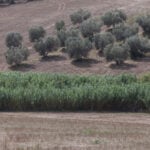
Agroforestry in the community of Tsiatosika was designed to address land degradation, food insecurity, and livelihood challenges by combining local knowledge with sustainable farming practices. Led by agricultural engineer Cédric Andriamananarivo Doriens, the initiative focuses on restoring degraded land, strengthening food production, and diversifying incomes through agroforestry systems that work in harmony with the environment…. [Read More]
Smart Valleys in Action: Scaling Integrated Land and Water Management from 2022 to 2025

Mali is located in the central Sahel, a region increasingly affected by climate change through rising temperatures, erratic rainfall patterns, and more frequent extreme weather events such as floods and droughts. These climatic shifts have reduced the reliability of rain-fed agriculture, intensified land degradation, and heightened risks for smallholder farmers. Rice producers are particularly vulnerable,… [Read More]
Driving Sustainable Rice Production: Scaling RiceAdvice and the Sustainable Rice Platform, 2022–2025
Mali’s rice-based farming systems are under growing pressure from climate change, with rising temperatures, erratic rainfall, recurrent droughts, and periodic flooding increasingly undermining agricultural productivity and rural livelihoods. These climate stresses have made water management more difficult in irrigated rice systems, shortened or disrupted growing seasons, and increased the frequency of severe yield losses. Changing… [Read More]
Advancing GEM Parboiling and Rice By-Product Innovations: Lessons Learned from 2022 to 2025

Climate change is placing increasing pressure on Mali’s rice production systems through irregular rainfall, droughts, rising temperatures, and flooding, which undermine productivity and household incomes. While much attention has focused on improving production, post-harvest stages remain highly vulnerable, particularly for women who dominate rice processing. These women face challenges such as inefficient parboiling equipment, health… [Read More]
Enhancing Rice Productivity in Mali: Insights from Scaling Resilient Varieties, Good Agricultural Practices, and Pest Management

Rice is a strategic staple crop in Mali, playing a crucial role in national food and nutrition security. Over the past two decades, demand for rice has increased steadily due to population growth and changing dietary habits. However, rice production, particularly in irrigated zones like the Office du Niger and lowland and rainfed ecosystems, is… [Read More]
How Forestry Decentralization Impacts Rural Inequality in Nepal

Decentralized approaches to natural resource governance are widely promoted in the Global South for their potential to improve conservation outcomes while alleviating rural poverty. However, the distribution of benefits under such programs is often unequal, reflecting existing social hierarchies. In Nepal, a large-scale forestry-sector decentralization program implemented between 2001 and 2011 provides a case study… [Read More]
Advancing Circular Solutions for Plastics Waste in South, Southeast Asia, and Pacific Regions
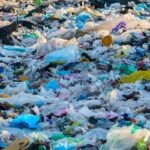
The Asia-Pacific region faces growing challenges in managing plastic waste due to rapid urbanization, rising consumption, and inadequate waste management infrastructure and regulations. The accumulation of plastic waste has led to severe environmental and health impacts, contaminating land, water, and air. Informal waste collectors play a critical role in recycling and collection, but their efforts… [Read More]
Over $12.5 Million in Funding Approved by NJEDA for Medtech and Maternal Health Innovation

The New Jersey Economic Development Authority (NJEDA) Board has approved a $12.55 million investment in two Strategic Innovation Centers (SICs) aimed at supporting medical technology and maternal health startups. The New Jersey Accelerator for Innovation in Medtech (NJ AIM), located in Camden and Mullica Hill, will facilitate the research, development, and commercialization of advanced medical… [Read More]
Why the General History of Africa Should Be Integrated into Schools

The General History of Africa (GHA), launched by UNESCO in 1964, is a landmark initiative aimed at telling Africa’s history from an African perspective. For centuries, the continent’s historical narrative had been shaped largely by external viewpoints, often reflecting biased or incomplete accounts. The GHA seeks to correct this imbalance by reconstructing Africa’s rich and… [Read More]
Mizuho USA Foundation Distributes $1 Million in Community Grants
Mizuho Americas, through its charitable arm, the Mizuho USA Foundation, announced $1 million in grants for 2025, aimed at strengthening and sustaining communities by supporting programs that tackle economic and societal challenges. The foundation focuses on enabling young adults to acquire technology skills, explore career pathways, and build tools for sustainable employment, partnering with nonprofit… [Read More]
When Systems Meet People: Transforming Everyday Life in India in 2025

In 2025, everyday life in India reflected the power of systems that worked closely with people, connecting health, livelihoods, climate action, and governance in ways that improved both resilience and opportunity. In Nagaland, digital health reminders ensured that children received timely immunizations, while in Odisha, women planting mangroves combined environmental protection with income stability and… [Read More]


