
Between September and December 2025, UNFPA Moldova, with the support of the Government of the United Kingdom, piloted three innovative micro-qualification programs aimed at empowering women in vulnerable situations. Implemented in collaboration with AO Prodidactica, the initiative brought together 45 women—39 refugees from Ukraine and 6 from the local community—creating a supportive space for learning,… [Read More]
Empowering Ethiopia’s Youth: UN CARES Initiative Builds Essential Life Skills for a Decade
For over ten years, the United Nations in Ethiopia has been committed to ensuring that the children of its personnel not only navigate adolescence but thrive through it. Central to this mission is the UN CARES initiative, a dynamic program that goes beyond standard education to equip young people with essential life skills, preparing them… [Read More]
Palau Advances Climate Mobility Planning with Regional Training for Government and Civil Society
Palau is strengthening its capacities on climate mobility through a regional training program hosted by the International Organization for Migration (IOM) in collaboration with the Palauan Government’s Office of Climate Change. The Pacific Climate Mobility Training, held from January 13 to 15, brought together over twenty national institutions to enhance knowledge and skills on climate… [Read More]
Inclusive Early Warning Systems: Lessons from Last-Mile Communities for Saving Lives

Early Warning Systems (EWS) are among the most effective tools for reducing disaster risk and saving lives, but their impact depends on whether communities can translate warnings into timely protective action. To maximize effectiveness, early warning systems must be inclusive, addressing the specific vulnerabilities and needs of marginalized populations, who often face the highest risks… [Read More]
Lebanon Schools Embrace Digital Learning: Lessons from the Madristi Program
During the 2023–2024 school year, from March to June 2024, UNICEF, in coordination with Lebanon’s Ministry of Education and Higher Education (MEHE), the Center for Education Research and Development (CERD), and with support from Teach for Lebanon (TFL), piloted a digital learning program in 14 public schools across the country. Funded by the European Union… [Read More]
Uganda Suspends Civic Groups Days Before National Elections
Just days ahead of Uganda’s national elections on January 15, 2026, the National Bureau for Non-Governmental Organizations ordered at least ten organizations to halt operations indefinitely. The suspended groups include human rights organizations, media outlets, and election monitoring bodies. The bureau cited “intelligence information” suggesting that the organizations were “engaged in activities that are prejudicial… [Read More]
Bangladesh Faces Surge in Violence Against Women, Girls, and Minorities Ahead of Elections
As Bangladesh prepares for its first general elections since the Monsoon Revolution of August 2024, attacks on women, girls, and religious minorities are rising, exposing serious gaps in the interim government’s protection of fundamental rights. Between January and June 2025, police data indicates an increase in gender-based violence compared to the same period in 2024…. [Read More]
UN Report Reveals Systemic Wartime Sexual Violence in Sri Lanka, Calls for Justice for Survivors
A new United Nations report has revealed that sexual violence during Sri Lanka’s civil war was widespread, systematic, and often carried out by state security forces, potentially amounting to war crimes and crimes against humanity, Human Rights Watch stated. Issued on 13 January 2025, the report underscores that both women and men were victims, with… [Read More]
Amnesty’s Call at Davos: World Must Reject Bullying and Restore True Dialogue

Ahead of the World Economic Forum’s annual meeting in Davos, scheduled to open on 19 January, Amnesty International’s Secretary General Agnès Callamard has issued a sharp warning that the “spirit of dialogue” — the official theme of this year’s Forum — has been largely absent from global affairs amid rising unilateralism and abuses of power…. [Read More]
Iran’s Deadly Crackdown on Protesters Demands Immediate Global Action
Amnesty International has documented unprecedented mass killings of protesters across Iran amid an ongoing internet shutdown, highlighting a systematic and escalating pattern of lethal repression. Since 8 January 2026, security forces have used firearms, shotguns, and prohibited weapons against largely peaceful demonstrators, resulting in a rapidly rising death toll officially reaching 2,000. The internet blackout,… [Read More]
Starlink Shutdowns Leave Myanmar Civilians Exposed to Conflict Risks
In Myanmar’s rural Sagaing region, civilians are paying the price as internet disruptions worsen the dangers of ongoing conflict. Last November, Bee Kyal, a local resistance fighter, sent a warning to villagers about a Russian-made Yak-130 fighter jet taking off from a military base. Using a walkie-talkie connected to village speakers—since internet access was unavailable—he… [Read More]
Amnesty Urges Uganda to Restore Internet Access Ahead of High-Stakes Election
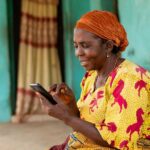
Amnesty International has called on Ugandan authorities to immediately lift internet and mobile phone restrictions imposed ahead of tomorrow’s general election. The Uganda Communication Commission (UCC) ordered an indefinite suspension of internet services, along with restrictions on mobile networks, citing the need to prevent misinformation, electoral fraud, and protect national security. Tigere Chagutah, Amnesty International’s… [Read More]
EU Unveils €90 Billion Support Package to Strengthen Ukraine in 2026–2027
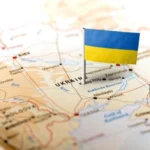
The European Commission has presented a comprehensive financial support package to ensure continuous backing for Ukraine throughout 2026 and 2027, reinforcing the EU’s commitment to the country’s defence against Russia’s war of aggression. The package includes a new proposal for a €90 billion support loan to Ukraine, an amendment to the Ukraine Facility to implement… [Read More]
L’Oréal Unveils 13 Game-Changing Innovators for Sustainable Beauty Program “L’Accelerator”

From over a thousand applications across roughly 100 countries, L’Oréal has chosen 13 pioneering organisations to join its sustainable innovation initiative, L’Accelerator, backed by €5 million over five years. These “agents of change” reflect L’Oréal’s commitment to circularity, low-carbon solutions, and bio-based ingredients in cosmetics. Among the selected companies, six focus on packaging and materials…. [Read More]
Queensland Expands Flood Assistance to More Local Governments

As Queensland grapples with ongoing flooding across the north, west, and central interior, the state has extended joint Commonwealth–state support through the Disaster Recovery Funding Arrangements (DRFA) to 13 additional councils. Aurukun, Burdekin, Central Highlands, Diamantina, Isaac, Livingstone, Mackay, Mareeba, Mornington, Northern Peninsula, Pormpuraaw, Rockhampton, and Whitsunday can now access funding to cover the costs… [Read More]
Nordic Council and Youth Council Sign Historic Agreement to Strengthen Young People’s Voice

The Nordic Council and the Nordic Youth Council have formalized a new co-operation agreement aimed at strengthening the influence of young people in Nordic political co-operation. Signed in Reykjavik in December 2025, the agreement comes shortly after the Nordic Youth Council became an independent legal organisation on 1 January 2025, with offices in Helsinki. “This… [Read More]
Government Pumps $3.69 Million into Regional Tourism to Attract More International Visitors in 2026

Regional New Zealand is set to welcome more international visitors in 2026 following a $3.69 million investment through the Government’s Regional Tourism Boost. The latest funding round supports five new campaigns designed to attract travelers during the quieter autumn and early winter months, encouraging exploration beyond traditional hotspots while promoting unique regional experiences and limited-time… [Read More]
EIB Global Commits $37.5 Million to Alta Semper Fund II to Strengthen Healthcare and Pharma Innovation in Africa

The European Investment Bank (EIB), through its development arm EIB Global, has invested $37.5 million in Alta Semper Fund II to support the growth of pharmaceutical and healthcare companies across Africa, with a focus on North Africa and a portion in sub-Saharan Africa. The fund is expected to mobilize up to $150 million for investments,… [Read More]
EIB Global Invests $80 Million in RMBV North Africa Fund III to Boost Private Sector Growth and Gender Equality in Egypt
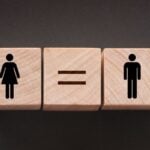
The European Investment Bank (EIB), through its development arm EIB Global, has committed $80 million to the RMBV North Africa Fund III to accelerate private sector development and sustainable growth in Egypt, forming part of a broader regional strategy across North Africa. The signing took place in Cairo with the participation of Egypt’s Minister of… [Read More]
€335 Million Boost for Italian Businesses: EIB Group and BNL BNP Paribas Drive Growth in Southern Italy and Agrifood Sector
The EIB Group, comprising the European Investment Bank (EIB) and the European Investment Fund (EIF), has partnered with BNL BNP Paribas to mobilise €335 million in support of Italy’s real economy, targeting the investments and working capital needs of around 300 Italian companies. The announcement was made by EIB Vice-President Gelsomina Vigliotti and BNL CEO… [Read More]
WHO and EU Bolster Frontline Hospitals in Ukraine with Life-Saving Surgical Equipment

As Ukraine enters the fifth year of the full-scale invasion, health-care facilities in Chernihiv, Kherson, Odesa, Mykolaiv, and Sumy continue to operate under extreme pressure. To help meet the urgent medical needs, the WHO Country Office in Ukraine, with financial support from the European Union (EU) Directorate-General for Enlargement and Eastern Neighbourhood, recently delivered critical… [Read More]
Polio Eradication in the Eastern Mediterranean Region: Seven Key Advances in 2025
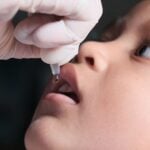
Despite ongoing conflict, humanitarian crises, and funding pressures, WHO’s polio programme in the Eastern Mediterranean Region made significant strides in 2025, advancing multiple fronts toward eradication. In Afghanistan and Pakistan, efforts to interrupt wild poliovirus transmission intensified, guided by Technical Advisory Groups and strengthened national and regional oversight. Both countries focused on critical transmission zones,… [Read More]
WHO and Gavi Boost Pakistan’s Immunization Drive with New Vehicles to Reach Zero-Dose Children

The World Health Organization (WHO), with financial support from Gavi, the Vaccine Alliance, has strengthened Pakistan’s immunization efforts by handing over 20 four-wheel-drive vehicles to the country’s Expanded Programme on Immunization (EPI). The vehicles will be deployed in 20 priority districts where large numbers of “zero-dose” children—those who have never received a single vaccine—live in… [Read More]


