The African Development Bank Group and the Tunisian government have launched a joint initiative to strengthen the financial and accounting management of Bank-funded projects in Tunisia, aiming to accelerate implementation and improve development outcomes. In collaboration with Tunisia’s Ministry of Economy and Planning, the General Financial Control, and the National Information Technology Centre (CNI), a… [Read More]
cat
IDB-Backed Program to Improve Peru’s Identity and Registry Services

The Inter-American Development Bank (IDB) has approved an $80 million loan to improve access to civil registration and identification services in Peru, aiming to promote inclusion and economic participation. The project seeks to reduce costs and processing times, strengthen the National Registry of Identification and Civil Status (RENIEC), and build a more efficient, secure, and… [Read More]
New Program to Create Jobs for 18 Million Youth in East & Southern Africa

A new regional initiative, the Skills for Economic Transformation and Jobs Program (SET4Jobs), aims to equip 18 million young people across Eastern and Southern Africa with the education and skills needed to thrive in key economic sectors by 2034. Addressing the urgent challenge of youth unemployment—where roughly 8 million young people enter the labor market… [Read More]
Iceland Pledges ISK 400M to Strengthen Ukraine’s Energy Grid with UNDP

The Government of Iceland and the United Nations Development Programme (UNDP) have signed a new agreement to strengthen the resilience of Ukraine’s energy sector, contributing ISK 400 million (around US$3.25 million) to the initiative. The project, part of the “Strengthening Energy Sector Resilience in Ukraine” programme, focuses on procuring decentralised energy solutions and modernising critical… [Read More]
Reimagining Healthcare in Trinidad and Tobago: Innovation at Work

In Trinidad and Tobago, healthcare is undergoing a transformative shift powered by innovation and strategic support from the Pan American Health Organization (PAHO) and the World Health Organization (WHO). Hospitals are now incorporating advanced technologies to improve patient care and operational efficiency. One example is the introduction of ultraviolet disinfecting robots, nicknamed Roberta, at Scarborough… [Read More]
$117M World Bank Project to Boost Fisheries and Aquaculture in Tanzania

Tanzania has launched a USD 117 million (EUR 99 million) World Bank-funded project, the Scaling-Up Sustainable Marine Fisheries and Aquaculture Management (TASFAM) initiative, aimed at increasing the country’s seafood production and reducing post-harvest losses. Initiated in early February 2026 after planning began in May 2025, the project will run for five years and is expected… [Read More]
10 Years of Waste Research and Innovation in South Africa
The Council for Scientific and Industrial Research (CSIR) is hosting the Waste Research, Development, and Innovation Roadmap Conference online from 3 to 5 March 2026. The conference highlights a decade of waste research, development, and innovation in South Africa, showcasing achievements from the Waste Research, Development, and Innovation (RD&I) Roadmap, an initiative supported by the… [Read More]
6 Months After Earthquake: 25,000 Afghan Children in Temporary Schools
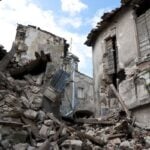
About six months after a devastating earthquake struck eastern Afghanistan, approximately 25,000 children in Kunar province are still living in tents, as homes and schools remain unrepaired and no reconstruction timeline has been established, according to Save the Children. The earthquake on 31 August 2025 killed more than 2,000 people and destroyed or damaged over… [Read More]
Rural Schools in Kenya: Beyond Outputs to Youth Resilience
Magaga Enos reflects on J‑term fieldwork in rural Kenyan schools, supported by the Harvard Center for International Development and the Women and Public Policy Program at Harvard Kennedy School. His inquiry focused on understanding how rural schooling can foster both unity and justice in communities, rather than merely advancing individual academic mobility. Enos connects this… [Read More]
Lesotho Teacher Development: Lessons from Zambia
Lesotho’s education system has historically faced significant challenges in managing and supporting its teaching workforce. Prior to a peer learning exchange with Zambia, the country lacked coherent structures for teacher professional development, data management, and regulatory oversight. There was no approved national framework guiding teacher education and Continuous Professional Development (CPD), which limited systematic professional… [Read More]
Four Years of Ukraine Conflict: Insights for Europe

Four years of war in Ukraine have transformed modern warfare, with drones, digital defence systems, and improvised solutions redefining the battlefield. At a recent symposium, Dutch and Ukrainian experts reflected on frontline conditions and explored lessons that Europe can learn to better prepare for future conflicts. One major lesson emphasized was the need for timely… [Read More]
Breaking the Silence: Advancing Gender Justice in Northern Kosovo

Gender-based and domestic violence remain pervasive issues worldwide, disproportionately affecting women. In many communities in Kosovo, domestic violence is still often regarded as a private matter to be handled within the family. While Kosovo’s legal framework on gender-based and domestic violence aligns with international standards, consistent enforcement remains a challenge. Many women do not report… [Read More]
Thailand Launches Migration Journalism E-Learning Course for Ethical Reporting

The Ministry of Foreign Affairs (MFA) of Thailand, together with the International Organization for Migration (IOM) in Thailand and Social Lab – Migration in Media, officially launched a new migration journalism e-learning curriculum aimed at strengthening ethical and evidence-based reporting on migration across the country. The launch event, held in Bangkok on 20 February 2026,… [Read More]
EU Pledges €8M to Boost Primary Health Care in Syria

The European Union has committed EUR 8 million to support the recovery and strengthening of Syria’s health system, with a particular focus on primary health care. Through its collaboration with the Syrian Ministry of Health and national institutions, WHO will help translate the national primary health care action plan into practical, Ministry-led initiatives. The support… [Read More]
UNESCO Boosts Living Heritage for Sustainable Urban Development

UNESCO is advancing its project “Latin America and the Caribbean: Capacity-building for resilient communities through sustainable tourism and the safeguarding of heritage,” which unites 10 countries in the region to strengthen capacities for protecting Intangible Cultural Heritage (ICH) and promoting its integration into urban planning. Supported by the Ministry of Culture of the Kingdom of… [Read More]
Sindh Strengthens Disaster Preparedness with UNESCO Support

From February 11–14, 2026, the UNESCO team in Pakistan, represented by Syed Muhammad Raza Shah and Ghazala Naeem, conducted a mission to Karachi, Sindh, to strengthen climate resilience, disaster preparedness, and science-driven collaboration. The mission coincided with the Asia-Pacific Shelter and Settlements Forum (APSSF) 2026, which brought together governments, development agencies, humanitarian organizations, and technical… [Read More]
Fiji Policy Dialogue: Linking Plans, Budgets & People
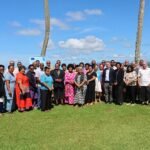
The Fiji Policy Dialogue explored how national priorities are translated into budget decisions and how those decisions impact real results for citizens. Permanent Secretary for National Planning, Development and Statistics, Peni Sikivou, emphasized that Fiji’s National Development Plan 2025–2029 and Vision 2050 set ambitious goals, but achieving them relies on the effective coordination of policies,… [Read More]
Energea Invests $100 Million in Latin America Solar Projects
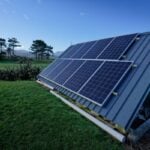
Global renewable energy developer and operator Energea has announced the launch of its LATAM Energy Portfolio, marking the company’s fourth active investment strategy. The portfolio focuses on distributed solar power projects across South America, Central America, and the Caribbean, with an initial $100-million secured credit facility in partnership with Helios Energía S.A.S. E.S.P., a regulated… [Read More]
How UN Women Supports Women in Ukraine: Five Essential Services
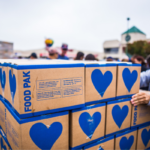
Four years after the full-scale invasion of Ukraine on 24 February 2022, daily life for millions remains a struggle, marked by economic insecurity, power outages during harsh winters, constant security threats, and displacement. Amid this, Ukrainian women have shown remarkable resilience and leadership, managing humanitarian response from the earliest days of the conflict. They have… [Read More]
International Women’s Day 2026 & UN CSW70 Highlights
International Women’s Day 2026 comes at a pivotal moment, highlighting both progress and setbacks in gender equality. While legal protections against domestic violence have expanded in many countries, women and girls worldwide continue to face systemic discrimination, limited legal rights, and increasing violations of their fundamental freedoms. The day underscores the urgent need to ensure… [Read More]
Justice for All Women and Girls: A Global Call to Action

Around the world, millions of women and girls continue to face violence, discrimination, and systemic abuse. In many cases, legal systems fail to protect them, leaving survivors without recourse, while perpetrators go unpunished. Women are frequently denied equal pay, inheritance, and land rights, and even when laws exist, they often do not translate into real… [Read More]
Women’s Equality and Modern Feminist Movements

Feminism is a dynamic and evolving movement without a formal rule book, hierarchy, or governing body. It takes diverse forms depending on historical and social contexts and is shaped by advocates, local leaders, and communities. While often referred to in the plural as “feminisms,” the movement shares a unifying goal: advancing equality for women and… [Read More]
Empowering Local Actors: A Pathway to Real Impact
Development today faces a paradox: those best positioned to address local challenges often receive the least support. Farmers adapting to climate shocks, women entrepreneurs sustaining fragile economies, youth innovators bridging digital gaps, municipal leaders managing constrained services, and civil society groups preventing conflict understand local contexts in ways external actors cannot. Yet they navigate scarce… [Read More]


