
Across the OECD and beyond, collaborative governance is becoming increasingly essential. The concept of “co-production,” where public services and policies are designed together with communities and civil society, demonstrates that reforms are more durable, legitimate, and effective when built through partnerships. Countries such as Canada, Finland, and New Zealand leverage civil society to reshape healthcare,… [Read More]
cat
Small but Mighty: 5 Lessons from Small Teams Delivering High-Quality Palliative Care

High-quality palliative care is not determined by the size of a program or the scale of its budget, but by consistency, collaboration, and a shared commitment to patients and families. Across the United States, smaller palliative care programs are demonstrating how focused teamwork, intentional training, and clear priorities can deliver meaningful, high-quality care even with… [Read More]
Q&A: How Community Foundations Are Strengthening Climate Resilience

As climate risks escalate and federal funding becomes less predictable, community foundations are increasingly stepping in as anchors for locally driven climate resilience efforts. Rooted deeply in their regions, these institutions bring long-term commitment, trusted relationships, and flexible financial tools that enable climate solutions tailored to local needs. Their longevity and place-based focus allow them… [Read More]
Building the Local Ecosystem for Clean Energy Lending: Strategies for Sustainable Finance

Over the past year, community climate finance in the United States has faced significant disruption, driven by broader challenges affecting community development financial institutions and the freezing of key federal funding streams, including the Greenhouse Gas Reduction Fund. To understand how these shifts are affecting lenders on the ground, The Kresge Foundation and Climate Impact… [Read More]
Can Teachers Drive Digital Transformation? The Bahamas Shows How

The Bahamas is emerging as a regional leader in digital transformation in education, driven by a strong national commitment to improving digital literacy and modernizing learning systems. Key initiatives include the establishment of a Digital Transformation Unit and strategic partnerships with the University of The Bahamas and the Bahamas Technical and Vocational Institute. Through these… [Read More]
Oklahoma City Workforce Commits $613,312 in Charitable Giving to Community Causes

City of Oklahoma City employees demonstrated strong community spirit by pledging more than $613,000 to local charities through the 2025 Heart of the City charitable giving campaign. The annual workplace initiative brings employees together to support residents in need through contributions to organizations that provide essential services such as food assistance, housing support, healthcare, arts,… [Read More]
Mirova Gigaton Fund: Scaling Climate Solutions While Integrating Gender Finance
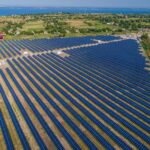
More than 675 million people worldwide still lack access to electricity, with the majority living in Sub-Saharan Africa, despite the continent’s vast renewable energy potential. As solar power becomes one of the most affordable energy sources globally, distributed renewable solutions such as mini-grids, agri-solar systems, and commercial and industrial installations present a viable pathway to… [Read More]
Bolivia Boosts MSMEs Through Inclusive Innovation Initiatives

Micro-, small, and medium-sized enterprises (MSMEs) account for nearly 70% of employment and contribute 25% to Bolivia’s GDP, yet they continue to face challenges including informality, limited access to financing, and constrained innovation capacity. Addressing these barriers is essential for unlocking inclusive and resilient growth opportunities for the country’s MSME sector. As part of the… [Read More]
West Bank Camp Faces New Demolition Order, Escalating Humanitarian Concerns

The International Labour Organization (ILO) has released its first comprehensive report on collective bargaining in Serbia’s private sector, highlighting significant opportunities for growth and improvement. Currently, only 13 percent of private companies in Serbia have collective agreements, yet those that do experience clear benefits, including improved communication, predictability, and workplace harmony. Collective bargaining is the… [Read More]
West Bank Camp Faces New Demolition Order, Escalating Humanitarian Concerns
Some 25 buildings in a West Bank camp face imminent demolition starting on 18 December, threatening hundreds of forcibly displaced Palestinians, according to Roland Friedrich, Director of UNRWA Affairs for the occupied West Bank. Satellite imagery indicates that nearly half of all buildings in the camp, 48 percent, had already been damaged or destroyed before… [Read More]
Deepening Repression in Venezuela and Growing Toll in Ukraine: UN Rights Chief Warns
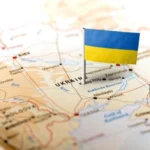
High Commissioner for Human Rights Volker Türk, addressing the Geneva-based Human Rights Council, warned that the human rights situation in Venezuela has continued to deteriorate since his last update in June. He highlighted an intensifying crackdown on civic space, which is severely restricting people’s freedoms. Arbitrary detentions and enforced disappearances remain prevalent, while social and… [Read More]
New UN Deal Simplifies International Trade Procedures Worldwide

The United Nations has introduced the Convention on Negotiable Cargo Documents, establishing, for the first time, a single document that can be used for goods transported by trains, trucks, and planes. This innovative framework allows logistical adjustments for cargo already in transit, enabling goods to be sold, rerouted, or used as collateral for financing during… [Read More]
Ontario Energy Expansion Drives $30 Million Investment by Hitachi Energy

Hitachi Energy is investing $30 million to upgrade and expand its recently acquired facility in Stoney Creek, Ontario, securing 155 existing jobs and creating 30 new positions. The investment aims to strengthen Ontario’s energy infrastructure, supporting long-term energy security and the province’s economic competitiveness. Minister of Energy and Mines Stephen Lecce highlighted that this investment… [Read More]
Canada Responds with Emergency Assistance Following Cyclone in Sri Lanka

Sri Lanka has been severely impacted by Cyclone Ditwah, which caused extensive flooding and landslides across the country. The disaster resulted in loss of life and widespread damage to homes and infrastructure, disrupting communities and local economies. In response, Canada announced over $2 million in humanitarian assistance to support emergency relief efforts. This includes $1.4… [Read More]
Ireland Secures €18.9 Billion for Renewable Energy and Grid Modernization

Minister for Climate, Energy and the Environment Darragh O’Brien has welcomed the Commission for the Regulation of Utilities (CRU) Final Determination on Price Review 6 (PR6), covering 2026 to 2030. PR6 sets expenditure by EirGrid and ESB Networks in five-year cycles and establishes a transformative framework for Ireland’s energy infrastructure, enabling historic investment of up… [Read More]
Minister Heydon Announces Strengthened Oversight for Agri-Food Regulator to Ensure Food Supply Transparency

Minister for Agriculture, Food and the Marine, Martin Heydon TD, has announced new regulations granting enhanced powers to the Agri-Food Regulator, reinforcing a key commitment under the Programme for Government to improve transparency and fairness across the agri-food supply chain. Established in December 2023 under the Agricultural and Food Supply Chain Act 2023, the Regulator… [Read More]
Enhanced Health, Education, and Social Services in Salvador Backed by World Bank Financing

The World Bank Board of Directors has approved a new operation to expand access to quality health, education, and social assistance services in Salvador, a major municipality in Brazil’s northeastern State of Bahia. The Salvador Social III Program is expected to directly benefit 1.7 million residents relying on the public health system, 104,000 students in… [Read More]
Piauí Receives World Bank Backing for Fiscal Reform and Economic Development

The World Bank Board of Directors has approved a new operation to strengthen fiscal sustainability and promote economic development in the State of Piauí, Brazil. This Development Policy Financing (DPF) aims to support reforms that enhance the quality of public expenditure and expand private sector participation in water and land resources management, key sectors for… [Read More]
Syria’s Subsidized Bread Programme Scaled Up by WFP to Reach More Families

The United Nations World Food Programme (WFP), in collaboration with Syria’s Ministry of Economy and Industry, is expanding and extending its Subsidized Bread Programme through March 2026, supported by a generous contribution from the United States government. Starting in January 2026, the programme will operate through more than 300 bakeries nationwide, providing daily bread assistance… [Read More]
Afghanistan Faces Deepening Hunger Crisis as Winter Approaches, Latest Report Confirms
Over 17 million Afghans are facing acute food insecurity this winter, as hunger and malnutrition intensify across the country, according to the latest Integrated Food Security Phase Classification (IPC) report. This represents an increase of three million people compared to last year, with nearly four million children projected to suffer from malnutrition in the coming… [Read More]
ADB Approves $16.7M Grant for Nature-Based Coastal Protection in Fiji

The Asian Development Bank (ADB) has approved a $16.7 million grant to support Fiji’s efforts to protect coastal communities from storm surges, sea level rise, and coastal erosion. The grant will fund the Enhancing Climate Resilience of Coastal Communities Sector Project, which aims to reduce vulnerability to extreme weather events while strengthening the resilience of… [Read More]
$11 Billion Mobilized by African Development Fund to Boost Ownership and Investment-Led Growth in Africa

The African Development Fund (ADF), the concessional financing arm of the African Development Bank Group, has secured a record $11 billion from 43 partners for its 17th Replenishment (ADF-17), the largest in the Fund’s history. This represents a 23% increase over the previous replenishment and underscores global confidence in Africa’s development prospects, the African Development… [Read More]
$9 Million African Development Fund Grant to Boost Climate Resilience in Tanzania’s Mkondoa Region
The African Development Fund (ADF) has approved a $9.38 million grant to Tanzania to enhance climate resilience in the Mkondoa Catchment, a critical water resource area vulnerable to floods and droughts exacerbated by climate change. The Enhancing Climate Resilience on Water Resources in Mkondoa Catchment project, approved on 12 December 2025, will be financed through… [Read More]


