The International Labour Organization (ILO), together with Myanmar civil society, community-based, and labour organizations, commemorated International Migrants Day on 14 December 2025 in Yangon under the theme “Every Migrant, Every Story, One Humanity.” The event was organized through the EU-funded Ship to Shore Rights South-East Asia: Safe Migration for Decent Work in the Blue Economy… [Read More]
cat
WHO Reports Early and Severe Flu Season Across European Region Amid Emerging Strain

Influenza is spreading across the WHO European Region earlier than usual, driven by a newly dominant virus strain that is putting significant pressure on health systems in some countries. Public health authorities are advising individuals to take simple protective measures to safeguard themselves and others during this winter season. The influenza season began approximately four… [Read More]
Historic Global Declaration on NCDs and Mental Health Adopted by World Leaders

World leaders at the Eightieth United Nations General Assembly have adopted a landmark political declaration to combat noncommunicable diseases (NCDs) and promote mental health through a fully integrated approach. The declaration, agreed upon ahead of the fourth high-level meeting on NCDs and mental health held on 25 September 2025, represents the first global commitment addressing… [Read More]
Second WHO Global Summit Advances Innovation and Evidence-Based Traditional Medicine

The World Health Organization (WHO) has launched its Second Global Summit on Traditional Medicine in collaboration with the Government of India, bringing together ministers, scientists, Indigenous leaders, and practitioners from over 100 countries. The Summit aims to advance the implementation of the WHO Global Traditional Medicine Strategy 2025–2034, focusing on stronger evidence, better regulation, health… [Read More]
$23 Million ADF Grant to Boost Renewable Energy Access in Bosaso, Somalia

The African Development Fund has approved a $23.36 million grants package to bring clean and reliable electricity to Bosaso, Somalia. The project, titled Rehabilitation and Expansion of Bosaso Power Grid and Strengthening of Energy Sector Institutions, is funded through $9.62 million from the African Development Fund and $13.74 million from the Transition Support Facility. It… [Read More]
$9 Million ADF Grant to Strengthen Climate Resilience in Tanzania’s Mkondoa Catchment

The African Development Fund (ADF) has approved a $9.38 million grant to Tanzania to enhance climate resilience in the Mkondoa Catchment, a critical water resource area vulnerable to floods and drought caused by climate change. The grant, approved on 12 December 2025, will finance the Enhancing Climate Resilience on Water Resources in Mkondoa Catchment project… [Read More]
ADF Raises $11 Billion, Ushering a New Era of African Ownership and Growth

The African Development Fund (ADF), the concessional financing arm of the African Development Bank Group, has secured a record $11 billion from 43 partners for its 17th Replenishment (ADF-17), marking the largest funding round in the Fund’s history despite global fiscal constraints and declining aid budgets. This represents a 23% increase over the previous replenishment… [Read More]
Understanding the African Development Fund: 5 Essential Questions Answered
The 17th replenishment of the African Development Fund (ADF-17), the concessional financing window of the African Development Bank Group, concluded its final meeting on 15 and 16 December 2025 in London. During the session, development partners announced their financial commitments to support 37 low-income African countries, at a time when official development assistance faces growing… [Read More]
Sri Lanka Receives $40 Million Emergency Trade Finance from ADB Following Cyclone Ditwah

The Asian Development Bank (ADB) has launched a $40 million emergency assistance facility under its Trade and Supply Chain Finance Program (TSCFP) to support Sri Lanka’s recovery from Cyclone Ditwah. The facility will finance essential imports such as food, medicines, and critical relief supplies, helping the country rebuild damaged infrastructure and restore livelihoods. This emergency… [Read More]
Tajikistan Strengthens Disaster Resilience with ADB Glacier Monitoring Support

The Asian Development Bank (ADB) has approved a $3 million grant to enhance Tajikistan’s capacity for glacier monitoring and hazard forecasting. The grant, provided through the Japan Fund for Prosperous and Resilient Asia and the Pacific (JFPR) and financed by the Government of Japan, aims to strengthen the country’s ability to predict and respond to… [Read More]
Urgent Flood Relief in Viet Nam: Japan Donates $1.5 Million through IOM and UNICEF
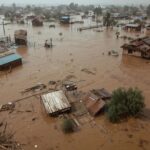
The Government of Japan has contributed USD 1.5 million through the International Organization for Migration (IOM) and the United Nations Children’s Fund (UNICEF) to support urgent flood relief and early recovery efforts in Viet Nam. This funding targets families and children affected by the severe tropical storms, typhoons, and flooding that struck the country throughout… [Read More]
From One Cleanup to the Next: How Paducah Crews Drive Innovation
Cleanup crews at the U.S. Department of Energy Office of Environmental Management (EM) Paducah Site are concluding work on the C-333 Process Building and applying lessons learned in innovation, efficiency, and safety as they shift focus to the C-337 Process Building. The knowledge gained from C-333—including new tools and refined approaches—is guiding strategies for the… [Read More]
How Schools Adopt Electric Cooking: Key Lessons on Behavioral Change
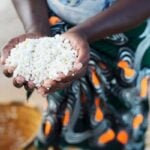
Modern clean cooking technologies offer significant potential to address a long-standing challenge in Kenya, where most institutions still rely on polluting fuels. The MECS programme, in partnership with CLASP, has been working to introduce large-scale electric cookstoves as a clean and efficient alternative, with a particular focus on schools. This initiative goes beyond merely replacing… [Read More]
How Institutions Shape Change: Turning Impact into Culture

In the first four editions of Impact Corner, we explored what impact is, how to make science more connected to society, what values underpin discussions of impact, and how to measure and learn from it. The next step is to examine how institutions themselves can foster an environment that supports and integrates impact—a culture where… [Read More]
Strengthening AMR Strategies in Angola: WHO Conducts Technical Mission

Angola recently enhanced its national response to antimicrobial resistance (AMR) through a joint technical mission organized by the Ministry of Health, with specialized support from the World Health Organization (WHO). The mission involved experts from WHO Headquarters, the Regional Office for Africa, and the WHO Office in Angola, aiming to strengthen institutional capacity in AMR… [Read More]
What India’s Largest Transparency Initiative Teaches About Access and Impact – Guest Post by Pallavi Prabhakar
Over two billion people live in countries where governments under-deliver on essential public services, yet citizens rarely use formal grievance systems to demand improvements. To address this participation gap, transparency programs have been introduced to make government performance visible, assuming that informed citizens will press officials for change. However, despite significant investments, evidence is limited… [Read More]
Transforming Waste into Economic Growth: Egypt’s Bioeconomy Boosted by Dutch Innovation
Egypt produces over 100 million tons of waste annually, much of which is organic, representing both a challenge and a significant economic opportunity. With effective policies, technologies, and international collaboration, organic waste can be converted into value streams that support the country’s bioeconomy. Dutch partners bring expertise in waste processing, circular solutions, and investment in… [Read More]
Ten Years of Empowering Environmental Defenders in the Peruvian Amazon: Insights and Recommendations
Over the past decade, IUCN NL and the Peruvian Society for Environmental Law (SPDA) have collaborated in the Madre de Dios region of the Peruvian Amazon, with support from the French Development Agency (AFD), to develop a gender-sensitive, intersectional framework for protecting environmental defenders. This partnership has addressed escalating threats such as illegal activities, land… [Read More]
How the Aeres–Gyeonggi Partnership Is Transforming Agricultural Education in South Korea

In May 2024, Aeres University of Applied Sciences in the Netherlands and the Gyeonggi Provincial Office of Education in South Korea formalized a strategic partnership through a Memorandum of Understanding aimed at advancing innovation in agricultural education. Supported by the Agricultural Department of the Netherlands Embassy in Seoul and involving Yeoju Agricultural High School, the… [Read More]
Key Lessons on Investing in Collaborative Community Health Approaches
For the past decade, The BUILD Health Challenge® has brought together community-based organizations, health care partners, and public health agencies to drive meaningful change in communities across the United States. Guided by its core principles of bold, upstream, integrated, local, and data-driven action, BUILD has developed a collaborative model that offers valuable lessons for funders… [Read More]
Developing Countries Drive Climate Action Forward with Innovative Solutions
While global attention often focuses on the actions of major emitters, developing countries continue to advance meaningful climate action across diverse sectors worldwide. Over the past decade, UNDP has worked with more than 90 percent of developing countries to strengthen local and national climate responses, and in 2025 this work demonstrated how leadership, innovation, and… [Read More]
UNDP Calls on Private Sector to Strengthen High-Integrity Carbon Markets Through Article 6.2
The United Nations Development Programme has launched a Request for Expressions of Interest inviting private sector organizations to participate in the supply of Internationally Transferred Mitigation Outcomes under the cooperative approaches of Article 6.2 of the Paris Agreement. The initiative targets project developers operating in countries that have signed bilateral cooperation agreements with Switzerland and… [Read More]
Germany and UNDP Partnership Strengthens Security and Economic Prosperity

Germany has renewed its partnership with the United Nations Development Programme to support sustainable development efforts worldwide, reaffirming its role as a key multilateral partner. The renewed cooperation also includes continued support for UNDP’s Accelerator Labs, enabling the successful completion and scaling of this innovation programme. This commitment coincides with UNDP Administrator Alexander De Croo’s… [Read More]


