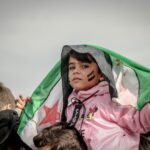
The World Bank’s Board of Executive Directors approved a US$20 million grant from the International Development Association (IDA) to support Syria in strengthening the efficiency, transparency, and accountability of its public financial management systems. The funding will support the Syria Public Financial Management Capacity Strengthening Project, which aims to improve core financial management and procurement… [Read More]
$5.52M Grant to Strengthen Tax Administration in West Africa

The African Development Bank Group has signed a $5.52 million grant agreement with the West African Tax Administration Forum (WATAF) to launch the Strengthening Tax Administration Capacity Project in West Africa (STACP-WA). The initiative aims to strengthen the ability of six West African countries to mobilize, manage, and protect domestic revenues more effectively. The funding… [Read More]
UNDP and Italy Back Green Climate Projects in Senegal
Senegal has emerged as a central hub for climate finance and economic cooperation in Africa, strengthening its climate policy framework to translate environmental commitments into concrete development and investment opportunities. Under its Nationally Determined Contributions (NDCs) to the Paris Agreement, Senegal aims to reduce greenhouse gas emissions by 7% unconditionally and up to 29% with… [Read More]
West Africa Faces Lassa Fever Crisis as Cases Go Undetected
Lassa fever, a viral haemorrhagic illness endemic in parts of Nigeria, Liberia, Sierra Leone, and neighbouring countries, kills thousands each year in West Africa, yet many infections go undiagnosed until it is too late. The disease, primarily spread by rodents, can also be transmitted through contact with infected blood or bodily fluids. Travellers returning from… [Read More]
$1.76M Grants Announced for Women Entrepreneurs by WEIDE Fund
To mark International Women’s Day on 8 March, the Women Exporters in the Digital Economy (WEIDE) Fund announced on 6 March that it will disburse US$ 1.76 million in the first quarter of 2026 to support 219 women-led enterprises in the Dominican Republic, Mongolia, and Nigeria. This first disbursement launches the WEIDE Fund’s innovative grant… [Read More]
£2.2 Million Funding Boost to Strengthen Volunteering in Scotland
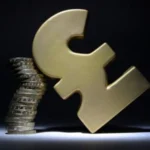
More than 100 grassroots organisations across Scotland will share £2.2 million through the Volunteering Support Fund 2025-27 to recruit and support volunteers in their communities. Over the next two years, small and medium-sized third sector organisations from the Highlands to the Borders will receive grants of up to £20,000 for projects that make a tangible… [Read More]
CSOs Lead Solutions to Tech-Facilitated Gender-Based Violence

As digital transformation accelerates across Asia and the Pacific, technology-facilitated gender-based violence (TFGBV) has emerged as a significant challenge, disproportionately affecting women, girls, and vulnerable groups in online spaces. Addressing this issue requires targeted interventions to prevent and respond to harm while promoting digital inclusion and empowerment. The CSO Conversations webinar highlighted the critical role… [Read More]
Water Security Boost: Govt Teams Up with Civil Society and Financial Sector
Three Kenyan startups have been recognized for their innovative solutions to Africa’s social and economic challenges, winning three of the five category awards at the Africa Entrepreneurship Awards 2026. The awards, announced during the 13th Sankalp Africa Summit held in Nairobi on February 25–26, celebrated enterprises driving impact across AgriTech, Circular Tech, Climate Tech, FinTech,… [Read More]
Rockefeller Foundation: Food as Medicine Can Generate $45 Billion for States
New research from The Rockefeller Foundation shows that scaling Food is Medicine (FIM) programs—offering produce prescriptions and medically tailored meals to people with diet-related conditions—could generate over $45 billion in state economic activity, create 316,000 jobs nationwide, and generate $5.6 billion for small and mid-sized farms. The report, From Farm to FIM: The Economic Impact… [Read More]
Women, Elections, and Peace: How Civil Society Drives Change in Gabon

The NGO Women Go for Peace (WGP) works to promote peace, social cohesion, and women’s participation in elections and decision-making in Gabon. Following the events of August 30, 2023, and the overthrow of President Ali Bongo Ondimba, Gabon entered a two-year transition period aimed at restoring constitutional order. During this time, civil society mobilized to… [Read More]
UNHCR Reports Nearly 700,000 Displaced in Lebanon in One Week Amid Worsening Crisis
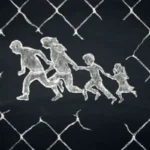
The recent escalation of conflict in Lebanon, which began on 2 March, has forced tens of thousands of families to flee their homes within minutes following Israeli evacuation warnings and intensified airstrikes. Over 667,000 people have now registered on Lebanon’s government displacement platform, marking an increase of more than 100,000 in just one day, with… [Read More]
Over 70 NGOs Warn of Worsening Hunger Crisis in Somalia
Humanitarian organizations in Somalia have warned that millions of people are facing an escalating hunger crisis, urging international donors to increase funding immediately to prevent widespread loss of life. In an open letter, dozens of NGOs highlighted the critical situation, emphasizing that lives are at imminent risk due to rising food insecurity and malnutrition across… [Read More]
Lessons from Lumina Foundation’s FutureReady States Initiative
Lumina Foundation’s FutureReady States (FRS) initiative brings together a cohort of states working to strengthen short-term credential ecosystems and ensure that state investments in nondegree credentials (NDCs) deliver meaningful economic and social returns for residents. This multi-state analysis synthesizes findings from state landscape assessments and highlights cross-cutting themes, persistent challenges, and emerging opportunities to guide… [Read More]
Houston Hosts Watershed Roundtable on Conservation Partnerships April 8

The Texas Water Resources Institute (TWRI) at Texas A&M AgriLife will host the Spring 2026 Watershed Coordinator Roundtable on April 8 in Houston, bringing together conservation leaders, watershed professionals, and community partners to explore collaborative strategies for protecting water quality across the state. The event will take place at the Tracy Gee Community Center, with… [Read More]
Western Balkans Regional Soil Pollution Conference 2026: Tackling Contamination
The South-East European Platform to Beat Pollution (SEEPP), established in 2019 with support from the Italian Ministry of Environment and Energy Security, acts as a central regional mechanism for advancing commitments toward a pollution-free planet. The platform translates global initiatives, such as the UNEA-3 Ministerial Declaration Towards a Pollution-Free Planet, into regional cooperation, knowledge sharing,… [Read More]
Asia-Pacific Quadripartite Webinar on Nipah Virus

One Health is a collaborative, multisectoral approach that addresses health threats at the intersection of humans, animals, and the environment, aiming to improve the well-being of people, animals, and ecosystems by acknowledging their interdependence. This integrated framework relies on cooperation across disciplines and sectors to prevent, detect, and respond to emerging health threats. The Regional… [Read More]
Japan 2011: Key Lessons from the Earthquake and Tsunami
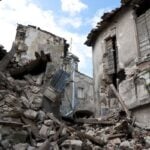
In April 2012, a Harley-Davidson motorcycle belonging to Ikuo Yokoyama, a survivor of Japan’s 2011 earthquake and tsunami, was found on Graham Island in the Haida Gwaii archipelago. Yokoyama had lost his home and three family members in the disaster. Fifteen years after the magnitude-9.0 earthquake off Japan’s northeastern coast, which triggered a devastating tsunami… [Read More]
Kyrgyzstan Prepares Second Biennial Transparency Report & Fifth National Communication
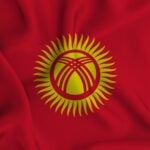
The Ministry of Natural Resources, Ecology and Technical Supervision of the Kyrgyz Republic (MNRETS), in partnership with UNDP, launched the preparation of the “Combined Second Biennial Transparency Report (BTR2) and Fifth National Communication (NC5)” on 10 March 2026. The event brought together representatives from government agencies, international organizations, the scientific community, and climate experts. As… [Read More]
Commission Unveils New Strategy to Boost Clean Energy Investment
Delivering Europe’s clean energy transition will require massive annual investments, estimated at €660 billion until 2030 and rising to €695 billion between 2031 and 2040. Although significant progress has been made, the current pace and scale of investment must increase to ensure the continent’s economy relies on secure, affordable, and clean energy. In response, the… [Read More]
South Africa in Talks with Gilead for Local HIV Drug Production
Earlier this month, Unitaid announced its collaboration with the South African government to engage Gilead Sciences in discussions about lenacapavir, a next-generation HIV preventive medicine. The talks aim to secure a voluntary license that would allow local generic manufacturers to produce the drug, increasing regional access and strengthening local pharmaceutical capacity. Unitaid, a global health… [Read More]
What Justice Means to Women and How to Make It Real

Globally, women and girls continue to face systemic barriers to justice, even where laws exist to protect them. Stories of survivors illustrate how societal bias, fear of retaliation, and institutional weaknesses prevent accountability for abuse. Laws alone are insufficient if enforcement is weak, leaving human rights as words on paper rather than tangible protections. Currently,… [Read More]
Promoting Heritage Preservation for Sustainable Tourism in Egypt

The completion of Phase III of the “Conservation of the Wall Paintings of the Royal Tomb of Amenhotep III – KV22” project marks a major milestone in safeguarding one of Egypt’s most significant royal monuments. Conducted under the UNESCO/Japanese Funds-in-Trust for the Preservation of the World Cultural Heritage, in partnership with the Ministry of Tourism… [Read More]
Red Cross Takes Eight Key Actions to Protect Women and Girls in the Americas

When disasters such as hurricanes, floods, fires, or droughts occur, the most visible impacts are often damaged homes, destroyed crops, and disrupted infrastructure. However, crises also create less visible consequences by deepening existing social inequalities, particularly gender inequality. Women and girls frequently face increased risks during emergencies, including higher exposure to violence, heavier caregiving responsibilities,… [Read More]


