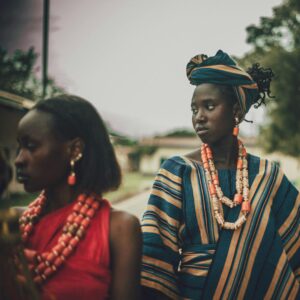
In Agnéby-Tiassa, Côte d’Ivoire, N’Gbesso Sopie Sylvie’s story reflects the resilience and determination of rural women working to improve their families’ lives through agriculture. At 46 years old, married and a mother of seven, Sylvie had spent years working hard on her 2.45-hectare cocoa plantation, but her harvests rarely exceeded 500 kilograms per year. This level of production was not enough to meet her family’s basic needs, leaving her with limited income and few opportunities to improve their situation.
Her circumstances began to change in 2023 when she joined the PROMIRE project, a national initiative titled “Promoting Deforestation-Free Cocoa Production to Reduce Emissions in Côte d’Ivoire.” Implemented with technical support from the Food and Agriculture Organization of the United Nations (FAO) and funded by the Green Climate Fund (GCF), the project is designed to help cocoa farmers adopt more sustainable and climate-resilient agricultural systems. It does this by improving farming practices, strengthening technical assistance, and increasing access to key services that support productivity and sustainability.
With support from PROMIRE, Sylvie’s cocoa plot was transformed into an agroforestry system, which combines cocoa cultivation with fruit and forest trees on the same land. This approach helps maintain soil fertility, supports biodiversity, and improves overall productivity. She also received training in Good Agricultural Practices, soil management, and crop diversification, which gradually changed how she managed her farm and gave her practical tools to improve yields in a more sustainable way.
By 2025, the results were significant. Sylvie’s annual cocoa production had more than doubled, rising from 500 kilograms to over one ton per year. Her cocoa trees became healthier and stronger, the plantation itself improved, and her income became more stable. This increased financial security allowed her to better support her children’s education and meet her household’s needs with greater confidence and consistency.
Sylvie said the project helped her make better use of her land and that seeing the results of her efforts has given her a strong sense of pride. Encouraged by this progress, she now hopes to secure additional financial support to continue improving her plantation, particularly by investing in better soil maintenance and obtaining suitable fertilizers so she can further increase production.
Her experience highlights the important role rural women play in transforming agriculture in Côte d’Ivoire. Through initiatives like PROMIRE, women farmers are not only adopting climate-resilient and zero-deforestation cocoa systems, but are also gaining greater access to resources, knowledge, and recognition within their communities. This support is helping strengthen both their economic position and their role in local agricultural development.
Sylvie’s story also reflects Côte d’Ivoire’s broader push to promote sustainable agriculture and protect forests, while advancing more inclusive and equitable food systems. With support from the Green Climate Fund and collaboration between the Government of Côte d’Ivoire and FAO, PROMIRE is helping build a more sustainable, just, and resilient cocoa sector across the country.
The project’s wider impact is substantial. Through PROMIRE, 7,550 cocoa producers—at least 30 percent of them women—are gaining improved access to agroforestry systems, stronger cooperatives, and specialized training. In addition, around 600,000 people in the targeted regions are expected to benefit indirectly from more resilient, zero-deforestation cocoa landscapes and restored forests. Sylvie’s journey stands as a clear example of how empowering rural women through sustainable agriculture can create lasting change for families, communities, and the environment.