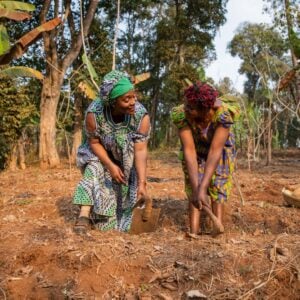
As Côte d’Ivoire welcomes a new government following legislative and presidential elections, the country faces a unique opportunity to turn political transition into a catalyst for women’s leadership and inclusive growth. With attention shifting from campaigning to governing, there is a strategic window to inspire and enable more women to participate meaningfully in public decision-making at all levels. Voices across the country, such as a woman from Bouaké aspiring to be the first female representative in her community, highlight both the challenge and potential of increased women’s participation in leadership.
Political transitions are particularly important moments for embedding gender inclusivity. Côte d’Ivoire has already shown progress, with women appointed to strategic positions like Kaba Nialé as Minister of Foreign Affairs and Anne Désirée Ouloto-Lamizana as State Minister of the Civil Service and Modernization of the Administration. However, women remain underrepresented in parliament, holding just 34 of 253 seats, far below the 30 per cent target established under the country’s 2019 parity law. Evidence from around the world demonstrates that women’s participation in leadership improves institutional performance, public service inclusivity, societal resilience, and economic growth.
Efforts to accelerate women’s leadership in Côte d’Ivoire require a combination of confidence-building, institutional support, mentorship, and systems that actively promote women leaders. Initiatives like the Chrysalide Women’s Leadership Incubator, supported by the Ministry of Women, Family and Children, UNDP, and the Swiss Embassy, help women transition from civic engagement to political and institutional leadership through mentorship, leadership coaching, peer networks, and campaign training. These programs address critical gaps in women’s political participation, showing that mentorship and structured support are key to translating potential into leadership.
Structural and economic barriers remain significant. Women often have fewer financial resources, limited access to formal employment, and restricted access to credit and capital, which constrain their ability to campaign effectively and sustain political careers. These economic disadvantages intersect with social norms, caregiving responsibilities, limited access to networks, and media representation, creating systemic obstacles to achieving gender parity in political and professional spheres.
Despite these challenges, opportunities for change are expanding. Leadership incubators, capacity-building programs, and growing women’s networks are strengthening political pathways, while digital tools improve mobilization, communication, and fundraising. The Ministry of Women, Family and Children has launched the Programme for the Development of Women’s Economic Initiatives and Capacities to empower women, particularly in rural areas, with the economic means to support their leadership ambitions.
The path forward involves scaling effective initiatives, actively mentoring women candidates, leveraging local governance as a leadership pipeline, promoting gender equality in senior roles, addressing financial barriers, and normalizing women’s leadership through media representation. By taking these actions, Côte d’Ivoire can move closer to its 30 per cent gender parity objective while strengthening governance, social cohesion, and inclusive growth. With programs like Chrysalide and continued institutional commitment, the country has a historic opportunity to empower more women to assume leadership roles and shape its future.