To address Southern Africa’s food, land, and water inequalities, it is essential to first listen to local communities and resolve the conflicts that divide them. Effective solutions require cooperation among diverse actors, meaningful participation from indigenous communities, and strong governance systems.
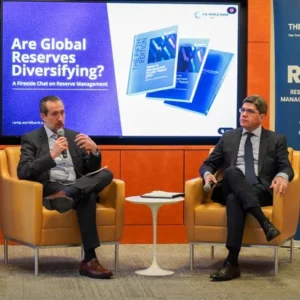
These key themes were highlighted during a panel discussion at the annual Science Forum South Africa on November 24, 2025, in Pretoria. The panel, organized by the International Water Management Institute (IWMI) and the Alliance of Bioversity International and the International Centre for Tropical Agriculture (CIAT), examined the potential of a just transition and peacebuilding in managing the region’s food, land, and water systems.
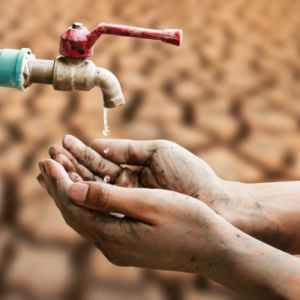
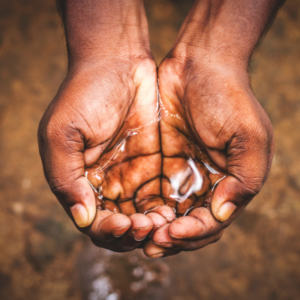
Communities in Southern Africa are increasingly competing for limited water resources. Climate change is altering habitats and forcing people into risky human-wildlife interactions, which drives displacement, insecurity, and deepens poverty, often fueling conflict. Analysis by the World Wildlife Organization, based on over 3,000 community interviews, found that 25% of respondents linked climate change to rising human-wildlife conflicts, while 36% reported increased crop damage from wildlife searching for food.
Ojongetakah Enokenwa Baa, a researcher at IWMI, emphasized that structural inequalities persist when systems operate independently, highlighting the need for intersectional approaches that connect climate, land, livelihoods, and governance. Adapting to climate change requires both resilience and the resolution of social tensions that emerge when resources become scarce, calling for integrated land-use planning that balances ecological preservation with human safety and dignity.
Research from IWMI indicates that achieving poverty reduction goals requires a water-energy-food-environment (WEFE) nexus approach. This method considers water, energy, and food systems together to identify strategies that support energy access and sustainable livelihoods while minimizing negative trade-offs for communities and ecosystems.
Indigenous knowledge plays a crucial role in informing scientific approaches and shaping adaptation decisions. However, top-down and siloed planning often excludes these communities, especially in rural areas, where climate initiatives can feel disconnected from daily struggles. For communities facing energy poverty, immediate access to reliable electricity and clean cooking fuels must be addressed before long-term climate transitions can succeed.
Indigenous communities have generations of experience managing scarce water and land, which can help prevent conflicts that modern policies often overlook. A just transition approach integrates indigenous knowledge with scientific expertise to implement practical climate solutions in resource-scarce landscapes such as those in Southern Africa.
The panel also discussed equity in post-disaster responses, noting that prioritizing infrastructure over supporting displaced communities can inadvertently redistribute vulnerability. Climate frameworks must be gender-responsive, ensuring that a just transition is approached as a moral imperative rather than purely a technical one.
Henry Roman, IWMI’s Regional Representative for Southern Africa, stressed the importance of integrated systems thinking, inclusive governance, and using science and innovation to scale interventions. By collaborating with governments, NGOs, research institutes, and small businesses, isolated interventions and their pitfalls can be avoided.
Researchers emphasized that protecting vulnerable communities and preventing conflict requires climate action that actively includes marginalized groups and avoids policies that create new tensions. In Southern Africa, climate change is a lived reality, and peace will not emerge solely from political agreements but from effective management of stressed land, water, and ecosystems.
Sustainable and resilient food, land, and water systems in Southern Africa depend on people-centered, integrated approaches that dismantle silos, elevate indigenous voices, and ensure inclusive governance. As Decide Mabumbo, senior researcher at IWMI, highlighted, a just transition must be built with communities, not for them, and peace is the result of equitable and inclusive systems.