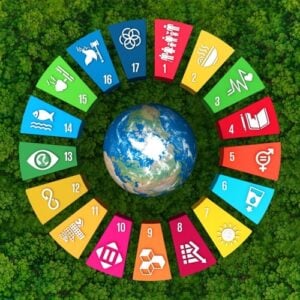
The Joint SDG Fund is the United Nations’ flagship catalytic financing mechanism, designed to accelerate integrated policy reforms and strategic investments that advance the 2030 Agenda for Sustainable Development. Aligned with the UN Secretary-General’s Funding Compact 2.0, the Fund helps countries synchronize national priorities, financing frameworks, and institutional systems with the Sustainable Development Goals (SDGs).
In the Kyrgyz Republic, the Joint SDG Fund supports a Joint UN Programme under the One UN approach to assist the Government in strengthening governance, financing, and service delivery systems aligned with the SDGs. Since 2020, the Fund has contributed USD 1,525,191 to advance integrated national financing, SDG localization, and digital health transformation, in line with national development priorities and sectoral reforms.
Achieving the SDGs in Kyrgyzstan requires coordinated planning, budgeting, and investment decisions across government institutions, alongside effective mobilization of public and private finance. With support from the Joint SDG Fund, UNDP helped the Government operationalize the Integrated National Financing Framework (INFF), a country-led mechanism to align financing flows with national development priorities and SDG targets. The INFF strengthened the link between development planning, fiscal policy, and investment frameworks, directly supporting implementation of the National Development Programme 2030 and related public finance reforms.
The initiative enhanced national capacity to connect development planning, budgeting, and financing policies with SDG targets, improved coordination among government stakeholders responsible for economic policy and investment planning, and strengthened analytical foundations for SDG-aligned financing. It also created a strategic platform for public–private dialogue on SDG-aligned investments, contributing to a more enabling environment for private sector participation in sustainable development.
Local governments are central to delivering SDG outcomes, particularly in urban development, service delivery, climate resilience, and social inclusion. With Joint SDG Fund support, UNDP partnered with UNECE, UN-Habitat, and the Bishkek Mayor’s Office to operationalize the city’s first Voluntary Local Review (VLR). This effort embedded SDG monitoring and evidence-based planning into municipal governance systems, supporting decentralization and ensuring stronger alignment between national strategies and local action.
The VLR initiative in Bishkek moved beyond reporting, positioning it as a living policy tool for urban planning, regulatory reforms, and service delivery improvements. Risk-informed and climate-sensitive territorial analysis was introduced to guide urban expansion, infrastructure planning, emissions management, and fiscal decision-making, while vertical coordination between municipal and national institutions was strengthened to improve alignment with national SDG commitments and the 2030 Agenda.
Digital transformation has been prioritized to improve access, efficiency, and quality of public services in Kyrgyzstan. Through the Joint Programme “Bridging the Digital Health Divide,” implemented by UNDP, UNFPA, and WHO, UNDP supports the Government in strengthening digital health ecosystems with a focus on interoperability, institutional capacity, and accessibility for vulnerable groups.
UNDP’s efforts emphasized system-wide digital integration across health, social protection, and related sectors to reduce administrative barriers and improve service delivery outcomes. Initiatives included supporting the Government Accelerator program on disability certification, transitioning to fully digital processes, and enhancing interoperability between the Ministry of Health and the Ministry of Labour, Social Protection and Migration. These measures improved efficiency, transparency, and service quality for over 50,000 annual disability certification applicants and laid the foundation for a comprehensive digital health roadmap to guide future system integration, connectivity, and resource mobilization.