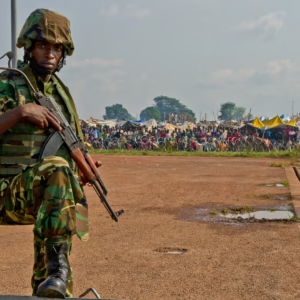
South Sudan, the world’s youngest nation since its independence in 2011, has faced a series of crises that continue to undermine stability. A brutal civil war from 2013 to 2018 killed hundreds of thousands, displaced millions, and devastated the economy. Today, political tensions are rising, violence persists in parts of the country, and repeated climate shocks—including severe flooding—have destroyed crops and livelihoods. Economic collapse has further pushed food prices sky-high, leaving many families unable to afford basic meals. As a result, 10 million people—about 84% of the population—urgently need humanitarian support, with nearly half of South Sudan’s counties projected to face emergency levels of food insecurity.
Years of conflict and instability have disrupted farming, markets, and essential services, while repeated flooding, rising food prices, and an influx of refugees from neighboring Sudan have exacerbated the crisis. These overlapping challenges have placed South Sudan on the International Rescue Committee’s (IRC) 2026 Emergency Watchlist, ranking it third globally in terms of humanitarian risk. The Watchlist highlights the drivers of crisis and the urgent need for lifesaving action. The IRC is actively providing health care, protection, education, and economic recovery support to communities affected by conflict, displacement, and hunger.
The risk of famine is intensifying as families struggle to access sufficient food. The economy shrank by 30% in 2025 alone, making essential food items unaffordable for millions, including Sudanese refugees. Rising insecurity further disrupts aid delivery, and some households are already projected to face famine conditions where death by starvation is a daily reality. IRC South Sudan Country Director Richard Orengo emphasizes that women and children are disproportionately affected, with alarming levels of acute malnutrition observed across the country.
The fragile peace established by the 2018 civil war agreement is under threat. Key commitments—such as security reforms and preparations for national elections—were never fully implemented, and delayed elections combined with economic crisis heighten the risk of renewed conflict. Renewed fighting would likely trigger further displacement, disrupt food production, and hinder humanitarian assistance, worsening the already dire situation.
The civil war in Sudan has compounded South Sudan’s humanitarian crisis, driving over one million refugees into the country. These new arrivals urgently require food, shelter, health care, and protection, placing additional strain on local communities already struggling to meet their own basic needs. The conflict has also caused severe economic consequences, as damage to oil infrastructure in 2024 has driven up costs for families and fueled inflation.
Climate shocks continue to worsen the situation. In 2025, South Sudan experienced its sixth consecutive year of severe flooding, affecting more than 900,000 people. Flooding has contributed to a public health emergency, including a prolonged cholera outbreak of over 100,000 cases, while also devastating agricultural livelihoods that sustain 95% of the population.
The IRC has been a critical presence in South Sudan for over three decades, reaching more than one million people with essential services including health, protection, education, and economic empowerment. Its work helps communities not only survive but rebuild with dignity and resilience, even amid ongoing conflict and environmental shocks. Support from donors is essential for sustaining lifesaving interventions and restoring hope to affected families.
The International Rescue Committee, with over 90 years of experience in humanitarian response across more than 40 countries, continues to provide emergency relief and long-term recovery for refugees, displaced people, and vulnerable communities. Its efforts in South Sudan exemplify the combination of immediate aid and sustainable development needed to address complex humanitarian crises.