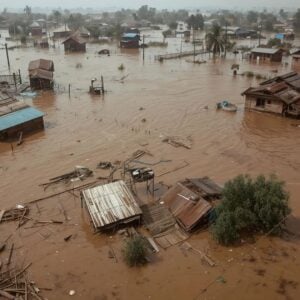
Escalating conflict in eastern Democratic Republic of the Congo (DRC) has intensified the humanitarian crisis, placing children at heightened risk of abuse, exploitation, and long-term trauma. Renewed fighting has triggered mass displacement, weakened protection systems, and worsened poverty, compounding vulnerabilities nationwide. UNICEF has repeatedly called for an immediate cessation of hostilities and unhindered humanitarian access, highlighting that conflict-driven displacement and deprivation are key drivers of violence against children.
The report The Hidden Scars of Conflict and Silence documents sexual violence against children in every province, with the highest incidence in conflict-affected eastern provinces such as North Kivu, South Kivu, and Ituri. Poverty, food insecurity, and school drop-outs have also heightened risks in Kinshasa and the Kasai regions. More than 35,000 cases were recorded in the first nine months of 2025, following nearly 45,000 cases in 2024—almost three times higher than in 2022—accounting for nearly 40 percent of all reported sexual violence cases. UNICEF cautions that the real numbers are likely far higher, as fear, stigma, insecurity, and limited access to services prevent many survivors from reporting abuse.
Survivor testimony underscores both the magnitude of the crisis and the resilience of affected children. Many children describe shame, isolation, and trauma, while still striving to reclaim dignity and hope. Adolescent girls represent the largest and fastest-growing share of reported cases, though boys and children with disabilities are also highly vulnerable, often underrepresented due to stigma and barriers to reporting and accessing care. UNICEF emphasizes that responses must center on survivor resilience and address the entrenched challenges of insecurity, inequality, and weak support systems.
Children themselves have spoken out about the crisis, participating in campaigns such as Prove It Matters to draw attention to their plight. UN Special Representative Vanessa Frazier highlighted that 2024 and 2025 were marked by unprecedented levels of grave violations against children, noting the DRC alongside countries such as Gaza, Haiti, Myanmar, Nigeria, Somalia, Sudan, and Ukraine as contexts with extreme abuse. She called on world leaders to uphold international law, end violations, release children associated with armed groups, and strengthen funding for child protection, justice, and long-term recovery.
Despite efforts by UNICEF and partners to expand assistance—reaching over 24,200 children in 2024—funding cuts and insecurity have forced the scaling back or closure of many safe spaces, mobile clinics, and community-based protection programs. By mid-2025, only 23 percent of gender-based violence interventions were funded, down from 48 percent in 2022, leaving hundreds of thousands of children, including an estimated 300,000 in eastern conflict zones, at risk of losing essential services. Children continue to emphasize that protection is fundamental to securing their futures, highlighting the urgent need for global action.