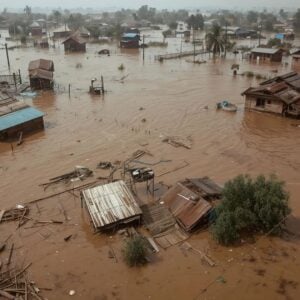
Between June and August 2022, Pakistan experienced unprecedented torrential rains that caused catastrophic flooding, affecting approximately one-third of the country. The floods displaced nearly eight million people, claimed over 1,700 lives, and left 9.6 million children in need of humanitarian assistance. The Post-Disaster Needs Assessment valued the economic losses and damages at around US$30 billion, with severe destruction to housing, infrastructure, and agriculture. The coastal provinces of Baluchistan and Sindh were disproportionately affected, as extensive flooding damaged crops, irrigation systems, and homes, undermining food security and plunging many households into financial distress. Children faced heightened risks, including malnutrition, water-borne diseases, disrupted education, psychosocial trauma, and exposure to exploitation, child labour, and child marriage.
Immediate relief efforts focused on providing shelter, food, clean water, healthcare, and educational support, while long-term recovery required rebuilding homes and livelihoods alongside psychosocial support. To guide recovery, the Government of Pakistan developed the Resilient Recovery, Rehabilitation and Reconstruction Framework (4RF), which promoted a whole-of-society approach to “building back better.”
In response, Save the Children International (SCI) Pakistan, in collaboration with the Tameer-e-Khalq Foundation (TKF), delivered early recovery assistance to highly vulnerable households in the flood-affected districts of Naseerabad and Jaffarabad in Baluchistan, and Khairpur in Sindh. The project prioritized child protection, integrating basic protection principles to ensure that interventions were delivered safely and respectfully. It addressed education impacts through school rehabilitation, development of inclusive and risk-informed school improvement plans, provision of teaching and learning kits, and hygiene promotion sessions. Nearly 4,000 hygiene materials were distributed, and barriers to education were reduced through teacher training and support for transitions from non-formal to formal schooling.
The project also strengthened local child protection capacities and provided multi-purpose cash assistance to food-insecure households, helping families meet basic needs, improve food security, and reduce reliance on negative coping strategies. Child protection referral pathways were developed in collaboration with schools, healthcare facilities, and district administrations. A participatory, child-responsive approach was central to the project, with child protection committees and clubs established in all 27 schools to ensure children, parents, and duty-bearers were actively involved in the design and implementation of protection mechanisms.
The interventions successfully addressed both economic and non-economic losses and damages for over 17,000 children, including supporting 27 schools and returning nearly 870 out-of-school children at risk of child labour to formal education. The project improved public health through hygiene initiatives, strengthened household resilience through cash assistance, and promoted awareness of children’s rights and protection from violence, including child labour and child marriage.
Despite these achievements, the scale of the disaster meant that many children and families remained unreached, and short-term humanitarian funding limited the ability to address both immediate losses and structural vulnerabilities. The overlapping effects of climate hazards, socioeconomic challenges, and lingering impacts of COVID-19 further deepened vulnerability in Sindh and Baluchistan. The experience highlights the urgent need for sustainable, long-term funding and integrated cross-sectoral programming aligned with broader climate action, disaster risk reduction, and resilience-building, while ensuring children’s meaningful participation in accountability and decision-making processes.
Shahid’s story from Khairpur illustrates the transformative impact of the intervention: previously forced into child labour due to the floods destroying his home and school, he was enrolled in a non-formal education program, provided school supplies, and supported by cash assistance for his family. This enabled him to return to school, catch up academically, and pursue his dreams, while his parents were motivated to prioritize education for all their children, breaking the cycle of child labour.