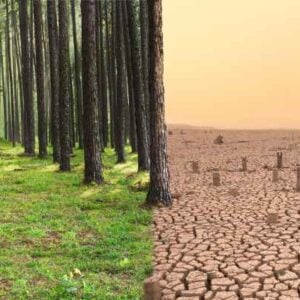
Climate change has emerged as a pressing economic and financial threat, no longer confined to environmental concerns. In Asia and the Pacific, nearly 85 per cent of people are projected to face multiple climate hazards even under the targeted 1.5°C warming scenario. Mongolia exemplifies these vulnerabilities, ranking 19th out of 171 countries on the Global Climate Risk Index for 1993–2022 and experiencing repeated catastrophic events, including the 2009–2010 dzud that killed over 8.5 million livestock and caused $287 million in losses, and the 2023 dzud and floods that affected thousands of households and over 100,000 people in Ulaanbaatar and surrounding areas. These events illustrate the compounding and escalating nature of climate hazards.
Mongolia’s financial system faces dual pressures from physical climate risks and transition risks. Acute hazards such as floods, droughts, and dzuds, alongside chronic shifts in rainfall and temperature, threaten pastoral agriculture and infrastructure. Rapid snowmelt and increased precipitation have intensified flood events, while droughts undermine pastureland productivity and water supplies. Transition risks are rising as the global shift to low-carbon development affects Mongolia’s carbon-intensive sectors. Policies targeting emissions reductions could impact agriculture, while declining global demand for coal and structural changes in the energy sector pose significant challenges to economic stability.
These climate hazards translate directly into financial risks for banks, insurers, and the broader financial system. When herders lose livestock or crops fail, defaults on loans increase, infrastructure damage undermines property values, and business disruptions raise credit losses. Climate shocks in Mongolia are estimated to cost $0.43 billion annually—over 3 per cent of GDP—demonstrating a substantial drain on development gains. Banks’ loan portfolios are concentrated in climate-sensitive sectors, with 17 per cent of loans in real estate and construction and 5 per cent in agriculture, highlighting the potential for cascading losses. Effective risk management requires mapping collateral, borrowers, and grazing areas against hazard indices and integrating early-warning systems, livestock insurance, and contingency credit lines.
In response, the Bank of Mongolia and ESCAP conducted an in-depth study on climate risks in the financial sector, combining national data analysis, stakeholder interviews, and input from development partners. Their report, Climate Change Risks and Impact on Mongolia’s Financial Sector, aims to strengthen the central bank’s capacity to manage climate risks and align financial stability efforts with global climate commitments and the Sustainable Development Goals.
The report outlines a practical agenda for supervisors and financial institutions. It recommends integrating climate risk into financial supervision, embedding climate considerations in risk assessments, and updating prudential regulations. Decision-grade stress tests using NGFS-aligned scenarios are advised to evaluate potential losses by sector and region, combining scenario outputs with geo-referenced collateral data. Strengthening data systems, improving disclosure practices, and promoting peer learning are also highlighted. Finally, targeted financing for adaptation—such as herder resilience investments, index-based livestock insurance, and flood-resilient urban retrofits—can reduce vulnerability and protect economic growth. By implementing these measures, Mongolia and other nations can safeguard financial systems against climate shocks while promoting sustainable development.