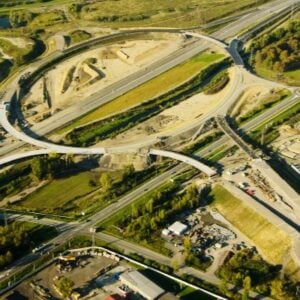
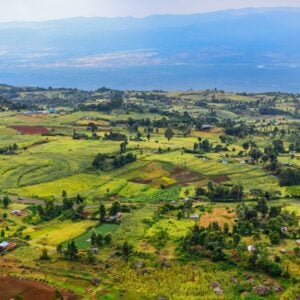
The UN Decade of Sustainable Transport highlights the crucial role of transport in achieving the UN’s 17 Sustainable Development Goals, emphasizing the need for coordinated, cross-sector action. To support this initiative, organizations were invited to submit voluntary Sustainable Transport Action Commitments—practical measures aimed at transforming global transport practices. WWF, in collaboration with the Asian Development Bank and the United Nations Development Programme, submitted a commitment to integrate biodiversity considerations into transportation infrastructure planning, aiming to influence decisions from the earliest stages of project development. This approach seeks to balance development needs with conservation priorities, ensuring that ecosystems are preserved while infrastructure expands.
Through the Greening Transportation Infrastructure Development (GRID) program, WWF and its partners are promoting nature-positive approaches to infrastructure planning and development globally. GRID focuses on strengthening early-stage planning, supporting policy reform, building institutional capacity, and creating a global knowledge hub. The initiative is designed to help countries design transport systems that minimize climate and biodiversity impacts, enhance resilience, and protect ecosystems while maintaining economic connectivity. According to Nik Sekhran, WWF’s Chief Conservation Officer, integrating biodiversity from the start allows for infrastructure that benefits both communities and wildlife, avoiding the trade-offs that often arise between development and conservation.
GRID also emphasizes global knowledge sharing and on-the-ground action through partnerships worldwide. Between 2025 and 2031, pilot projects in Malaysia, Nepal, the Philippines, Suriname, and Ukraine will showcase sustainable infrastructure planning and delivery, focusing on innovative policies, multi-stakeholder engagement, and ecosystem protection. These efforts aim to demonstrate how infrastructure can be developed in ways that conserve and restore terrestrial, coastal, and marine ecosystems, creating transport networks that are both functional and ecologically responsible.
The urgency of such efforts is underscored by rapid global infrastructure growth. Research projects that by 2050, paved roads alone are expected to increase by 60%, enough to encircle the Earth more than 600 times. Infrastructure decisions made today have long-term implications for ecosystems, economies, and communities. The UN Decade of Sustainable Transport provides a platform to align infrastructure development with climate and biodiversity goals, ensuring that future transport systems support both human and environmental well-being. Mohammed Bakarr from the Global Environment Facility notes that integrating ecosystem-based considerations into planning is essential for meeting human needs while safeguarding nature, and GRID’s initiatives provide the support needed to address these complex challenges.