UN agencies report that conditions in North Darfur and neighbouring Kordofan are deteriorating, with independent human rights experts warning that the collapse of protection following the fall of El Fasher has sharply increased risks for women and children. The Rapid Support Forces (RSF) captured El Fasher, the capital of North Darfur, on 26 October after an 18-month siege that left residents cut off from food, medicine, and other essential supplies. El Fasher had been the government’s last major stronghold in the Darfur region.
The UN World Food Programme (WFP) notes that families fleeing the fighting are now dispersed across five locations around El Fasher, including Tawila, while others have reached more distant areas such as Dabbah in Northern State and even Khartoum. Currently, 1,485 metric tons of food and nutrition supplies—enough for roughly 130,000 people—are being transported to Tawila via the Dabbah Crossing, adding to ongoing support for earlier displaced populations.
Renewed fighting in Kordofan has driven further large-scale displacement. The International Organization for Migration (IOM) reported that over 1,800 people were displaced in South Kordofan on a single day, while nearly 40,000 were uprooted in North Kordofan between 25 October and 18 November. Sudan’s war, which began in April 2023 due to a power struggle between the RSF and the national Sudanese Armed Forces (SAF), has resulted in one of the world’s worst humanitarian crises, with famine, mass displacement, and widespread atrocities.
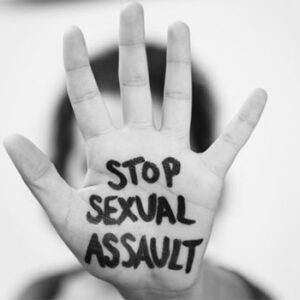
Independent human rights experts have raised alarm over reports of trafficking, sexual exploitation, and the recruitment of children, particularly since the RSF takeover of El Fasher. They noted that women and girls have been abducted, while unaccompanied children are at heightened risk of sexual violence. Since May 2024, more than 470,000 people have been repeatedly displaced from camps such as Shagra, Zamzam, and Abu Shouk. Across Sudan, nearly 12 million people—about half of them children—are either internally displaced or have fled to neighbouring countries, with sexual violence reported in multiple conflict zones. The experts cited incidents near RSF checkpoints and shelters, including the gang-rape of 25 women near El Fasher University, and called for immediate cessation of violations and urgent international action.
In response to the crisis, the UN Secretary-General’s Personal Envoy for Sudan, Ramtane Lamamra, plans to travel to Port Sudan and Addis Ababa to advocate for renewed political dialogue, civilian protection, and unhindered humanitarian access across Darfur and Kordofan.