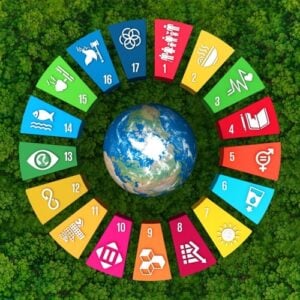
This year marks the tenth anniversary of both the Paris Agreement and the Sustainable Development Goals (SDGs), two landmark international frameworks that are increasingly shaping the economies of the future. Today, local development is inseparable from climate resilience, decarbonization transitions, and environmental sustainability. Countries are now presenting their third generation of Nationally Determined Contributions (NDCs), which go beyond setting decarbonization targets to offer blueprints for strengthening local economies.
When preparing NDCs, governments address three key frontiers: land, energy, and resilience. Land underpins societies, regulating carbon and water cycles, supporting food production, and sustaining rural livelihoods and biodiversity. Sustainable land management therefore advances both climate goals and economic development. For example, Ecuador’s NDC aligns land and forest governance with REDD+ finance, incentivizing farmers to conserve forests and enabling deforestation-free coffee production in partnership with the private sector. Cambodia’s NDC similarly promotes sustainable land use and supports rural communities and Indigenous Peoples. Brazil has launched the Tropical Forest Forever Facility, channeling billions annually to forests while allocating funds directly to Indigenous Peoples and local communities. UNDP’s Forest Guardians Investment Accelerator further promotes equitable partnerships between private companies and Indigenous Peoples to protect forests while supporting local livelihoods.
Energy transitions serve as another critical driver of local development. Shifting to renewable energy reduces emissions while expanding economic opportunities. UNDP and the Pardee Institute estimate that combining renewable energy solutions with SDG-aligned policies could lift tens of millions out of extreme poverty by 2030 and nearly 200 million by 2050, with the largest impact in sub-Saharan Africa. Investments in solar mini-grids, wind, and micro-hydro systems improve energy access, support local enterprises, create jobs, and accelerate low-carbon development, demonstrating the synergy between climate action and economic growth.
Resilience is the third frontier, crucial across all sectors. Climate impacts are intensifying, threatening livelihoods, economies, and GDP. Adaptation measures—from restoring mangroves in Kenya, Vietnam, and Colombia to women-led climate initiatives in India—enhance community resilience while supporting livelihoods. Investment in resilient infrastructure yields substantial returns, with studies showing that every dollar not spent on disaster resilience can result in up to $33 in future losses. Adaptation is thus both a climate necessity and a strategic economic investment.
To integrate climate action with economic development, UNDP promotes three policy methods under the Climate Promise. “Connect” emphasizes cross-sectoral coordination among government ministries and stakeholders to design resilient development pathways. “Include” focuses on engaging local communities, Indigenous Peoples, women, and youth, whose knowledge and leadership enhance climate outcomes, as seen in Ecuador where women’s participation improved forest protection and sustainable farming. “Finance” aligns national budgets, private banks, environmental funds, and philanthropies with climate goals to maximize impact.
The Paris Agreement provides an international blueprint to drive local economies toward a sustainable future. By transforming land management, energy systems, and development finance, it supports economic development, climate adaptation, and environmental sustainability. Its enduring legacy will depend on safeguarding forests, sustaining farms, decarbonizing energy, and building resilient communities that can thrive amid climate challenges.