The World Bank has approved two projects in Tunisia to improve potable water services, modernize irrigated agriculture, and support jobs and livelihoods in rural areas. The projects, financed with a US$332.5 million commitment, form the first phase of the Tunisia Water Security and Resilience Program, addressing both rural and urban water challenges. The program is expected to create over 4,000 permanent jobs and more than 13,000 temporary jobs while helping Tunisia adapt to increasing water scarcity and climate pressures.
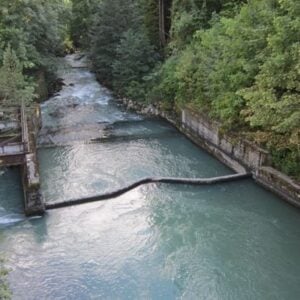
The Irrigation Water Security, Resilience, and Value-Addition Project, funded with US$124 million, will improve irrigation water services, strengthen irrigation operators, and increase crop yields in public irrigation schemes across Jendouba, Béja, Bizerte, and Siliana. The project includes rehabilitating key irrigation infrastructure, enhancing the capacity of regional agricultural offices and local water user groups, and supporting farmers in adopting climate-smart technologies and accessing higher-value markets. It is expected to directly benefit nearly 4,000 farmers through improved irrigation and 9,000 farmers through agricultural extension and value-addition support, generating 3,400 permanent jobs and 7,000 temporary construction jobs.
The Potable Water Security and Resilience Project, financed with US$208.5 million, aims to improve the quality and reliability of potable water services and strengthen the operational performance of SONEDE, the national water utility. Key measures include expanding the Zarat seawater desalination plant in Gabès, deploying 100,000 smart meters, rehabilitating water distribution networks in Sfax, Tozeur, and Kebili, and supporting organizational modernization. The project is expected to benefit 2.3 million people, including 224,000 gaining continuous water supply and 440,000 seeing improved water quality, while creating around 600 permanent jobs and 6,000 temporary jobs.
The Tunisia Water Security and Resilience Program is a Multi-Phase Programmatic Approach with a total financing envelope of US$700 million over 10 years. By sequencing investments across several phases, the program enables Tunisia and the World Bank to diversify water sources, modernize service providers, and scale successful interventions. Phase 1 focuses on potable water and irrigated agriculture, while the next phase will target sanitation, with ONAS, the national sanitation utility, playing a central role in wastewater collection, treatment, and reuse.