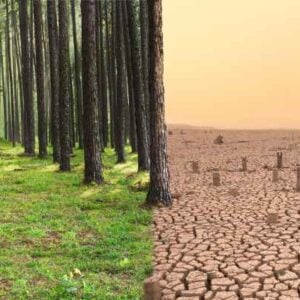
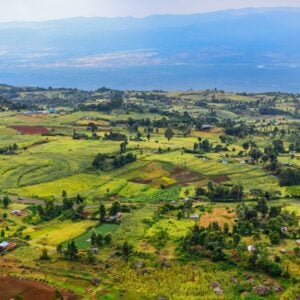
Mamou, Guinea – In response to growing land degradation and climate change impacts, the Food and Agriculture Organization of the United Nations (FAO) launched training sessions on 24 February 2026 to promote assisted natural regeneration (ANR) as a sustainable approach to restore landscapes and enhance ecosystem resilience. The initiative, implemented with the Ministries of Environment and Sustainable Development and Agriculture and financially supported by the Kingdom of Belgium, aims to restore 1,000 hectares of degraded land in Mamou and Kindia while strengthening the capacities of local stakeholders in natural resource management.
The launch brought together local authorities, technical services, agricultural advisors, and producers. Keita Ibrahim, Director of Environment for Mamou Prefecture, highlighted concerns about increasing bushfires, especially in the Kébél classified forest, a critical watershed supplying Guinea’s hydroelectric dams, underscoring the link between landscape restoration, water security, and economic development.
Training sessions combined theoretical instruction with participatory discussions on ANR principles, challenges, and benefits. Participants learned key techniques such as selecting and protecting natural regrowth, sustainable management of on-farm trees, and bushfire prevention. Hands-on fieldwork allowed them to practice plot demarcation, selective pruning, tree marking, and data collection for dendrometric and geographic monitoring.
The programme continued in Kindia, emphasizing practical application and empowering technical staff with tools for field operations, plot monitoring, and improved data quality. Experience-sharing among forestry services, agricultural advisors, and lead farmers strengthened local ownership of ANR as a practical method to restore degraded land, improve soil fertility, and enhance agroforestry resilience to climate shocks.
By promoting ANR as a low-cost, participatory, and replicable nature-based solution, FAO supports Guinea in restoring landscapes while advancing national objectives on climate change adaptation, food security, and integrated natural resource management, offering strong potential for national-scale replication.