• Skip to primary navigation
  • Skip to main content
  • Skip to primary sidebar

fundsforNGOs News

Grants and Resources for Sustainability

  • Subscribe for Free
  • Premium Support
  • Premium Login
  • Premium Sign up
  • Home
  • Funds for NGOs
    • Agriculture, Food and Nutrition
    • Animals and Wildlife
    • Arts and Culture
    • Children
    • Civil Society
    • Community Development
    • COVID
    • Democracy and Good Governance
    • Disability
    • Economic Development
    • Education
    • Employment and Labour
    • Environmental Conservation and Climate Change
    • Family Support
    • Healthcare
    • HIV and AIDS
    • Housing and Shelter
    • Humanitarian Relief
    • Human Rights
    • Human Service
    • Information Technology
    • LGBTQ
    • Livelihood Development
    • Media and Development
    • Narcotics, Drugs and Crime
    • Old Age Care
    • Peace and Conflict Resolution
    • Poverty Alleviation
    • Refugees, Migration and Asylum Seekers
    • Science and Technology
    • Sports and Development
    • Sustainable Development
    • Water, Sanitation and Hygiene (WASH)
    • Women and Gender
  • Funds for Companies
    • Accounts and Finance
    • Agriculture, Food and Nutrition
    • Artificial Intelligence
    • Education
    • Energy
    • Environment and Climate Change
    • Healthcare
    • Innovation
    • Manufacturing
    • Media
    • Research Activities
    • Startups and Early-Stage
    • Sustainable Development
    • Technology
    • Travel and Tourism
    • Women
    • Youth
  • Funds for Individuals
    • All Individuals
    • Artists
    • Disabled Persons
    • LGBTQ Persons
    • PhD Holders
    • Researchers
    • Scientists
    • Students
    • Women
    • Writers
    • Youths
  • Funds in Your Country
    • Funds in Australia
    • Funds in Bangladesh
    • Funds in Belgium
    • Funds in Canada
    • Funds in Switzerland
    • Funds in Cameroon
    • Funds in Germany
    • Funds in the United Kingdom
    • Funds in Ghana
    • Funds in India
    • Funds in Kenya
    • Funds in Lebanon
    • Funds in Malawi
    • Funds in Nigeria
    • Funds in the Netherlands
    • Funds in Tanzania
    • Funds in Uganda
    • Funds in the United States
    • Funds within the United States
      • Funds for US Nonprofits
      • Funds for US Individuals
      • Funds for US Businesses
      • Funds for US Institutions
    • Funds in South Africa
    • Funds in Zambia
    • Funds in Zimbabwe
  • Proposal Writing
    • How to write a Proposal
    • Sample Proposals
      • Agriculture
      • Business & Entrepreneurship
      • Children
      • Climate Change & Diversity
      • Community Development
      • Democracy and Good Governance
      • Disability
      • Disaster & Humanitarian Relief
      • Environment
      • Education
      • Healthcare
      • Housing & Shelter
      • Human Rights
      • Information Technology
      • Livelihood Development
      • Narcotics, Drugs & Crime
      • Nutrition & Food Security
      • Poverty Alleviation
      • Sustainable Develoment
      • Refugee & Asylum Seekers
      • Rural Development
      • Water, Sanitation and Hygiene (WASH)
      • Women and Gender
  • News
    • Q&A
  • Premium
    • Premium Log-in
    • Premium Webinars
    • Premium Support
  • Contact
    • Submit Your Grant
    • About us
    • FAQ
    • NGOs.AI
You are here: Home / cat / Supply Chain Disruptions Fuel Tomorrow’s Hunger Crisis

Supply Chain Disruptions Fuel Tomorrow’s Hunger Crisis

Dated: April 1, 2026

The World Food Programme (WFP) has warned that current global supply chain disruptions caused by the conflict in the Middle East could trigger a major hunger crisis in the months ahead. Speaking at a press briefing in Geneva, WFP Director of Supply Chain Corinne Fleischer described the situation as the most serious disruption to humanitarian supply chains since the COVID-19 pandemic and the early stages of the war in Ukraine. According to WFP, around 70,000 metric tons of food intended for life-saving operations worldwide have already been affected, with roughly half on chartered bulk vessels and the other half in containers that are either delayed in transit or stuck in ports.

Although WFP does not currently have vessels passing directly through the Strait of Hormuz, the organization says it is being heavily impacted by the wider consequences of instability in the region. Congestion at ports, delayed berthing, and difficulties in offloading containers are creating a ripple effect across global shipping networks. This is reducing container availability, misplacing equipment, and disrupting cargo movement well beyond the Middle East. WFP noted that after COVID-19, it took four to five months for supply chains to stabilize, and the current situation may lead to even longer-term delays, higher transport costs, and extended lead times.

The disruption is having a particularly strong impact on food deliveries to Africa. With many carriers avoiding the Suez Canal and the Red Sea, ships are being rerouted around the Horn of Africa and the Cape of Good Hope to reach Eastern Africa. This alternative route adds approximately 25 to 30 days to shipping times and increases freight rates by 15 to 25 percent due to longer distances, higher fuel consumption, and more expensive fuel. These changes are placing added strain on humanitarian operations that depend on timely and affordable deliveries.

In response, WFP is working directly with shipping companies and vessel owners to secure priority treatment for humanitarian cargo. As the only United Nations agency with its own shipping department, WFP is using its direct relationships with carriers to protect critical food deliveries. The agency has also negotiated waivers on emergency surcharges imposed by shipping lines and ports in high-risk areas of the Middle East. These surcharges, which ranged from $2,000 to $4,000 per container, could have added roughly $200 per metric ton, but their removal has already helped WFP avoid around $1.5 million in extra costs.

WFP is also rerouting shipments to keep supplies moving, even when this significantly increases costs and delivery times. In one example, food bound for Afghanistan had to be diverted multiple times due to regional instability. After supply routes from Pakistan were disrupted, cargo was redirected through Iran, but when conflict escalated there, it was rerouted again to Jebel Ali in Dubai. From there, the food will now travel by land through Saudi Arabia, Jordan, Syria, Turkey, Azerbaijan, Turkmenistan, and finally into Afghanistan. This alternative route adds around €1,000 per ton and about three extra weeks, but WFP says it may help establish a new land corridor if the crisis continues.

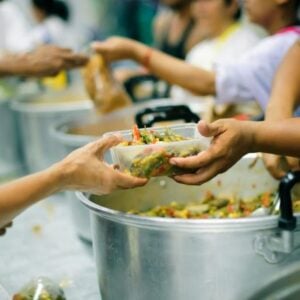
Beyond the immediate logistics challenges, WFP is deeply concerned about the broader humanitarian consequences of rising transport costs and supply delays. The agency stressed that the greatest impact will fall on low-income families who already spend between 50 and 70 percent of their income on food. If the cost of living continues to rise, millions may no longer be able to afford enough to eat. WFP estimates that if the current disruptions continue through June, the number of acutely hungry people worldwide could increase by 45 million, rising from 318 million to 363 million.

The organization also warned that this crisis is unfolding at a time when humanitarian funding is already under severe pressure. With more people in need, higher operational costs, and fewer resources available, WFP fears it may struggle to reach vulnerable populations. Early signs of this pressure are already visible, with local transport costs in Lebanon rising by 45 percent and delivery costs for Afghanistan tripling due to rerouting. WFP says these increases are likely to translate into higher food prices more broadly, making global food insecurity even worse if disruptions persist.


Related Posts

  • Myanmar Earthquake Survivors Face Hunger Amid New Global Shocks
  • Nutrition North Canada Strengthens Northern Food Security
  • Local Food Procurement Boosts Schools, Hospitals, and Public Services
  • Yemen Faces Famine After 11 Years of Crisis
  • Canada Funds 9 Indigenous Projects to Boost Northern Food Security

Primary Sidebar

Latest News

ILO Project Boosts ESG and Responsible Business Capacity in Lao PDR

Indonesia: Inclusive Finance Drives Growth in Patchouli Industry and MSMEs

ILO Supports Lao Academia to Embed Responsible Business Practices in Higher Education

World Bank, AfDB Launch Mission 300 Council to Boost Energy Access and Jobs in Africa

$501M World Bank Investment to Enhance Learning and Workforce Skills in El Salvador

World Bank Backs MSMEs in El Salvador with $100M Financing for Job Creation

Nigeria Secures $500 Million World Bank Funding to Boost Agriculture and Create Jobs

World Bank Backs $8.3 Billion Rail Mega Project to Boost Türkiye’s Global Logistics Role

$550M World Bank Investment to Strengthen Skills, Jobs, and Social Protection in Tanzania

Supply Chain Disruptions Fuel Tomorrow’s Hunger Crisis

Fortified Rice Initiative Launched for Cambodia Factory Workers

ADB Promotes Green Mortgages for Women in Kazakhstan

AfDB Invests €7.5 Million in Breega Africa Seed I Fund

African Development Bank Invests $15M in SPE PEF III

Parliament Urged to Act on Fuel Crisis Immediately

Legal Aid and Forced Displacement in Latin America: Why It Matters

New Danish Refugee Council Program Backed by Coca-Cola Foundation

Madagascar Crisis: Youth-Led Revolution Gives Way to Repression and Military Control

Small-Scale Green Projects in Poland Get Boost from EIB and Santander

Free Speech at Risk? Zimbabwe Public Hearings Raise Human Rights Concerns

Israel Expands Death Penalty Powers, Sparks Global Human Rights Concerns

Baltic Microenterprises Receive €15M Boost via EIF-Backed Capitalia Initiative

New GCF Regional Offices Aim to Improve Climate Funding Access Worldwide

MC14 Concludes with Joint Ministerial Declaration from IFD Members

UK Invests £950,000 to Boost Global Trade Facilitation Programme (2026–2029)

Global Food Security at Risk as Fertilizer Trade Faces Disruption from Hormuz Crisis

Strategic Property Sale Approved by Maitland City Council

€19M Annual Aid Reinstated: Netherlands Backs UNRWA Despite Political Opposition

GIP+ Initiative Strengthens UK-Philippines Economic Ties

Enhancing Education: UK-Philippines EdTech Partnership

New UK Funding Model Sparks Concerns Over Loss of Critical Youth Services

EIB and Santander Unlock PLN 860 Million for Green Energy Projects in Poland

Paris and London Strengthen Food Security and Cooperation

Local Food Procurement Boosts Schools, Hospitals, and Public Services

UK Plans Industry Training Board Changes to Improve Workforce Skills

Water Network Inspections Reach 10,000 Health Checks

New Recycling Rules Now in Effect Across England

Rising Costs Leave Developing Nations Priced Out of Finance

New Ontario Law Targets More Homes and Improved Transit

New Long-Term Care Home Finished in Toronto by Ontario

Funds for NGOs
Funds for Companies
Funds for Media
Funds for Individuals
Sample Proposals

Contact us
Submit a Grant
Advertise, Guest Posting & Backlinks
Fight Fraud against NGOs
About us

Terms of Use
Third-Party Links & Ads
Disclaimers
Copyright Policy
General
Privacy Policy

Premium Sign in
Premium Sign up
Premium Customer Support
Premium Terms of Service

©FUNDSFORNGOS LLC.   fundsforngos.org, fundsforngos.ai, and fundsforngospremium.com domains and their subdomains are the property of FUNDSFORNGOS, LLC 1018, 1060 Broadway, Albany, New York, NY 12204, United States.   Unless otherwise specified, this website is not affiliated with the abovementioned organizations. The material provided here is solely for informational purposes and without any warranty. Visitors are advised to use it at their discretion. Read the full disclaimer here. Privacy Policy. Cookie Policy.