The United Nations World Food Programme (WFP), in partnership with the Royal Government of Cambodia and with financial support from the Government of Japan, has launched a new initiative to improve nutrition among garment factory workers by expanding access to fortified rice. Backed by a $1.5 million contribution from Japan, the five-year project is expected to benefit more than 50,000 workers across 118 garment and textile factories located in the Royal Group Phnom Penh and Kandal Special Economic Zones.
Officially launched at the Phnom Penh Special Economic Zone, the initiative, titled Breaking the Cycle of Malnutrition in Cambodia: Fortifying the Food Plate of Garment Factory Workers, is designed to tackle micronutrient deficiencies and improve workers’ overall health and productivity. The project reflects a practical response to widespread nutrition challenges in Cambodia’s garment sector, which is a major contributor to the national economy and employs hundreds of thousands of workers.
Many garment workers in Cambodia, especially women, face high rates of malnutrition, including anaemia and other micronutrient deficiencies. These nutritional gaps affect not only their health and wellbeing but also their productivity, income, and long-term economic security. By targeting this workforce, the initiative seeks to strengthen both individual livelihoods and broader national development outcomes.
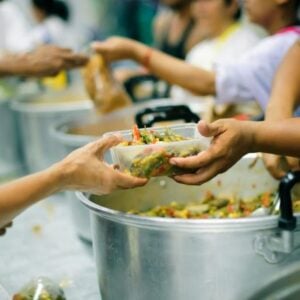
Under the project, fortified rice will be introduced into factory meal programmes so that workers can receive essential vitamins and minerals as part of their daily diets. Since rice is the country’s main staple food, fortification offers a practical and cost-effective solution that improves nutrition without requiring major changes to existing eating habits. This approach is intended to make healthier diets more accessible in a familiar and sustainable way.
The initiative will also work with factory owners, food suppliers, producers, millers, and other national stakeholders to integrate fortified rice into workplace meal systems, strengthen supply chains, improve quality assurance for fortified foods, and build awareness among workers about the importance of better nutrition. In addition, WFP will collaborate with partners such as FAO, WHO, and UNICEF, along with government agencies and private sector actors, to ensure coordinated and sustainable implementation.
Overall, the project is expected to become a model for expanding food fortification across Cambodia’s wider food systems. By improving the nutrition of garment workers, the initiative supports healthier communities, stronger productivity, and more inclusive economic growth, while also contributing to national efforts to reduce malnutrition and build long-term resilience.