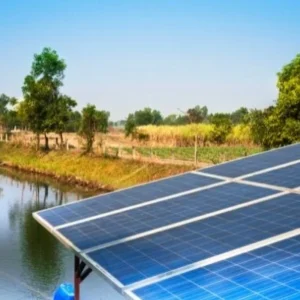
The Vanuatu Energy Resilience Project (VERP) has progressed from planning to field implementation, with technical experts from the Department of Energy (DoE) and UNDP conducting on-site assessments in mid-February to safeguard critical solar infrastructure using Nature-based Solutions (NbS). Launched in July 2025 and funded by CDRI, the project aims to enhance the durability of renewable energy systems in one of the world’s most disaster-prone countries.
During the field mission, the team, including Julius Mala (DoE), Muhan Maskey, and Joel Galeb, visited three key sites across Efate, Nguna, and Pele Islands: the Port Vila Fish Market Mini Grid, Utanlang Village Micro Grid, and Tangovawia School Micro Grid. The assessments focused on identifying site-specific vulnerabilities such as salt spray, erosion, and flooding that could compromise the longevity of solar energy systems.
The technical inspection included evaluating solar PV systems, structures, and fencing for exposure to extreme weather. Environmental mapping documented vegetation cover and natural water flow to identify areas where NbS interventions, like coastal buffers, windbreaks, and bioswales, could provide protection. The team also engaged local communities to integrate traditional ecological knowledge and historical hazard insights, ensuring that designs respond to both technical and local realities.
Based on a structured multi-criteria analysis, the project will prioritize funding for NbS measures, including erosion control planting and windbreaks, to create a physical protective layer for mini and micro grids. These interventions are intended to sustain community-managed energy infrastructure over the long term by embedding risk-informed approaches into the Department of Energy’s standard operational workflows.