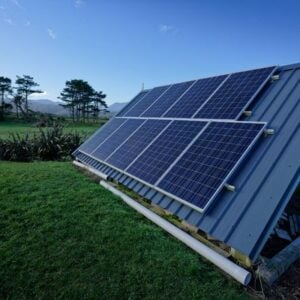
In Madagascar’s coastal villages, women trained through the Barefoot College National Programme, with support from WWF, are bringing solar-powered light to remote stilted homes, transforming both living conditions and opportunities for communities. In villages like Andavoanemboka, families live above rising tides in wooden huts, relying on mangroves for protection against flooding and storms. Solar technicians such as Henriette Mahafeno have emerged as agents of change, applying skills learned at the Barefoot College Training Centre to install, maintain, and repair solar systems, while also gaining lessons in women’s empowerment and reproductive rights.
Through these efforts, 165 out of 210 households in Mahafeno’s village now have access to safe, reliable electricity, replacing hazardous candles and costly battery-powered lights. The solar initiative has improved education, enabling children to study at night, enhanced safety by illuminating homes, and supported economic activities like fish preparation. So far, 131 rural women across 21 villages have been trained, benefiting hundreds of thousands of people and strengthening community resilience.
In southern Madagascar, the village of Lanirano also saw electrification through the programme, improving children’s learning, household security, and economic efficiency by reducing reliance on kerosene and batteries. Families report significant cost savings and improved quality of life, while the community collectively participates in local electricity associations to sustain these benefits.
Beyond immediate lighting, the initiative fosters long-term development. Mahafeno envisions better educational outcomes for her children and hopes to pursue entrepreneurial opportunities herself. Since 2017, the Malagasy Ministry of Energy and Hydrocarbons, Barefoot College Madagascar, and WWF have developed training centres and curricula to equip rural women with solar technology skills. The programme, under WWF’s Energizing Communities and Conservation initiative, plans to expand to solar-powered services beyond lighting, including water pumps, further enhancing access, safety, and opportunity in Madagascar’s remote coastal communities.