• Skip to primary navigation
  • Skip to main content
  • Skip to primary sidebar

fundsforNGOs News

Grants and Resources for Sustainability

  • Subscribe for Free
  • Premium Support
  • Premium Login
  • Premium Sign up
  • Home
  • Funds for NGOs
    • Agriculture, Food and Nutrition
    • Animals and Wildlife
    • Arts and Culture
    • Children
    • Civil Society
    • Community Development
    • COVID
    • Democracy and Good Governance
    • Disability
    • Economic Development
    • Education
    • Employment and Labour
    • Environmental Conservation and Climate Change
    • Family Support
    • Healthcare
    • HIV and AIDS
    • Housing and Shelter
    • Humanitarian Relief
    • Human Rights
    • Human Service
    • Information Technology
    • LGBTQ
    • Livelihood Development
    • Media and Development
    • Narcotics, Drugs and Crime
    • Old Age Care
    • Peace and Conflict Resolution
    • Poverty Alleviation
    • Refugees, Migration and Asylum Seekers
    • Science and Technology
    • Sports and Development
    • Sustainable Development
    • Water, Sanitation and Hygiene (WASH)
    • Women and Gender
  • Funds for Companies
    • Accounts and Finance
    • Agriculture, Food and Nutrition
    • Artificial Intelligence
    • Education
    • Energy
    • Environment and Climate Change
    • Healthcare
    • Innovation
    • Manufacturing
    • Media
    • Research Activities
    • Startups and Early-Stage
    • Sustainable Development
    • Technology
    • Travel and Tourism
    • Women
    • Youth
  • Funds for Individuals
    • All Individuals
    • Artists
    • Disabled Persons
    • LGBTQ Persons
    • PhD Holders
    • Researchers
    • Scientists
    • Students
    • Women
    • Writers
    • Youths
  • Funds in Your Country
    • Funds in Australia
    • Funds in Bangladesh
    • Funds in Belgium
    • Funds in Canada
    • Funds in Switzerland
    • Funds in Cameroon
    • Funds in Germany
    • Funds in the United Kingdom
    • Funds in Ghana
    • Funds in India
    • Funds in Kenya
    • Funds in Lebanon
    • Funds in Malawi
    • Funds in Nigeria
    • Funds in the Netherlands
    • Funds in Tanzania
    • Funds in Uganda
    • Funds in the United States
    • Funds within the United States
      • Funds for US Nonprofits
      • Funds for US Individuals
      • Funds for US Businesses
      • Funds for US Institutions
    • Funds in South Africa
    • Funds in Zambia
    • Funds in Zimbabwe
  • Proposal Writing
    • How to write a Proposal
    • Sample Proposals
      • Agriculture
      • Business & Entrepreneurship
      • Children
      • Climate Change & Diversity
      • Community Development
      • Democracy and Good Governance
      • Disability
      • Disaster & Humanitarian Relief
      • Environment
      • Education
      • Healthcare
      • Housing & Shelter
      • Human Rights
      • Information Technology
      • Livelihood Development
      • Narcotics, Drugs & Crime
      • Nutrition & Food Security
      • Poverty Alleviation
      • Sustainable Develoment
      • Refugee & Asylum Seekers
      • Rural Development
      • Water, Sanitation and Hygiene (WASH)
      • Women and Gender
  • News
    • Q&A
  • Premium
    • Premium Log-in
    • Premium Webinars
    • Premium Support
  • Contact
    • Submit Your Grant
    • About us
    • FAQ
    • NGOs.AI
You are here: Home / cat / UNICEF Report: Four Years of War Leave 1 in 3 Ukrainian Children Displaced

UNICEF Report: Four Years of War Leave 1 in 3 Ukrainian Children Displaced

Dated: February 18, 2026

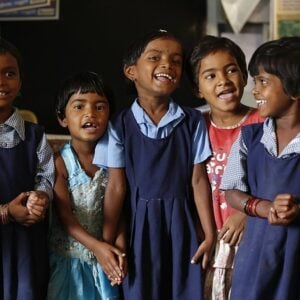
UNICEF has reported that over a third of Ukraine’s children—approximately 2,589,900—remain displaced as the war enters its fifth year. This includes more than 791,000 children displaced within Ukraine and nearly 1,798,900 living as refugees abroad. The ongoing conflict continues to threaten their safety, with attacks on civilian areas following many of these children even after they have fled their homes.

Many children have been forced to move multiple times. A recent UNICEF survey found that one in three adolescents aged 15–19 has relocated at least twice, primarily due to safety concerns. Since the start of the war on 24 February 2022, bombardments, including intensified long-range strikes, have killed or injured over 3,200 children. Child casualties increased by 10% in 2025 compared to 2024, marking the third consecutive year of rising UN-verified casualties.

Critical services for children have been severely disrupted. More than 1,700 schools and other educational facilities have been damaged or destroyed, leaving one in three children unable to attend in-person schooling full-time. Attacks on energy infrastructure have also forced millions of children and families to endure extreme cold without heating, electricity, or water. Babies and young children face heightened risks of respiratory illnesses and hypothermia, while nearly 200 medical facilities were reported damaged or destroyed in 2025, hampering health services.

The prolonged conflict has also taken a significant toll on children’s mental health. Constant fear of attacks, extended periods in shelters, and social isolation have left many adolescents struggling emotionally. UNICEF surveys indicate that one in four adolescents aged 15–19 is losing hope for a future in Ukraine, highlighting the urgent need for safe spaces, stability, and access to essential services.

To respond to these challenges, UNICEF has been working both within Ukraine and in neighboring countries to provide life-saving assistance. Programs focus on access to safe water, healthcare, nutrition, education, child protection, and mental health and psychosocial support. UNICEF is also helping to repair and rehabilitate schools, health facilities, and water systems damaged by the conflict.

In 2025, UNICEF reached 7 million people, including 2.5 million children, with humanitarian support. Its recovery programming, conducted in partnership with national and local authorities, strengthened social services for approximately 9.8 million people across Ukraine. UNICEF emphasizes that obligations under international humanitarian law must be respected and that every child has the right to grow up safely, free from harm and without exception.
Related Posts

  • Protecting Children During War Key to Sustainable Peace, UN Official Says
  • DR Congo Children Reveal Abduction and Violence in Armed Groups, Urgent Action Needed
  • Understanding the Triple Burden of Malnutrition in India’s Children
  • 2026 Bridge Funding Opportunity: Stabilizing Local Nonprofits in Bloomington
  • New Initiative by Education Cannot Wait to Boost Education Amid Eastern DRC Crisis

Primary Sidebar

Latest News

FAO Expands Cash Support to Gaza Farmers, Urges Input Import Liberalization

Eastern Africa Sets Roadmap to Accelerate Agrifood Systems Transformation

WHO Cyprus Initiative Delivers First Emergency Aid Shipment to Gaza

Ghana Targets High-Risk Districts to Strengthen Cholera Prevention

Ghana Strengthens Health Security with NAPHS Prioritisation Workshop

Burkina Faso Conflict: Report Accuses All Sides of War Crimes and Ethnic Cleansing

EU “Digital Omnibus” Plans Raise Concerns Over AI, Privacy, and Human Rights

EU Urged to Act After Israel Approves Controversial Death Penalty Law

Guterres Warns of Wider War as Middle East Conflict Escalates

Global Crisis Update: South Sudan Rights, WHO Opioid Guidelines, DR Congo Violence

Lao Businesses Prepare for LDC Graduation Amid Trade and Market Changes

ILO and UNHCR Strengthen Partnership in Türkiye for Refugee Jobs and Inclusion

Moldova TVET Schools Lead Green Transition Through EcoImpact Initiative

Yerevan Meeting Highlights Rights and Protection for Domestic Workers

Cameroon Recycling Initiative Turns Waste into Jobs and Sustainable Growth

Sri Lanka and World Bank Launch Partnership to Boost Jobs and Private Investment

Zambia Climate Resilience Report Highlights Growth, Jobs, and Poverty Reduction Opportunities

Sustainable Growth in the Land of a Thousand Hills

EIC Funds €118M for 30 Breakthrough Research Projects

Rethinking Purpose in Later Life for Healthy Longevity

Global Lessons for the Future of Social Care

Private Sector Lessons from FAIR for ALL Programme

Maharashtra Village Restores Mangrove Forests

Rwanda’s Withdrawal from Cabo Delgado: Key Lessons

FAO Warns of Global Food Risks from Strait of Hormuz Disruption

Filipino Food Month 2026 Launched in the Philippines with Culinary Showcases

FAO Promotes Assisted Natural Regeneration in Guinea

Nigeria Boosts Tuberculosis Detection Efforts Nationwide

Safer Food Through Cleaner Markets in Cameroon

Long‑Acting HIV Prevention Introduced in Nigeria to Strengthen Response

Ethiopia Marks World TB Day 2026, Pledges to End Tuberculosis

Seeking Case Studies on Integrated HIV, TB, Hepatitis and STI Care

Asia’s Plastic Waste Solutions Backed by New Investment Fund

Invest in Peace, Invest in Mine Action

Coca-Cola to Invest $1 Billion in South Africa by 2030

IFAD and Bank of Uganda Launch Remittance Dashboard

Mission 300 Forms Council to Expand Electricity Access in Africa

EU Announces Additional €2 Million Aid for Cuba

UNEP FI Makes Climate Data Accessible for Financial Institutions

Türkiye Continues UNDP Partnership on Sustainable Development

Funds for NGOs
Funds for Companies
Funds for Media
Funds for Individuals
Sample Proposals

Contact us
Submit a Grant
Advertise, Guest Posting & Backlinks
Fight Fraud against NGOs
About us

Terms of Use
Third-Party Links & Ads
Disclaimers
Copyright Policy
General
Privacy Policy

Premium Sign in
Premium Sign up
Premium Customer Support
Premium Terms of Service

©FUNDSFORNGOS LLC.   fundsforngos.org, fundsforngos.ai, and fundsforngospremium.com domains and their subdomains are the property of FUNDSFORNGOS, LLC 1018, 1060 Broadway, Albany, New York, NY 12204, United States.   Unless otherwise specified, this website is not affiliated with the abovementioned organizations. The material provided here is solely for informational purposes and without any warranty. Visitors are advised to use it at their discretion. Read the full disclaimer here. Privacy Policy. Cookie Policy.