On a crisp September morning, staff from the Maryland Department of Natural Resources (DNR) and the U.S. Fish and Wildlife Service gathered at a Wildlife Management Area to witness a historic conservation event. Small, yellow-green fish with dark stripes, blackbanded sunfish, were carefully released from five-gallon tanks into a pond, marking the first time captive-bred individuals of this rare species were returned to the wild in Maryland. This milestone represents the culmination of nearly two decades of strategic efforts, supported by multiple partners, State Wildlife Grants, and a 2024 Chesapeake WILD Program grant.
The blackbanded sunfish depends on “blackwater” habitats—acidic, nutrient-poor wetlands historically abundant in Maryland’s coastal plain. Over the centuries, these habitats were drained, leaving isolated pockets unable to sustain populations. Maryland DNR has since worked regionally to survey, restore, and protect suitable habitat while devising a captive propagation program to augment the small, inbred local population.
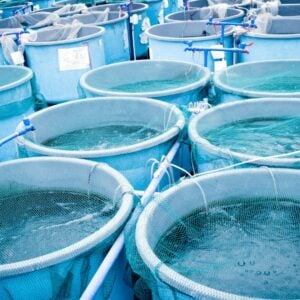
Recognizing that healthy populations existed in New Jersey’s Pinelands, Maryland biologists collaborated with the National Aquarium in Baltimore and New Jersey Fish and Wildlife to collect broodstock from robust populations. Early propagation attempts failed due to the species’ need for acidic, tannic water and precise environmental conditions. Overcoming challenges from facility changes and the COVID-19 pandemic, aquarium staff eventually developed specialized tank systems replicating blackwater conditions, controlling pH, temperature, light, and organic material to support fish health and breeding.
In September 2024, 40 blackbanded sunfish were collected from New Jersey, acclimated, and successfully propagated in state and aquarium facilities. By September 2025, state hatcheries produced healthy offspring, 39 of which survived captivity and were ready for release into restored Maryland habitats. Concurrent habitat restoration efforts, funded in part by Chesapeake WILD grants, included planting 1,500 Atlantic white cedar trees and restoring hydrology and native vegetation in blackwater wetlands at The Nature Conservancy’s Plum Creek Preserve.
This coordinated, decades-long, multi-partner effort demonstrates significant progress in conserving the blackbanded sunfish. While establishing robust populations across Maryland’s ponds, streams, and rivers remains a long-term goal, the recent releases and habitat improvements provide momentum for ongoing recovery and highlight the impact of targeted conservation funding and collaboration.