• Skip to primary navigation
  • Skip to main content
  • Skip to primary sidebar

fundsforNGOs News

Grants and Resources for Sustainability

  • Subscribe for Free
  • Premium Support
  • Premium Login
  • Premium Sign up
  • Home
  • Funds for NGOs
    • Agriculture, Food and Nutrition
    • Animals and Wildlife
    • Arts and Culture
    • Children
    • Civil Society
    • Community Development
    • COVID
    • Democracy and Good Governance
    • Disability
    • Economic Development
    • Education
    • Employment and Labour
    • Environmental Conservation and Climate Change
    • Family Support
    • Healthcare
    • HIV and AIDS
    • Housing and Shelter
    • Humanitarian Relief
    • Human Rights
    • Human Service
    • Information Technology
    • LGBTQ
    • Livelihood Development
    • Media and Development
    • Narcotics, Drugs and Crime
    • Old Age Care
    • Peace and Conflict Resolution
    • Poverty Alleviation
    • Refugees, Migration and Asylum Seekers
    • Science and Technology
    • Sports and Development
    • Sustainable Development
    • Water, Sanitation and Hygiene (WASH)
    • Women and Gender
  • Funds for Companies
    • Accounts and Finance
    • Agriculture, Food and Nutrition
    • Artificial Intelligence
    • Education
    • Energy
    • Environment and Climate Change
    • Healthcare
    • Innovation
    • Manufacturing
    • Media
    • Research Activities
    • Startups and Early-Stage
    • Sustainable Development
    • Technology
    • Travel and Tourism
    • Women
    • Youth
  • Funds for Individuals
    • All Individuals
    • Artists
    • Disabled Persons
    • LGBTQ Persons
    • PhD Holders
    • Researchers
    • Scientists
    • Students
    • Women
    • Writers
    • Youths
  • Funds in Your Country
    • Funds in Australia
    • Funds in Bangladesh
    • Funds in Belgium
    • Funds in Canada
    • Funds in Switzerland
    • Funds in Cameroon
    • Funds in Germany
    • Funds in the United Kingdom
    • Funds in Ghana
    • Funds in India
    • Funds in Kenya
    • Funds in Lebanon
    • Funds in Malawi
    • Funds in Nigeria
    • Funds in the Netherlands
    • Funds in Tanzania
    • Funds in Uganda
    • Funds in the United States
    • Funds within the United States
      • Funds for US Nonprofits
      • Funds for US Individuals
      • Funds for US Businesses
      • Funds for US Institutions
    • Funds in South Africa
    • Funds in Zambia
    • Funds in Zimbabwe
  • Proposal Writing
    • How to write a Proposal
    • Sample Proposals
      • Agriculture
      • Business & Entrepreneurship
      • Children
      • Climate Change & Diversity
      • Community Development
      • Democracy and Good Governance
      • Disability
      • Disaster & Humanitarian Relief
      • Environment
      • Education
      • Healthcare
      • Housing & Shelter
      • Human Rights
      • Information Technology
      • Livelihood Development
      • Narcotics, Drugs & Crime
      • Nutrition & Food Security
      • Poverty Alleviation
      • Sustainable Develoment
      • Refugee & Asylum Seekers
      • Rural Development
      • Water, Sanitation and Hygiene (WASH)
      • Women and Gender
  • News
    • Q&A
  • Premium
    • Premium Log-in
    • Premium Webinars
    • Premium Support
  • Contact
    • Submit Your Grant
    • About us
    • FAQ
    • NGOs.AI
You are here: Home / cat / How a Just Transition Could Transform Food, Land, and Water in Southern Africa

How a Just Transition Could Transform Food, Land, and Water in Southern Africa

Dated: February 10, 2026

To address Southern Africa’s food, land, and water inequalities, it is essential to first listen to local communities and resolve the conflicts that divide them. Effective solutions require cooperation among diverse actors, meaningful participation from indigenous communities, and strong governance systems.

These key themes were highlighted during a panel discussion at the annual Science Forum South Africa on November 24, 2025, in Pretoria. The panel, organized by the International Water Management Institute (IWMI) and the Alliance of Bioversity International and the International Centre for Tropical Agriculture (CIAT), examined the potential of a just transition and peacebuilding in managing the region’s food, land, and water systems.

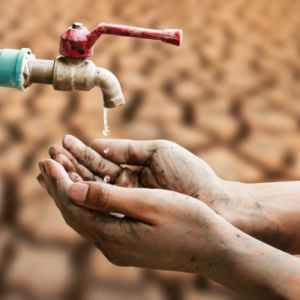
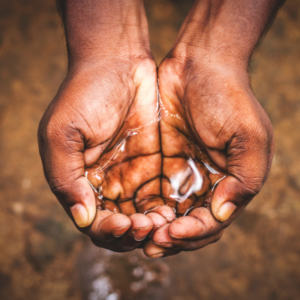
Communities in Southern Africa are increasingly competing for limited water resources. Climate change is altering habitats and forcing people into risky human-wildlife interactions, which drives displacement, insecurity, and deepens poverty, often fueling conflict. Analysis by the World Wildlife Organization, based on over 3,000 community interviews, found that 25% of respondents linked climate change to rising human-wildlife conflicts, while 36% reported increased crop damage from wildlife searching for food.

Ojongetakah Enokenwa Baa, a researcher at IWMI, emphasized that structural inequalities persist when systems operate independently, highlighting the need for intersectional approaches that connect climate, land, livelihoods, and governance. Adapting to climate change requires both resilience and the resolution of social tensions that emerge when resources become scarce, calling for integrated land-use planning that balances ecological preservation with human safety and dignity.

Research from IWMI indicates that achieving poverty reduction goals requires a water-energy-food-environment (WEFE) nexus approach. This method considers water, energy, and food systems together to identify strategies that support energy access and sustainable livelihoods while minimizing negative trade-offs for communities and ecosystems.

Indigenous knowledge plays a crucial role in informing scientific approaches and shaping adaptation decisions. However, top-down and siloed planning often excludes these communities, especially in rural areas, where climate initiatives can feel disconnected from daily struggles. For communities facing energy poverty, immediate access to reliable electricity and clean cooking fuels must be addressed before long-term climate transitions can succeed.

Indigenous communities have generations of experience managing scarce water and land, which can help prevent conflicts that modern policies often overlook. A just transition approach integrates indigenous knowledge with scientific expertise to implement practical climate solutions in resource-scarce landscapes such as those in Southern Africa.

The panel also discussed equity in post-disaster responses, noting that prioritizing infrastructure over supporting displaced communities can inadvertently redistribute vulnerability. Climate frameworks must be gender-responsive, ensuring that a just transition is approached as a moral imperative rather than purely a technical one.

Henry Roman, IWMI’s Regional Representative for Southern Africa, stressed the importance of integrated systems thinking, inclusive governance, and using science and innovation to scale interventions. By collaborating with governments, NGOs, research institutes, and small businesses, isolated interventions and their pitfalls can be avoided.

Researchers emphasized that protecting vulnerable communities and preventing conflict requires climate action that actively includes marginalized groups and avoids policies that create new tensions. In Southern Africa, climate change is a lived reality, and peace will not emerge solely from political agreements but from effective management of stressed land, water, and ecosystems.

Sustainable and resilient food, land, and water systems in Southern Africa depend on people-centered, integrated approaches that dismantle silos, elevate indigenous voices, and ensure inclusive governance. As Decide Mabumbo, senior researcher at IWMI, highlighted, a just transition must be built with communities, not for them, and peace is the result of equitable and inclusive systems.
Related Posts

  • New $9.3 Million Initiative Strengthens Climate Resilience and Water Security in Kabul
  • Why Cities Are Now at the Heart of the Global Water Crisis
  • CATAL1.5T Climate Actions: Building Resilience Across West Africa & Latin America
  • GEF Funds $9.45M Climate-Resilient Water Project in Zambezi Basin
  • Boosting Resilient Food Systems and Healthy Diets in Armenia

Primary Sidebar

Latest News

Estonian Development Cooperation Strengthened by €25.6M in ESDTEV Foreign Funding

2026 L’Oréal-UNESCO Call Invites Women Scientists Across Mexico

Esmée Funding Open for Habitat & Species Restoration: Tender Invitation

4G Capital Secures Investment from GIF Growth to Expand Informal Sector Financing

$20M Boost for African Startups as Delta40 Leads Funding Round

Economic Relief: Grants Open for Small Businesses

Empowering Women in STEM: Innospec and Africa Gifted Foundation Join Forces

Airtel Africa Foundation Awards $1M ICT Scholarships in Uganda

Saving Lives: Ensuring WASH Access for Vulnerable Children

Sustaining HIV Care in Ukraine: NGOs Brave Winter and Conflict

San Diego Foundation Grants Nearly $2M to Help Families Facing Hardship

Strengthening India’s STEM Pipeline for Women Leaders

EU Partners with Uzbekistan to Boost Rehabilitation and Reintegration Strategies

Bridging the Gap: Quality Education Through Offline-First Tech

Landmark IFC-Banco Industrial Partnership to Boost Jobs in Guatemala

Case Study: Tackling SEAH Through Business Action

$6.3M from Japan Strengthens Polio Eradication in Afghanistan

$4M Investment Expands Plastic Recycling in Vietnam

$12.4M Project Launched to Boost Jandar Power Plant in Syria

Boosting Power in Syria: UNDP, Italy, and Norway Invest $10.7M

European Union Strengthens Iraq Reintegration Programs

Philanthropy Meets Migration: IOM Engages Leaders in Greece

UNDP Supports PNG in Achieving Paris Agreement Goals

HR Goes Digital: Aquila’s €240,000 Investment for 3,500 Employees

Over 245,000 Finns Assisted Worldwide by Consular Services

Teacher Development in Colombia: Driving Holistic Student Growth

Ancient Trees at Risk: Fire Weather Worsens with Climate Change

Twinning Initiative Boosts Cross-Border Wildlife Conservation

Empowering Tomorrow’s Leaders: Korea Youth Summit 2026 Highlights

NGO Launches Baking Training for 999 Women in Northern Region

Firm and Foundation Launch $120K Plastic Waste Innovation Challenge

AfDB Supports Djibouti with $80M for Resilient Infrastructure

The Power of Co-Financing to Accelerate Development Projects

Deadly Floods Hit Southern Africa, Waterborne Disease Threatens Families

David Miliband Launches IRC Emergency Watchlist Africa 2026

Denmark Commits $23.47M to Boost Climate Adaptation in Rural Uganda

Why Ghana’s Fund Domiciliation Moment Is a Game-Changer for African Finance

Morocco Sees Increased Co-Financing Through World Bank and AFD Partnership

World Bank Funds $245M Climate-Resilient Infrastructure in Himachal Pradesh

Paraguay’s Bi-Oceanic Corridor Gets Key Investment from IDB

Funds for NGOs
Funds for Companies
Funds for Media
Funds for Individuals
Sample Proposals

Contact us
Submit a Grant
Advertise, Guest Posting & Backlinks
Fight Fraud against NGOs
About us

Terms of Use
Third-Party Links & Ads
Disclaimers
Copyright Policy
General
Privacy Policy

Premium Sign in
Premium Sign up
Premium Customer Support
Premium Terms of Service

©FUNDSFORNGOS LLC.   fundsforngos.org, fundsforngos.ai, and fundsforngospremium.com domains and their subdomains are the property of FUNDSFORNGOS, LLC 1018, 1060 Broadway, Albany, New York, NY 12204, United States.   Unless otherwise specified, this website is not affiliated with the abovementioned organizations. The material provided here is solely for informational purposes and without any warranty. Visitors are advised to use it at their discretion. Read the full disclaimer here. Privacy Policy. Cookie Policy.