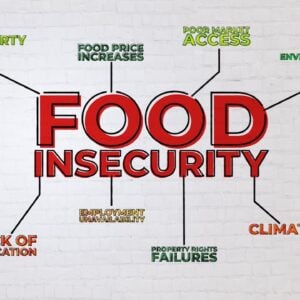
As political, business, and technology leaders convene at the World Economic Forum in Davos, the UN World Food Programme (WFP) is issuing a call to action: invest knowledge, resources, and capabilities to combat global hunger. The agency emphasizes that addressing hunger is not just a moral imperative but also critical for stabilizing economies and revitalizing communities worldwide.
The scale of the crisis is immense. WFP estimates that 318 million people face crisis-level hunger or worse in 2026, with hundreds of thousands living under famine-like conditions. Yet, current funding covers less than half of the USD13 billion needed to reach 110 million of the most vulnerable people. This funding gap results in reduced rations and meals, worsening the humanitarian crisis and threatening countless lives.
Rania Dagash-Kamara, WFP’s Assistant Executive Director for Partnerships and Innovation, highlighted the broader consequences of hunger, noting that it drives displacement, conflict, and economic instability. She stressed that global markets cannot remain stable when hundreds of millions go hungry, and that supporting WFP’s programs offers a practical solution for both humanitarian and economic stability.
The private sector has historically played a key role in WFP’s efforts. In 2025, private sector contributions ranked as the second-largest source of funding for WFP’s Palestine operations and the first for Ukraine. Since 2020, corporate partners have contributed over USD2 billion. At a time when public resources for humanitarian work are shrinking, private sector investment is increasingly critical.
WFP is also leveraging technology to improve efficiency and effectiveness. Its digital transformation initiatives are expected to save USD92 million annually, with AI-driven supply chain optimizations already delivering USD25 million in projected annual savings. Machine learning provides early warnings of food insecurity in over 90 countries, while AI-powered fraud detection ensures donations reach their intended recipients. These innovations allow WFP to respond faster and smarter to crises, with proven success in some of the most challenging contexts globally.
Leaders at Davos are encouraged to support WFP’s efforts by prioritizing hunger and food security, investing in resilient supply chains, advancing food technologies, and helping expand AI-enabled capabilities. Their expertise, resources, and innovation can significantly accelerate programs that reduce hunger, stabilize communities, and strengthen economic structures.
Dagash-Kamara emphasized that technology alone is not enough; sufficient resources are essential to scale these solutions. By combining WFP’s field experience and technology with private sector expertise and funding, the world can make a tangible difference in addressing both the humanitarian and economic aspects of global hunger.
The WFP’s message is clear: the tools, programs, and knowledge exist to tackle hunger effectively, but immediate action from global business leaders is essential to turn potential into impact