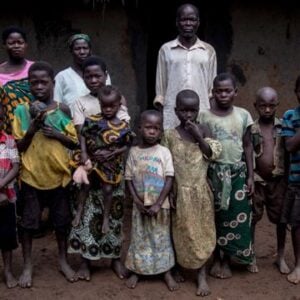
Violence continues to escalate in Sudan, with recent attacks leaving dozens of civilians dead. Local reports indicate that at least 19 people were killed during a ground assault in the Jarjira area of North Darfur, while a drone strike in Sinja, the capital of Sennar state, claimed another 10 lives and injured nine more. The ongoing conflict between the Sudanese Armed Forces (SAF) and the Rapid Support Forces (RSF), which began in April 2023, has forced thousands to flee their homes. The International Organization for Migration reported that over 8,000 people were displaced from Kernoi in North Darfur, with some crossing into Chad, while displacement in South Kordofan saw 125 people leave Kadugli and nearly 300 flee Dilling due to insecurity.
A severe nutrition crisis is unfolding in North Darfur. UNICEF and partners conducted a survey across three localities, revealing acute malnutrition rates far above the World Health Organization’s 15 percent emergency threshold. In Um Baru, the rate reached a staggering 53 percent, highlighting the urgent need for intervention. OCHA has called on all parties to protect civilians, uphold international humanitarian law, and allow humanitarian access, urging donors to scale up funding to deliver life-saving aid.
In Syria, the humanitarian situation in Aleppo remains critical. Nearly 120,000 people are still displaced following renewed clashes between transitional government forces and the predominantly Kurdish Syrian Democratic Forces (SDF), although about 29,000 have returned home. Access to affected neighborhoods, including Ashrafiyeh and Ash-Sheik Maqsoud, is slowly improving, hindered by ongoing clearance of explosive remnants. Public services, such as water supply restoration for approximately three million people, are gradually resuming, but schools remain closed for an additional 15 days, and flights in and out of Aleppo are suspended. Humanitarian teams continue to provide essential shelter, health, nutrition, and food assistance while monitoring population movements.
Meanwhile, in South Sudan, a $1.5 billion humanitarian appeal has been launched to support 4.3 million people in 2026. The UN and its partners, together with the government, are prioritizing the rapid mobilization of $1 billion to reach four million people. South Sudan faces one of the world’s most complex humanitarian crises, driven by ongoing conflict, climate shocks, disease outbreaks, economic instability, and spillover from the war in Sudan. It is estimated that two-thirds of the population, roughly 10 million people, will require humanitarian aid this year, including over 600,000 refugees, with more than 7.5 million projected to face food insecurity during the lean season from April to July.