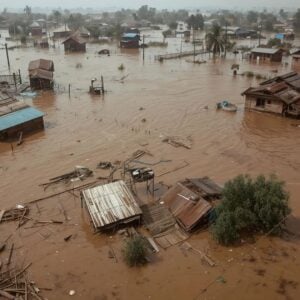
On 6 January 2025, heavy clashes between Government Forces and the SDF in Sheikh Maqsoud and Ashrafieh, home to over 300,000 people including 40% IDPs from Afrin, caused significant civilian casualties, mass displacement, and widespread damage to health and public infrastructure. The escalation paralyzed economic activity, forced the suspension of schools and public services, and led to the closure of Aleppo International Airport, with flights rerouted to Damascus. Ongoing armed hostilities, including drone attacks and shelling, have severely restricted movement within key urban routes, while over 148,000 people have been displaced, with the majority seeking refuge in Afrin and others in A’zaz, Al-Bab, Jarablus, and temporary shelters within Aleppo City. Civilian casualties remain high, with 64 reported, including nine fatalities.
The recent escalation has exacerbated pre-existing challenges in essential services. At least three schools and multiple primary health centers were damaged, and Zahi Azrak Hospital, a major internal medicine facility, was forced to close due to its proximity to active frontline areas. Residential and infrastructure damage has also increased, with previous UNDP assessments reporting over 21% of residential buildings in Sheikh Maqsoud and Ashrafieh already damaged, and additional destruction occurring from the latest clashes. Critical services such as electricity and water are severely impacted, with 15 transformation centers, 50 kilometers of electricity networks, and extensive water and sewage infrastructure requiring urgent rehabilitation.
UNDP has mobilized immediate support to address urgent humanitarian needs and early recovery priorities. Cash-for-work teams have been deployed for solid waste management in temporary shelters, and preparations are underway to reprogramme large-scale debris removal and recycling projects, including mine action components, thanks to donor support from the Republic of South Korea. Past rehabilitation efforts in both neighborhoods, including debris removal, sewage maintenance, solar-powered streetlights, and school and health facility support, provide a foundation for scaling up recovery interventions.
For medium to long-term recovery, UNDP proposes a comprehensive package of interventions estimated at USD 3.5 million to restore basic services and livelihoods, enabling safe returns of IDPs and stabilizing affected neighborhoods. Proposed activities include rehabilitating electricity and water infrastructure, restoring social buildings, repairing roads, creating short-term cash-for-work jobs, and conducting mine action through training, risk education, and removal of explosive ordnance. International donor support remains critical to repair damaged projects, launch new rehabilitation efforts, and prevent further displacement while ensuring early recovery aligns with immediate humanitarian response priorities.