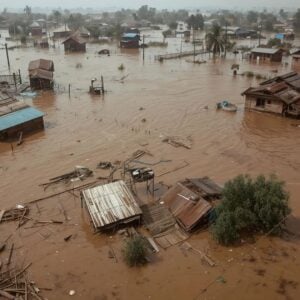
During the first quarter of 2023, northern Peru experienced severe flooding and landslides triggered by Cyclone Yaku and the El Niño phenomenon, affecting around half a million people, including approximately 150,000 children and adolescents. The extreme weather events caused extensive economic and non-economic losses, including the destruction of crops, agricultural infrastructure, homes, schools, and health-care facilities. Families faced heightened food insecurity, disrupted access to education and health care, and increased public health risks due to outbreaks of diarrhoea, dengue, and respiratory infections. Children with disabilities and pregnant or lactating women were particularly vulnerable, as mobility restrictions and financial hardship limited access to essential care. Many families were displaced to temporary shelters, and some opted for family separation to ensure children could continue schooling. These circumstances amplified child protection risks, including exposure to violence, exploitation, and gender-based abuse.
In response, UNICEF Peru implemented a cash transfer programme in collaboration with HIAS between June and October 2023, targeting vulnerable households with children, adolescents, and pregnant or lactating women affected by the floods in Piura and Lambayeque. The programme provided unconditional, multipurpose cash transfers tailored to household composition to help meet urgent needs such as food, health care, medication, and rent. Households with heightened vulnerabilities, such as single-parent families or those with children with disabilities, received additional support. A child protection case management system complemented the cash transfers by identifying children at risk of abuse, neglect, or exploitation and linking them to essential services, including health, education, legal aid, and psychosocial support. Families were also assisted in obtaining disability certification for children, enabling access to long-term government support and specialist services. Weekly messages were sent via WhatsApp or SMS to promote positive care practices and provide guidance on health, hygiene, emotional well-being, and optimal use of cash transfers.
The programme adopted a socially differentiated, child-centered approach, recognizing that children’s experiences of loss and damage are shaped by intersecting vulnerabilities such as gender, disability, and age. Feedback and accountability mechanisms ensured that children and families could participate in refining the programme, enhancing inclusivity and responsiveness. By addressing both economic and non-economic losses, the intervention helped families recover livelihoods, secure essential needs, and access child protection and education services. Cash transfers allowed families to repair homes and maintain children’s schooling, while child protection case management addressed risks related to exploitation, gender-based violence, and disrupted access to health and education.
The intervention reached 284 families and demonstrated the effectiveness of leveraging existing public services, forming strategic alliances with local organizations, and empowering families to respond to losses and damages. Partnerships with municipalities, community leaders, and public service providers ensured timely access to specialized support and continuity of assistance beyond the programme’s duration. However, limitations in funding, duration, geographic coverage, and population reach prevented the programme from addressing all losses and damages or reaching all affected children. This experience highlights the need for scalable, flexible, and well-funded interventions that integrate social protection and child-responsive measures to build long-term resilience and effectively respond to the complex challenges posed by climate change.