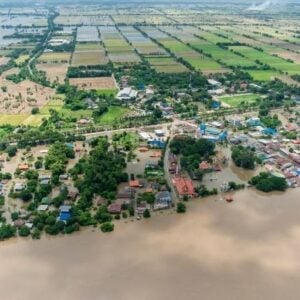
Cyclone Ditwah made landfall on Sri Lanka’s eastern coast on 28 November, causing widespread flooding and deadly landslides across all 25 districts. While some displaced families have returned home, recent heavy rains have triggered fresh flooding, landslides, and road closures, particularly in the central districts of Kandy, Nuwara Eliya, and Polonnaruwa.
UN assessments indicate that nearly 1.8 million people—about 8 percent of the population—remain affected, with more than 1.2 million requiring humanitarian assistance, including nearly 527,000 children. A joint rapid needs assessment led by national authorities and humanitarian partners confirmed extensive damage across all nine provinces, severe disruptions to essential services, and heightened risks for women, children, and persons with disabilities.
Food insecurity is rising, with nearly one in three households experiencing hunger and many families resorting to coping strategies such as reducing meals. Children face critical protection, education, nutrition, and WASH (water, sanitation, and hygiene) challenges. Many remain displaced in overcrowded centres or with host families, where inadequate lighting, privacy, and sanitation increase protection risks, including gender-based violence. Over 1,300 schools and six universities were damaged, and around 500 schools continue to serve as temporary shelters. Authorities are relocating students to functioning schools, but temporary learning spaces are needed to prevent prolonged disruption to education.
UNICEF and partners have scaled up emergency assistance, reaching over 76,000 people with WASH services, nearly 9,000 with nutrition support, and more than 5,600 with child protection services. The International Organization for Migration (IOM) reports that over 272,000 people remain displaced, staying with host communities or in schools, religious buildings, and community centres. As of mid-December, authorities reported 643 deaths, 183 missing persons, and more than 107,000 homes damaged or destroyed, making shelter one of the most urgent needs.
The cyclone has caused severe economic losses, with the World Bank estimating damages at $4.1 billion, equivalent to 4 percent of Sri Lanka’s GDP. Agriculture losses exceed $800 million, with more than 58,000 hectares of paddy land flooded, threatening food production and livelihoods for smallholder farmers.
In response, UN agencies and humanitarian partners launched a Humanitarian Priorities Plan seeking $35.3 million to support the most vulnerable. UNICEF requires $7.8 million to sustain its emergency response for children, but as of 23 December, less than half that amount had been received or pledged. Humanitarian agencies warn that without sustained funding and support, recovery will be slow, particularly for children, whose education, safety, and well-being remain at serious risk as Sri Lanka faces a long and challenging path to recovery.