• Skip to primary navigation
  • Skip to main content
  • Skip to primary sidebar

fundsforNGOs News

Grants and Resources for Sustainability

  • Subscribe for Free
  • Premium Support
  • Premium Login
  • Premium Sign up
  • Home
  • Funds for NGOs
    • Agriculture, Food and Nutrition
    • Animals and Wildlife
    • Arts and Culture
    • Children
    • Civil Society
    • Community Development
    • COVID
    • Democracy and Good Governance
    • Disability
    • Economic Development
    • Education
    • Employment and Labour
    • Environmental Conservation and Climate Change
    • Family Support
    • Healthcare
    • HIV and AIDS
    • Housing and Shelter
    • Humanitarian Relief
    • Human Rights
    • Human Service
    • Information Technology
    • LGBTQ
    • Livelihood Development
    • Media and Development
    • Narcotics, Drugs and Crime
    • Old Age Care
    • Peace and Conflict Resolution
    • Poverty Alleviation
    • Refugees, Migration and Asylum Seekers
    • Science and Technology
    • Sports and Development
    • Sustainable Development
    • Water, Sanitation and Hygiene (WASH)
    • Women and Gender
  • Funds for Companies
    • Accounts and Finance
    • Agriculture, Food and Nutrition
    • Artificial Intelligence
    • Education
    • Energy
    • Environment and Climate Change
    • Healthcare
    • Innovation
    • Manufacturing
    • Media
    • Research Activities
    • Startups and Early-Stage
    • Sustainable Development
    • Technology
    • Travel and Tourism
    • Women
    • Youth
  • Funds for Individuals
    • All Individuals
    • Artists
    • Disabled Persons
    • LGBTQ Persons
    • PhD Holders
    • Researchers
    • Scientists
    • Students
    • Women
    • Writers
    • Youths
  • Funds in Your Country
    • Funds in Australia
    • Funds in Bangladesh
    • Funds in Belgium
    • Funds in Canada
    • Funds in Switzerland
    • Funds in Cameroon
    • Funds in Germany
    • Funds in the United Kingdom
    • Funds in Ghana
    • Funds in India
    • Funds in Kenya
    • Funds in Lebanon
    • Funds in Malawi
    • Funds in Nigeria
    • Funds in the Netherlands
    • Funds in Tanzania
    • Funds in Uganda
    • Funds in the United States
    • Funds within the United States
      • Funds for US Nonprofits
      • Funds for US Individuals
      • Funds for US Businesses
      • Funds for US Institutions
    • Funds in South Africa
    • Funds in Zambia
    • Funds in Zimbabwe
  • Proposal Writing
    • How to write a Proposal
    • Sample Proposals
      • Agriculture
      • Business & Entrepreneurship
      • Children
      • Climate Change & Diversity
      • Community Development
      • Democracy and Good Governance
      • Disability
      • Disaster & Humanitarian Relief
      • Environment
      • Education
      • Healthcare
      • Housing & Shelter
      • Human Rights
      • Information Technology
      • Livelihood Development
      • Narcotics, Drugs & Crime
      • Nutrition & Food Security
      • Poverty Alleviation
      • Sustainable Develoment
      • Refugee & Asylum Seekers
      • Rural Development
      • Water, Sanitation and Hygiene (WASH)
      • Women and Gender
  • News
    • Q&A
  • Premium
    • Premium Log-in
    • Premium Webinars
    • Premium Support
  • Contact
    • Submit Your Grant
    • About us
    • FAQ
    • NGOs.AI
You are here: Home / cat / Sri Lanka Faces $4.1 Billion Losses from Cyclone Ditwah

Sri Lanka Faces $4.1 Billion Losses from Cyclone Ditwah

Dated: December 24, 2025

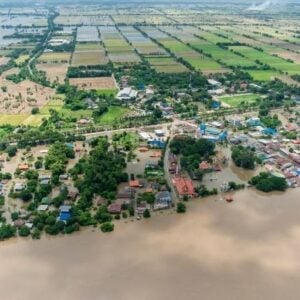
Cyclone Ditwah, which struck Sri Lanka in late November 2025, caused an estimated US$4.1 billion in direct physical damage to buildings, agriculture, and critical infrastructure, equivalent to around 4 percent of the country’s GDP. The cyclone affected nearly 2 million people, including 500,000 families across all 25 districts, disrupting livelihoods, essential services, and the broader economy.

The World Bank Group’s Global Rapid Post-Disaster Damage Estimation (GRADE) report provides timely insights to guide emergency response, recovery planning, and long-term disaster risk reduction. The methodology estimates direct economic damage to physical assets but does not account for income losses, production disruptions, or the full costs of recovery and reconstruction.

The Central province was the hardest hit, with Kandy district alone suffering damages estimated at $689 million due primarily to flooding and landslides. Infrastructure such as roads, bridges, railways, and water networks bore the largest share of damage, totaling $1.735 billion, which disrupted connectivity and access to markets and essential services.

Residential buildings and contents experienced approximately $985 million in damages, highlighting the vulnerability of homes to flooding and high winds. Agriculture, including paddy, vegetables, maize, livestock, and inland fishing, suffered $814 million in damages, threatening food security and rural livelihoods. Non-residential buildings, such as schools, healthcare facilities, businesses, and industrial units, incurred $562 million in damages, interrupting education, healthcare, and economic activities.

The assessment emphasizes that pre-existing socio-economic vulnerabilities—including poverty, limited service access, and exposure to climate risks—amplify the cyclone’s impacts, particularly for women, children, older persons, and female-headed households. Targeted recovery efforts are therefore crucial to support the most at-risk communities.

In response, the World Bank Group has mobilized up to $120 million from ongoing projects to restore essential services and infrastructure, including healthcare, water, education, agriculture, and connectivity in the hardest-hit areas. The report highlights that actual recovery and reconstruction needs are likely to far exceed the direct damage estimates, underlining the importance of comprehensive strategies that integrate climate and disaster risk considerations.

The GRADE assessment was conducted in close collaboration with Sri Lanka’s government, including the External Resources Department, Treasury, National Planning Department, and Disaster Management Centre. Over the past decade, the GRADE approach has supported more than 54 countries, providing rapid, evidence-based post-disaster assessments with approximately 90 percent accuracy compared to detailed ground-based evaluations. The Sri Lanka assessment was financially supported by the Global Facility for Disaster Reduction and Recovery (GFDRR) and Japan’s Ministry of Finance, in collaboration with the World Bank.

Related Posts

  • Asian Development Bank Provides $909.7 Million to Aid Türkiye’s Earthquake Recovery
  • Building Resilience in Mozambique: FAO Supports Training on Damage and Loss Assessment
  • Jamaica Faces Ongoing Recovery Challenges 50 Days After Hurricane Melissa
  • International NGO Honoured for Lifesaving Disaster Response
  • Syria at a Crossroads: Humanitarian and Economic Challenges One Year Post-Transition

Primary Sidebar

Latest News

UK Plans Industry Training Board Changes to Improve Workforce Skills

Water Network Inspections Reach 10,000 Health Checks

New Recycling Rules Now in Effect Across England

Rising Costs Leave Developing Nations Priced Out of Finance

New Ontario Law Targets More Homes and Improved Transit

New Long-Term Care Home Finished in Toronto by Ontario

Details of the Canada-Ontario Partnership for Homes and Transit

Historic Ontario-Canada Deal to Boost Housing and Transit

Ontario Invests $838K to Shield Amherstburg Workers from U.S. Tariffs

Whitby Industrial Accident Leads to $80,000 Contractor Penalty

How TNFD Is Shaping Nature-Related Financial Risk Management in Malaysia

Africa’s Future Depends on Disaster Risk Financing and Climate Resilience Strategies

Sudan Crisis Response: How Relief Partnerships Are Changing Lives of IDPs

Access to Lenacapavir Blocked: MSF Urges Gilead to Prioritize Global Health

Eastern Chad Crisis Deepens as Funding Cuts Impact Women and Girls

European Union Boosts Asia Disaster Resilience with €11 Million Funding

$232 Million US-Lesotho Health Agreement Faces Backlash Over Transparency Issues

Finland Boosts Lebanon Relief Efforts with €2 Million UNHCR Funding

African Court Urged to Protect Climate-Displaced Communities Across Africa

Mental Health Crisis Response in the US: Moving Beyond Policing to Care

Proposed Mexico City Care Law Criticized for Gaps in Disability and Elderly Support

New Voting Bill Sparks Debate Over Discrimination and Access to Ballots

Global Alarm as Iran Expands Military Recruitment to Children Amid Rising Conflict

IOM and Princess Alanood Foundation Sign Anti-Trafficking Partnership

World Bank Helps Armenia Attract More Investment

World Bank Backs Djibouti with $25 Million Financing

Zambia Unveils Apprenticeship Pilot to Tackle Skills Gap

African Development Bank Strengthens Kenya Partnership

DR Congo Women Break Workplace Barriers

African Development Bank Backs SPE PEF III with $15M

AfDB Invests €7.5 Million in Breega Africa Seed I Fund

Tanzania Country Manager Presents Accreditation Letter

London Launches Finance Hub to Support SMEs

Nigeria Commits $346M to Fight HIV and TB in 2026

UN Highlights Record Climate Imbalance as Earth’s Warming Speeds Up

World’s First Conscious Food Systems Summit Coming to Bhutan

Water Security Strengthens Rural Climate Resilience in Asia

Accelerating Food Systems Transformation in Cameroon

Disaster Preparedness Strategies for Sri Lanka

Decarbonizing Public Buildings and Transport in Uzbekistan

Funds for NGOs
Funds for Companies
Funds for Media
Funds for Individuals
Sample Proposals

Contact us
Submit a Grant
Advertise, Guest Posting & Backlinks
Fight Fraud against NGOs
About us

Terms of Use
Third-Party Links & Ads
Disclaimers
Copyright Policy
General
Privacy Policy

Premium Sign in
Premium Sign up
Premium Customer Support
Premium Terms of Service

©FUNDSFORNGOS LLC.   fundsforngos.org, fundsforngos.ai, and fundsforngospremium.com domains and their subdomains are the property of FUNDSFORNGOS, LLC 1018, 1060 Broadway, Albany, New York, NY 12204, United States.   Unless otherwise specified, this website is not affiliated with the abovementioned organizations. The material provided here is solely for informational purposes and without any warranty. Visitors are advised to use it at their discretion. Read the full disclaimer here. Privacy Policy. Cookie Policy.