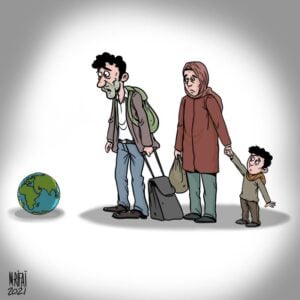
Mohamed Refaat, IOM Chief of Mission in Sudan, has highlighted the severe humanitarian crisis unfolding across the country, emphasizing that civilians are fleeing not by choice but in search of safety. Speaking from Port Sudan, he urged international support to ensure protection for those affected by the ongoing conflict.
Recent reports indicate that the paramilitary Rapid Support Forces (RSF), along with allies from the Sudan People’s Liberation Movement-North (SPLM-N), shelled residential areas in Dilling, South Kordofan, within the last 48 hours. The RSF has been engaged in conflict with the Sudanese army since April 2023, following a breakdown in the transition to civilian rule. On 26 October, the RSF overran El Fasher, the regional capital of North Darfur, after a 500-day siege, causing mass displacement and extreme humanitarian suffering for those trapped in the city.
Displacement from Kordofan is occurring on a large scale, with residents fleeing from Babanusa, Kadugli, and El-Obeid due to fear of escalating violence. Many vulnerable individuals on the move are women and children, arriving in eastern areas such as White Nile and Gedaref. Ongoing insecurity and violence continue to hinder humanitarian access, leaving civilians at high risk.
Kadugli, the capital of South Kordofan, is of particular concern, where six Bangladeshi UN peacekeepers were killed in recent drone attacks. The IOM estimates that 90,000 to 100,000 people in Kadugli could be displaced if fighting continues. El-Obeid is reportedly “one or two steps” away from attack, with over half a million people expected to be impacted if hostilities reach the city.
In El Fasher, more than 109,000 people have fled since the city fell to the RSF in late October. Many remain stranded in surrounding villages due to security and logistical challenges, exacerbating humanitarian suffering as access to essential resources has been severely disrupted.
The crisis is further compounded by severe funding shortages. The IOM has faced an $83 million shortfall this year, forcing aid teams to drastically reduce operations. Refaat stressed that due to these cuts, humanitarian teams are forced to prioritize life-saving interventions, leaving many in dire need without assistance despite their critical vulnerability.