The International Labour Organization (ILO), in partnership with UNICEF and Oman’s Social Protection Fund (SPF), conducted the first training workshop in the Gulf Cooperation Council (GCC) region on monitoring and evaluation (M&E) of social protection systems. Held in Muscat from 2–5 November 2025, the workshop strengthened the capacities of 26 SPF officials and other national stakeholders involved in implementing Oman’s landmark Social Protection Law (52/2023). The training delivered the TRANSFORM learning package, an innovative initiative designed to enhance social protection systems through structured learning, peer exchange, and institutional development, with guidance from an advisory group including UNDP, UNESCWA, WFP, UNICEF, and the ILO.
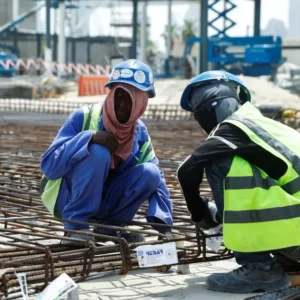
As Oman implements some of the region’s most comprehensive social protection reforms, establishing a robust M&E system is critical to guide policy, assess socio-economic impacts, improve service delivery, and ensure financial sustainability. Radhiya Al-Mahroqi, Director General of Social Protection Policies at the SPF, emphasized the importance of embedding a strong monitoring culture through the National M&E Committee, while ILO Senior Technical Advisor Luca Pellerano highlighted that M&E forms the backbone of systems that learn, adapt, and deliver real results for people, including migrant workers.
The training engaged members of the newly established National M&E Committee, which coordinates monitoring efforts across ministries and institutions involved in social protection. Committee representatives included officials from the SPF, Ministries of Labour, Social Development, Finance, Health, Education, and Economy, as well as the National Centre for Statistics and Information (NCSI). Their participation reflects Oman’s commitment to building a coordinated, system-wide M&E framework aligning institutional mandates, data systems, and governance structures. UNICEF Oman Programme Manager Dr. Bilal Al-Kiswani noted that robust M&E provides policymakers with the data needed to refine programs and measure impact, strengthening social protection coverage for vulnerable children and other groups.
Over four days, the training combined case studies and practical exercises to build an evidence-based culture, strengthen the “supply side” of national M&E systems, and explore components of effective frameworks. Sessions covered selection and collection of indicators, balancing data-generation capacity with accountability needs, and integrating service standards, staff engagement, ethical principles, and accountability mechanisms. Particular focus was given to developing indicators to track the impact of Oman’s social protection schemes and facilitate access for vulnerable groups, including children, persons with disabilities, and migrant workers.
This initiative is part of the ILO’s global mandate to monitor social protection systems and promote evidence-based policymaking. The organization’s expertise informs efforts to develop a GCC Social Protection Monitor in collaboration with GCC-STAT and the GCC Executive Bureau. The regional monitoring platform will provide standardized, reliable, and comparable data on social protection coverage, adequacy, financing, and governance for both national and migrant workers, supporting harmonized and informed policy design and evaluation across the region.
The ILO’s involvement in Oman’s TRANSFORM M&E training was supported through the STREAM Programme, a multi-country initiative aimed at expanding inclusive, gender-responsive, and rights-based social protection for migrant workers and their families along the South Asia-GCC migration corridor. Funded by the Swiss Agency for Development and Cooperation, the EU Foreign Policy Instrument, and the Ford Foundation, STREAM seeks to ensure that all migrant workers, regardless of gender, status, or sector, have access to social protection to live and work with dignity.