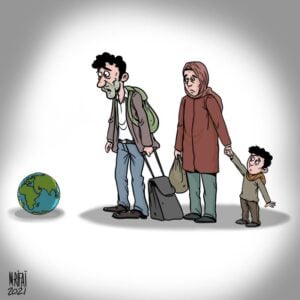
The Latin America and Caribbean (LAC) region is experiencing significant changes in migration and displacement patterns. Once primarily a region of emigration, LAC has become a major destination, transit corridor, and place of return for migrants and forcibly displaced populations. In 2024, Latin America and the Caribbean accounted for 20 million internally displaced people, representing nearly a quarter of the global total. Migration pressures include the displacement of 6.8 million Venezuelans since 2015, 1.4 million forced returns to Northern Central America, and 2.1 million climate-induced displacements, with countries like Brazil, Peru, and Chile facing severe flood-related movements. These dynamics, coupled with persistent negative perceptions of migrants, challenge social cohesion and development in the region.
Addressing these complex shifts requires an integrated approach that combines humanitarian, development, and peacebuilding efforts. The United Nations Development Programme (UNDP) promotes a Humanitarian-Development-Peace (HDP) nexus, recognizing that human mobility is a structural phenomenon influenced by poverty, inequality, climate change, and governance gaps. Effective responses must go beyond temporary relief, focusing on long-term strategies that foster resilience, inclusion, and sustainable development while considering national and local contexts.
UNDP’s regional strategy on human mobility and sustainable development emphasizes locally grounded initiatives with regional impact. In Guatemala, the Trifinio area project trained municipal officials and community leaders to integrate human mobility into development planning, including reintegration and remittance utilization. In Ecuador, the INTEGRA initiative promoted socioeconomic integration through entrepreneurship and employment services, particularly empowering migrant women. The Tri-national Response initiative in Honduras supported displaced women with training and seed capital, linking humanitarian assistance with peacebuilding. Colombia’s Banco Amable initiative engaged migrants and local volunteers to strengthen social cohesion and reduce xenophobia.
Lessons from these initiatives highlight that resilience through human mobility is most effective when responses are local, gender-sensitive, data-informed, and regionally coordinated. Municipalities play a crucial role in managing migration and displacement, and capacity-building and strategic planning yield sustainable outcomes. Gender-responsive programming ensures women are empowered as agents of change, while reliable data enables targeted interventions and monitoring. Cross-border cooperation is essential for addressing shared challenges across the region.
Looking ahead, migration and displacement in LAC will be increasingly shaped by climate impacts, geopolitical shifts, and economic pressures. Climate mobility alone could displace up to 17 million people internally by 2050. Policies emphasizing securitization may create bottlenecks in transit countries, Caribbean nations may see increased arrivals, and forced returns will strain local economies and public services. Volatility in remittances and forced displacement in impoverished or weakly governed areas will exacerbate vulnerabilities. These trends demand adaptive, locally grounded, and regionally coordinated governance frameworks.
To address the full spectrum of human mobility challenges, UNDP promotes a multidimensional strategy spanning six thematic areas: strengthening institutional capacities through planning, training, and data systems; promoting socioeconomic reintegration of returnees via income-generation programs and financial inclusion; leveraging remittances for personal and local development; maximizing the contributions of immigrants through vocational training and regulatory reform; fostering social cohesion and reducing xenophobia through dialogue and community networks; and integrating climate mobility into national adaptation strategies with risk assessments and resilient infrastructure planning. This comprehensive approach aims to transform human mobility into a driver of resilience, development, and inclusive growth across Latin America and the Caribbean.