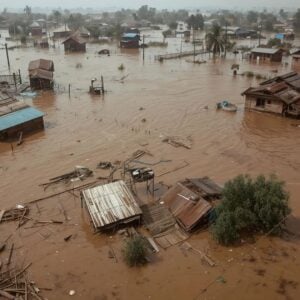
Colombo, 17 December 2025 – The International Organization for Migration (IOM) has launched an appeal for USD 7.3 million to support over 100,000 people affected by Cyclone Ditwah in Sri Lanka. The cyclone has displaced more than 280,000 people and damaged or destroyed over 81,000 homes, leaving families in urgent need of shelter, protection, and essential services.
Kristin Parco, IOM Chief of Mission in Sri Lanka, emphasized that the response must prioritize the safety, dignity, and rights of affected individuals. She highlighted the importance of providing immediate support to help people regain stability while working alongside government-led efforts for inclusive and sustainable community recovery.
As co-lead of the Shelter and Non-Food Item (NFI) cluster, IOM’s appeal focuses on urgent humanitarian needs, including emergency shelter, NFIs, protection, health and mental health and psychosocial support (MHPSS), water, sanitation, and hygiene (WASH). The organization will also utilize its Displacement Tracking Matrix (DTM) to ensure aid reaches the most vulnerable populations.
Cyclone Ditwah made landfall on 28 November, bringing strong winds, heavy rainfall, flooding, and landslides that affected all 25 districts of Sri Lanka. The storm has intensified existing vulnerabilities, further eroding livelihoods, weakening community infrastructure, and straining household coping capacities.
IOM’s appeal aims to deliver a coordinated, multi-sectoral response addressing immediate humanitarian needs while laying the groundwork for early recovery. Through the DTM, the organization will provide timely information on population movements and priority needs, informing national coordination mechanisms and guiding humanitarian planning.
The response will provide emergency shelter to over 78,000 people, including essential household items, improvements in government-run safety centres, and support for households with damaged homes through a combination of in-kind assistance and targeted cash support. Health and MHPSS activities are planned to reach around 10,000 people via mobile clinics, community outreach, and support to damaged health facilities. Rapid WASH interventions will benefit 20,000 people, offering emergency water supply, sanitation facilities, and hygiene support in safety centres and affected communities.
Protection will remain a central focus, targeting 10,000 people with integrated services and community-based activities to prevent and respond to risks such as gender-based violence, child protection concerns, and the exclusion of persons with disabilities. Short-term early recovery actions will also help stabilize communities and restore livelihoods through targeted assistance.
The appeal underscores the urgent need for support for families affected by Cyclone Ditwah. Continued displacement, damaged homes, and disrupted services leave many at ongoing risk. Timely investment will help meet immediate needs, support recovery, and enable communities to move beyond displacement toward safer living conditions, restored livelihoods, and long-term resilience.