While global attention often focuses on the actions of major emitters, developing countries continue to advance meaningful climate action across diverse sectors worldwide. Over the past decade, UNDP has worked with more than 90 percent of developing countries to strengthen local and national climate responses, and in 2025 this work demonstrated how leadership, innovation, and resilience are driving progress despite limited resources and complex challenges.
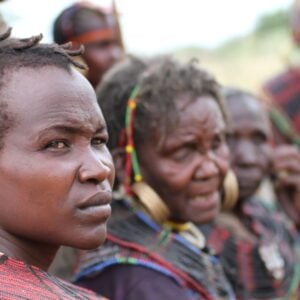
Indigenous Peoples play a central role in climate and biodiversity protection as stewards of a significant share of the world’s intact forests. In 2025, UNDP supported major advances in the recognition of Indigenous land rights, helping countries establish legal and institutional frameworks that secure ancestral territories, strengthen forest governance, and enable communities to access climate finance. These efforts not only protect ecosystems but also uphold Indigenous knowledge, livelihoods, and cultural rights.
Developing countries are also accelerating the transition to sustainable energy systems that expand access while reducing emissions. Across multiple regions, UNDP-supported renewable energy initiatives are improving daily life in underserved communities by replacing fossil fuel–based power with solar solutions. These efforts contribute to national decarbonization goals, enhance productivity, and improve living standards, while demonstrating how clean energy can simultaneously support development and climate mitigation.
National climate planning has become more ambitious, inclusive, and investible. In 2025, UNDP supported over 100 developing countries in revising their Nationally Determined Contributions, aligning climate action more closely with development priorities. These updated plans strengthen mitigation and adaptation commitments while embedding principles of gender equality, social inclusion, and just transition, ensuring climate action delivers broader economic and social benefits.
As climate impacts intensify, data-informed adaptation planning has gained momentum. Dozens of countries have developed National Adaptation Plans with UNDP support, using improved data systems, digital tools, and innovative financing mechanisms to guide decision-making. These plans help governments manage climate risks more effectively, mobilize investment, and strengthen institutional capacity across key sectors such as agriculture, water, health, and tourism.
Youth-led climate action is emerging as a powerful driver of innovation and community resilience. In 2025, UNDP-supported initiatives enabled young people across dozens of countries to lead solutions in areas such as circular economy practices, regenerative agriculture, ecosystem restoration, and waste reduction. These efforts combine traditional knowledge with modern approaches, empowering the next generation to shape sustainable futures.
In fragile and conflict-affected contexts, climate action is increasingly linked to peace and security. UNDP is supporting integrated approaches that address climate risks, livelihoods, and social cohesion simultaneously. Improved access to climate information, ecosystem restoration, and transboundary cooperation are helping reduce resource-related tensions, strengthen trust, and enhance stability in vulnerable regions.
High-integrity carbon markets are also opening new pathways for climate finance in developing countries. By supporting transparent, rights-based carbon market frameworks, UNDP is helping countries attract private investment and finance large-scale mitigation efforts. In 2025, landmark agreements demonstrated how jurisdictional carbon markets can link global demand for emission reductions with equitable, country-led implementation.
Digital technologies are playing an expanding role in environmental sustainability. UNDP is supporting countries to harness digital public infrastructure, geospatial tools, and artificial intelligence to reduce emissions, improve traceability, and strengthen climate resilience, particularly in sectors such as forestry, agriculture, and renewable energy.
UNDP is also reducing its own operational carbon footprint, demonstrating how development institutions can lead by example. Through investments in renewable energy, energy efficiency, and sustainable mobility, UNDP country offices are cutting emissions, lowering costs, and improving operational resilience, even in highly fragile settings.
Together, these examples show that developing countries are not waiting for others to lead on climate action. Through innovation, partnership, and determination, they are advancing solutions that protect people, ecosystems, and economies. Their actions underscore a clear message: meaningful climate progress is already underway, and global efforts must rise to match the ambition being shown across the developing world.