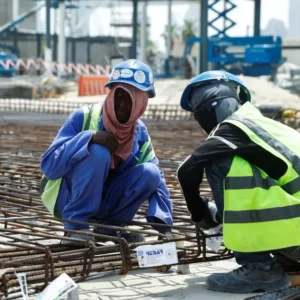
Over 290 prosecutors and officials from Mongolia’s Prosecutor’s Office participated in a training organized by the ILO, in collaboration with the Training and Research Institute under the Office of the Prosecutor General of Mongolia. The programme focused on strengthening the prosecutorial system’s capacity to uphold labour rights and enforce international labour standards, with particular emphasis on eliminating forced labour and child labour. By integrating international standards, national data, and practical guidance, the training aimed to equip prosecutors with the knowledge and tools to detect, investigate, and prosecute cases effectively, while ensuring victim protection and access to justice.
The initiative aligns with Mongolia’s broader commitment to international labour standards. In 2025, the Government of Mongolia submitted reports to the ILO Committee of Experts on the Application of Conventions and Recommendations (CEACR) regarding the application of Conventions Nos. 29, 105, 138, and 182, which focus on forced labour and child labour.
Senior ILO specialists from the Regional Office for Asia and the Pacific led the training sessions. Bharati Pflug, Senior Specialist on Fundamental Principles and Rights at Work, provided a detailed overview of ILO definitions and international standards on child labour, including Conventions Nos. 138 and 182. She shared Mongolia-specific findings from the ILO National Child Labour Survey (2021–2022), offering evidence-based insights into the prevalence and nature of child labour. The session also covered practical steps for investigation, evidence gathering, and victim protection, equipping prosecutors with actionable tools and international best practices for effective prosecution and prevention.
Alain Pelcé, Senior Specialist on International Labour Standards and Labour Law, delivered a session on forced labour. He explained the Forced Labour Convention, 1930 (No. 29), and the Abolition of Forced Labour Convention, 1957 (No. 105), highlighting emerging forms of forced labour, including political repression and economic exploitation. Pelcé also introduced the 2014 Protocol to Convention No. 29, which enhances measures to prevent trafficking, protect victims, and ensure remedies and compensation. The session outlined key indicators of forced labour, such as abuse of vulnerability, deception, restriction of movement, physical and sexual violence, intimidation, retention of identity documents, wage withholding, debt bondage, poor working and living conditions, and excessive overtime.
The training was organized under the EU-funded ILO Trade for Decent Work (T4DW) Project, reinforcing Mongolia’s ability to implement international labour standards and strengthen enforcement mechanisms against child and forced labour.