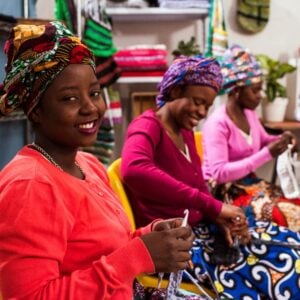
Women entrepreneurs are increasingly contributing to Bangladesh’s economy, leading around 2.8 million small and medium enterprises (SMEs) and employing an estimated 8.4 million people. Despite this progress, women own only 7.2% of all registered businesses, and many operate as micro-enterprises with limited access to finance and formal support systems. Persistent gender-specific investment barriers continue to restrict women’s full participation and growth potential in the economy.
These challenges were the focus of a High-Level Policy Dialogue held on 9 December 2025 in Dhaka, organised by UNDP under its Transformative Economic Policy Programme and supported by the UK FCDO. The event convened women entrepreneurs, government agencies, financial institutions, private sector actors, and development partners to discuss actionable reforms. Findings from a focus group with 12 women business owners in the leather, IT, handicrafts, and e-commerce sectors highlighted difficulties such as complex regulatory processes, limited access to business credit, inconsistent government services, and insufficient market information. These reflect broader national trends, where most women-owned enterprises remain small and informal, restricting access to institutional financing and growth opportunities.
Speakers emphasized the importance of connecting women entrepreneurs to mentorship and knowledge networks. Afroza Parveen of BWCCI noted that strong networks can transform businesses by opening employment opportunities, strengthening digital skills, and supporting a more inclusive, knowledge-driven economy. Naaz Farhana Ahmed, President of DWCCI, highlighted the need for gender-neutral policies, stronger partnerships, and capacity-building initiatives to help women scale their businesses and harness Bangladesh’s entrepreneurial potential.
Research from TEPP identified six major barriers hindering women-led businesses, and participants developed recommendations for reforms, including simplifying registration and licensing, strengthening digital services, expanding mentorship programs, improving financial literacy, and creating tailored loan products. A panel discussion with government and private sector representatives underscored the importance of women-friendly financial services, culturally aware public services, and technology adoption to reduce bureaucratic hurdles.
Priti Chakraborty of FBCCI and BWCCI emphasized that women entrepreneurs are central to Bangladesh’s economic future. As the country approaches graduation from Least Developed Country status, prioritizing sustainable, knowledge-based innovation and removing structural constraints for women-led enterprises is critical. The Policy Dialogue reinforced that advancing women’s entrepreneurship is a strategic economic priority. Strengthening collaboration among government agencies, banks, private sector institutions, and development partners can unlock the potential of millions of women entrepreneurs, accelerate growth, and build an inclusive, innovation-driven economy.