• Skip to primary navigation
  • Skip to main content
  • Skip to primary sidebar

fundsforNGOs News

Grants and Resources for Sustainability

  • Subscribe for Free
  • Premium Support
  • Premium Login
  • Premium Sign up
  • Home
  • Funds for NGOs
    • Agriculture, Food and Nutrition
    • Animals and Wildlife
    • Arts and Culture
    • Children
    • Civil Society
    • Community Development
    • COVID
    • Democracy and Good Governance
    • Disability
    • Economic Development
    • Education
    • Employment and Labour
    • Environmental Conservation and Climate Change
    • Family Support
    • Healthcare
    • HIV and AIDS
    • Housing and Shelter
    • Humanitarian Relief
    • Human Rights
    • Human Service
    • Information Technology
    • LGBTQ
    • Livelihood Development
    • Media and Development
    • Narcotics, Drugs and Crime
    • Old Age Care
    • Peace and Conflict Resolution
    • Poverty Alleviation
    • Refugees, Migration and Asylum Seekers
    • Science and Technology
    • Sports and Development
    • Sustainable Development
    • Water, Sanitation and Hygiene (WASH)
    • Women and Gender
  • Funds for Companies
    • Accounts and Finance
    • Agriculture, Food and Nutrition
    • Artificial Intelligence
    • Education
    • Energy
    • Environment and Climate Change
    • Healthcare
    • Innovation
    • Manufacturing
    • Media
    • Research Activities
    • Startups and Early-Stage
    • Sustainable Development
    • Technology
    • Travel and Tourism
    • Women
    • Youth
  • Funds for Individuals
    • All Individuals
    • Artists
    • Disabled Persons
    • LGBTQ Persons
    • PhD Holders
    • Researchers
    • Scientists
    • Students
    • Women
    • Writers
    • Youths
  • Funds in Your Country
    • Funds in Australia
    • Funds in Bangladesh
    • Funds in Belgium
    • Funds in Canada
    • Funds in Switzerland
    • Funds in Cameroon
    • Funds in Germany
    • Funds in the United Kingdom
    • Funds in Ghana
    • Funds in India
    • Funds in Kenya
    • Funds in Lebanon
    • Funds in Malawi
    • Funds in Nigeria
    • Funds in the Netherlands
    • Funds in Tanzania
    • Funds in Uganda
    • Funds in the United States
    • Funds within the United States
      • Funds for US Nonprofits
      • Funds for US Individuals
      • Funds for US Businesses
      • Funds for US Institutions
    • Funds in South Africa
    • Funds in Zambia
    • Funds in Zimbabwe
  • Proposal Writing
    • How to write a Proposal
    • Sample Proposals
      • Agriculture
      • Business & Entrepreneurship
      • Children
      • Climate Change & Diversity
      • Community Development
      • Democracy and Good Governance
      • Disability
      • Disaster & Humanitarian Relief
      • Environment
      • Education
      • Healthcare
      • Housing & Shelter
      • Human Rights
      • Information Technology
      • Livelihood Development
      • Narcotics, Drugs & Crime
      • Nutrition & Food Security
      • Poverty Alleviation
      • Sustainable Develoment
      • Refugee & Asylum Seekers
      • Rural Development
      • Water, Sanitation and Hygiene (WASH)
      • Women and Gender
  • News
    • Q&A
  • Premium
    • Premium Log-in
    • Premium Webinars
    • Premium Support
  • Contact
    • Submit Your Grant
    • About us
    • FAQ
    • NGOs.AI
You are here: Home / cat / Women Leading the Way: Collective Action at the Heart of Gender-Just Transitions in Global Food Systems

Women Leading the Way: Collective Action at the Heart of Gender-Just Transitions in Global Food Systems

Dated: December 4, 2025

A groundbreaking PhD research partnership between Northumbria University’s Centre for Global Development, the Ethical Trading Initiative (ETI), and Women Working Worldwide (WWW) is set to explore how gender-just transitions can be strengthened across global food supply chains. The project, led by doctoral researcher Aishath Green, emerged from ETI’s work on advancing just transitions in the food, farming, and fisheries sectors through social dialogue, alongside WWW’s mission to support and empower women workers in global supply chains to secure stronger rights and protections.

As climate change intensifies, interest in the concept of just transitions has grown across policy, academic, and practical spaces. A just transition aims for a fair shift away from fossil fuels toward low-carbon societies, one that creates new opportunities for decent work and ensures no one is left behind. While widely referenced, the concept remains open to interpretation, varying significantly across regions and social groups. Much still needs to be understood about what just transitions look like in practice and what impacts they will have on different communities.

Although most research to date has focused on the energy sector, food systems—responsible for roughly 12% of global greenhouse gas emissions—have received far less attention. The food sector sits at the intersection of vulnerability and responsibility: highly exposed to climate impacts while also contributing significantly to environmental degradation. A food system can reduce emissions yet still reinforce inequality, making it critical to address climate mitigation within the broader context of social justice. The research will build on existing work by ETI and WWW to better understand what just transitions mean for workers within agricultural supply chains.

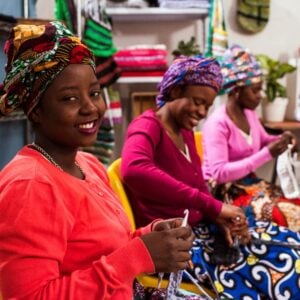
Women are central to the global food sector, with 36% of working women employed across agri-food systems, yet they remain largely absent from decision-making processes that shape the future of their livelihoods. Policies promoting sustainable agricultural practices have sometimes increased women’s workloads and deepened gender inequities, demonstrating the urgent need for their perspectives to be heard. This project will explore how social dialogue and collective organising among women workers can ensure that their priorities and rights are embedded in just transition planning across global commodity chains.

Women have long organised collectively to improve working conditions, and research shows that collective action—formal through trade unions or informal through safe community networks—can effectively challenge structural barriers. WWW’s work on ‘Safe Spaces’ highlights how informal organising in trusted environments, ranging from homes to community centres, enables women to voice concerns openly. This research seeks to understand the diverse spaces in which women mobilize and how such organising can shape more equitable climate and labour futures.

Over the next three years, the project will engage actors across multiple levels of global agricultural supply chains, working with women workers and companies in the Global South as well as stakeholders in the UK food sector. It aims to identify spaces where women are included or excluded from organising efforts, examine how social dialogue can drive equitable just transitions grounded in human rights, and highlight examples of best practice supporting gender-just approaches. Funded by the Arts and Humanities Research Council through the Northern Bridge Consortium, the project will use interdisciplinary and creative research methods including oral histories, archival research, and participatory photography. Findings will be shared through blogs and policy briefs throughout the research period.

Researcher Aishath Green brings extensive experience in climate justice, gender equality, and labour rights. Prior to joining Northumbria University, she worked as a Research Associate at University College London on a UKRI-funded project examining how politics shapes global climate adaptation measurement frameworks. Her academic background in History and Environment, Politics and Development informs her interdisciplinary feminist approach. She has previously researched street traders’ rights and is passionate about connecting historical labour struggles with contemporary climate challenges through participatory and community-based research.

ETI, a leading alliance of trade unions, NGOs, and companies, prioritises just transitions within sectors highly vulnerable to climate change yet often overlooked within broader transition debates. Social dialogue is central to their approach, treating workers as both rights holders and experts in shaping the future of work. Women Working Worldwide partners with grassroots organisations and unions globally to empower women in global supply chains—from garments to horticulture—to claim their rights and earn decent wages, while advising companies committed to improving gender equality. The project is supervised by Professor Katy Jenkins, Dr Sarah Peck and Dr Paul Griffin, who together bring deep expertise in women’s activism, labour geographies, and socially engaged research.

This collaborative initiative marks an important step toward ensuring that women’s voices and leadership are central to the transformation of global food systems and that the transition to a climate-resilient future is both just and genuinely inclusive.

Related Posts

  • UK Co-Launches Global ‘All In’ Coalition to End Violence Against Women and Girls
  • Beyond Equality: Why Disability Inclusion Is Essential to Women’s Rights
  • COP30 Explained: Goals, Agreements, and Global Climate Impact
  • FAO Urges Stronger Plant Health Measures to Secure Global Food Supply
  • Addressing Mining Abuses: A Global Opportunity for Change

Primary Sidebar

Latest News

FAO Launches Free Virtual Course on Improving Ruminant Biosecurity

WHO Urges Investment in Health Security Through 2026 Emergency Appeal

UNICEF Warns Children at Severe Risk as Conflict Disrupts Aid and Health Services

WHO Warns: Cancer Cases Could Rise 50% by 2040 Without Strong Prevention

What Is Crisis Management in Digital Marketing and Why Does It Matter?

How Digital Marketing Crises Impact Brand Trust: Case Studies and Recovery Lessons

How Sustainable Brands Drive Stronger Consumer Engagement and Loyalty

Digital Marketing for Non-Profits: Strategies to Boost Awareness, & Engagement

Millions Could Die as Global Aid Collapses, New Lancet Research Report Finds

WTO Chairs Programme Receives Funding Boost from Austria

WTO Fish Fund Seeks Proposals to Advance Fisheries Subsidy Agreement Implementation

Journalists Invited to Apply for Media Accreditation for WTO MC14 in Cameroon

WTO 2026 Workshop to Strengthen Government Procurement Policy and Trade Governance

CPI Study Highlights Women-Led Climate Finance in Nepal

Allianz Launches $1 Billion Emerging Markets Climate Fund with Anchor Backing from BII

BII, Alexforbes Drive Renewable Energy Innovation with R1 Billion Revego Investment

Vodacom Foundations Pledge R6 Million for Flood Relief in Mozambique and South Africa

€13B EIB Group Investment Supports France’s Climate Goals

EIB Backs Energy-Efficient Social Infrastructure with €200 Million Loan to Hemsö

€3.5 Billion EIB Financing Positions Greece Among Top EU Beneficiaries in 2025

Why Cities Are Now at the Heart of the Global Water Crisis

IFC Invests $150 Million in Otokoç Otomotiv to Boost Electric Mobility and Jobs in Türkiye

Nigeria Issues ₦501 Billion Power Sector Bond as AFC Supports Landmark Electricity Reforms

African Development Fund Plans Historic $1 Billion Market Borrowing Amid Donor Funding Decline

Somalia on the Brink: Children Face Catastrophic Hunger as Drought, Funding Cuts Deepen Crisis

New $9.3 Million Initiative Strengthens Climate Resilience and Water Security in Kabul

UNDP–ADB Partnership 2026 Boosts Inclusive Recovery in Kyrgyz Republic

Uzbekistan Launches GIS-Based Disaster Risk System

Peace Forest Initiative Pilot Launched in Kyrgyz Republic

Citi Foundation Launches $35M Community Finance Initiative

World Cancer Research Fund on US Dietary Guidelines 2025–2030

Three Key Takeaways from Davos 2026: Climate Resilience, Innovation and Global Partnerships

FAO, UNEP, WHO and WOAH Renew One Health Partnership Through 2030

£3 Million UK Investment to Drive Diet, Health and Sustainable Food Innovation

UK–Japan Partnership Boosts Quantum Technology and Advanced Digital Connectivity

Global Aid Cuts Could Lead to 22.6 Million Deaths by 2030, Study Warns

EBRD Commits Historic €654 Million Investment Across the Baltic States in 2025

How Floating Wetlands Are Transforming Wastewater Treatment Systems

$58 Billion Merger Between Devon and Coterra Creates Major U.S. Shale Player

UN-Led Initiative in Armenia Targets Sustainable Financing for Climate-Smart and Nutrition-Sensitive Agriculture

Funds for NGOs
Funds for Companies
Funds for Media
Funds for Individuals
Sample Proposals

Contact us
Submit a Grant
Advertise, Guest Posting & Backlinks
Fight Fraud against NGOs
About us

Terms of Use
Third-Party Links & Ads
Disclaimers
Copyright Policy
General
Privacy Policy

Premium Sign in
Premium Sign up
Premium Customer Support
Premium Terms of Service

©FUNDSFORNGOS LLC.   fundsforngos.org, fundsforngos.ai, and fundsforngospremium.com domains and their subdomains are the property of FUNDSFORNGOS, LLC 1018, 1060 Broadway, Albany, New York, NY 12204, United States.   Unless otherwise specified, this website is not affiliated with the abovementioned organizations. The material provided here is solely for informational purposes and without any warranty. Visitors are advised to use it at their discretion. Read the full disclaimer here. Privacy Policy. Cookie Policy.