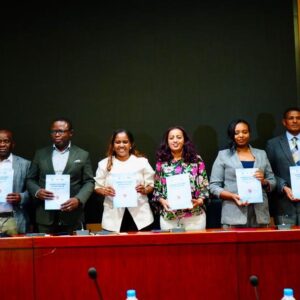
Health officials from the Republic of the Congo, together with World Health Organization (WHO) experts, have conducted Africa’s first simulation exercise on antimicrobial resistance (AMR), providing a practical, hands-on experience for assessing how countries detect, report, and respond to drug-resistant infections.
The exercise placed participants from human and animal health sectors in a realistic outbreak scenario involving a dangerous, multidrug-resistant pathogen. Teams were tasked with tracking suspicious cases, confirming the pathogen in laboratories, sharing data rapidly, and coordinating across sectors to protect communities. The simulation aims to reveal both the strengths and gaps in existing systems, helping countries align with WHO’s Global Antimicrobial Resistance/Use Surveillance System (GLASS) and reinforcing collaboration under the One Health approach.
During the exercise, participants mapped out roles and responsibilities during an AMR event, including case detection, reporting pathways, laboratory data sharing, and decision-making processes. The lessons learned will feed into national improvement plans and support the implementation of Congo’s existing national action plan on AMR.
AMR occurs when bacteria, viruses, fungi, and parasites evolve to resist treatments that were previously effective, making common infections potentially life-threatening. Sub-Saharan Africa faces the highest AMR-related mortality in the world, with an estimated 1.14 million deaths directly caused by AMR each year and an additional 4.71 million associated deaths. Without stronger detection, prevention, and response systems, annual deaths could rise to nearly 2 million by 2050.
Congo was selected as the pilot country because it reflects many regional challenges, including rising drug-resistant infections, widespread unregulated antimicrobial use, and limited laboratory and surveillance capacity. Although the country has a validated national AMR plan, it has not yet been fully implemented, and AMR is not fully integrated into its national Integrated Disease Surveillance and Response (IDSR) system.
The Congo simulation contributes to global and regional strategies, including the UN Political Declaration on AMR, WHO’s Strategic and Operational Priorities for 2025–2035, and the African Regional strategy for accelerating national AMR action plans (2023–2030). It also strengthens the role of WHO Country Offices in supporting national preparedness and response.
As the first African country to host an AMR simulation, Congo is setting an example for the region. Insights gained from the exercise will inform future simulations, bolster surveillance systems across Africa, and contribute to global efforts to safeguard the effectiveness of life-saving medicines.