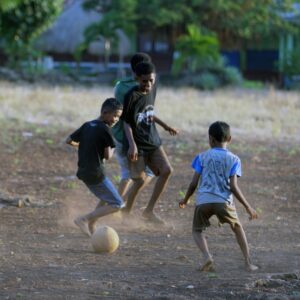
Japan has announced a contribution of JPY 200 million (US$1.3 million) to the United Nations World Food Programme (WFP) to support emergency school meals in Chad. The funding will help provide meals to 44,000 schoolchildren over the next two years, ensuring the continuation of school feeding initiatives in areas severely affected by crisis while safeguarding children’s education, health and overall well-being.
Sarah Gordon-Gibson, WFP’s Country Director in Chad, expressed deep appreciation for the contribution, noting that Japan’s support comes at a critical time. She stated that the assistance will enable WFP to respond to urgent needs and help communities recover and build a more stable future. She thanked the Government and people of Japan for their consistent commitment to strengthening food security and education outcomes in Chad.
Chad is currently grappling with one of the most complex humanitarian emergencies in the region. Since conflict erupted in Sudan in April 2023, the country has received 1.2 million new arrivals — 878,000 refugees and 313,000 returnees — pushing the total number of refugees to 1.4 million. This massive influx has put extreme pressure on food systems, natural resources and already struggling host communities.
The latest Cadre Harmonisé assessment (March 2025) shows that 3.3 million Chadians face acute food insecurity, along with more than 450,000 refugees and returnees who are also in dire need of support. Currently, WFP assists around 1.2 million people each month through food and cash transfers, complemented by nutrition and school feeding programmes.
To address rising needs among displaced children, WFP has expanded emergency school meal services alongside its regular programme, ensuring that children in crisis-affected regions can remain in school and receive at least one safe, nutritious meal each day. This effort stabilizes school attendance and alleviates strain on overcrowded schools and host communities, helping protect education systems and strengthen social stability.
In partnership with the Chadian Ministry of National Education and Civic Promotion, the initiative will place special emphasis on keeping adolescent girls in school, reducing risks such as early marriage, early pregnancy and other harmful coping strategies. School feeding has consistently proven effective in improving retention and academic performance among girls.
Japanese Ambassador H.E. MINAMI Kentaro reaffirmed Japan’s commitment to supporting vulnerable communities in Chad, expressing hope that the contribution will help save lives, strengthen resilience and ensure that children can continue their education in safety and dignity.
Despite the support, WFP still faces major financial constraints, requiring US$149.2 million over the next six months to sustain life-saving operations. Continued backing from partners like Japan remains crucial to meeting urgent humanitarian needs and reinforcing long-term stability and self-reliance in Chad.