Across the Caribbean, initiatives are increasingly supporting journalists in covering climate justice, with a particular focus on renewable energy projects. A recent example is funding for a Trinidad and Tobago reporter to investigate the country’s emerging solar energy sector, highlighting how renewable energy development intersects with community-centered reporting. These efforts aim to bring attention to the social, economic, and environmental impacts of energy transitions.
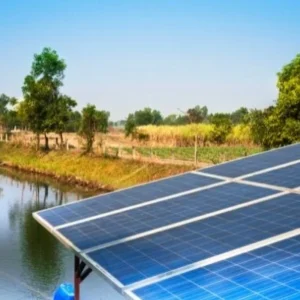
Trinidad and Tobago is on the brink of a major milestone in clean energy, poised to become the first Caribbean nation to implement utility-scale solar projects. Energy Minister Stuart Young announced that a consortium including Lightsource BP, Shell, and BP will build two large solar farms at Brechin Castle and Orange Grove, with completion expected within 18 to 24 months. Combined, the farms will generate 112 megawatts of electricity, powering thousands of homes while preventing roughly 175,000 tonnes of carbon dioxide emissions annually. The projects will employ advanced technologies such as floating and ground-mounted solar panels alongside battery storage systems, marking a significant step toward the nation’s goal of 30% renewable energy by 2030.
To ensure thorough reporting on these developments, programs like the Caribbean Climate Justice Journalism Fellowship are empowering local journalists. Trinidad and Tobago reporter Maria Nunes was recently awarded the fellowship, which provides financial support and mentorship to investigate climate justice issues. Nunes’s project will examine the environmental and economic impacts of the solar projects and their potential to address energy inequality. Similarly, the Caribbean Energy Transition Reporting Initiative (CETRI) awarded grants to ten journalists, including Ryan Bachoo, to explore workforce preparedness for the renewable energy era, emphasizing the human dimension of the solar transition.
These fellowships and grants are designed to enable journalists to produce in-depth, community-focused reporting that highlights the experiences of marginalized populations. By providing resources for research, travel, and mentorship, the programs aim to foster accountability, ensure governments and corporations are held responsible, and amplify the voices of those most affected by climate change.
The development of utility-scale solar farms in Trinidad and Tobago, coupled with these journalism initiatives, underscores a dual approach in the Caribbean: advancing renewable energy infrastructure while supporting transparent, research-driven media coverage. Together, these efforts contribute to a more sustainable, equitable, and climate-resilient future for the region.