The World Bank has approved two projects in India aimed at improving education outcomes in Punjab and boosting farmers’ incomes in Maharashtra through innovative digital solutions. Together, these initiatives are expected to benefit over six million people, enhancing economic development, poverty reduction, and livelihoods through technology-driven interventions in key sectors.
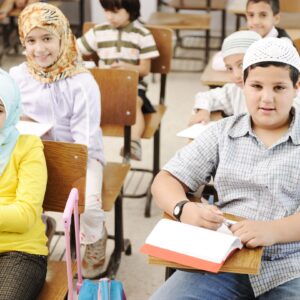
The Punjab Outcomes-Acceleration in School Education Operation (POISE) program, valued at $286 million, will use technology to track and improve learning outcomes. It targets 1.3 million primary school students, over 2.2 million secondary students, and 592,000 early childhood learners. The program will enhance digital infrastructure in schools by providing computer labs, tablets, and projectors, focusing on fostering innovation, particularly in science and mathematics education.
POISE will address systemic challenges in Punjab’s education system, supporting pre-primary school readiness, foundational learning at the primary level, secondary-level skills for higher education or employment, teacher training, and school management. The initiative aims to ensure continuity in education reforms and improve the quality and inclusivity of learning outcomes.
The Maharashtra Project on Climate Resilient Agriculture (POCRA) Phase II, valued at $490 million, will strengthen crop productivity and climate resilience using digital technologies and precision farming practices. This approach ensures crops and soil receive optimal inputs, maximizing yields while reducing waste. Over two million small and marginal farmers, including 290,000 women, across 21 districts in Maharashtra will benefit from improved soil health, nutrient management, water-use efficiency, and increased income, projected at a 30 percent rise for smallholders.
POCRA Phase II also integrates real-time monitoring, data analytics, remote sensing, and AI to enhance efficiency along agricultural value chains. Village community groups and agri-tech startups will guide local investments to promote better livelihoods and access to markets, fostering sustainable agricultural development.
The POISE project has a final maturity of 19 years, including a five-year grace period, while the POCRA Phase II project has a final maturity of 24 years with a six-year grace period, ensuring long-term support for sustainable education and agriculture improvements in India.