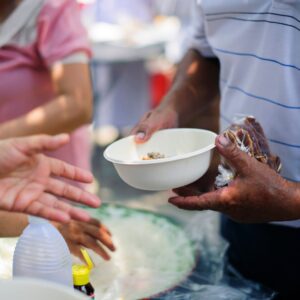
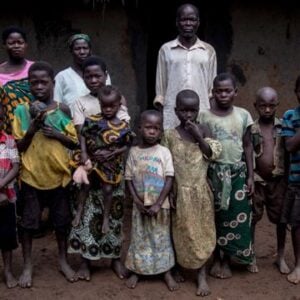
A convoy carrying returning families arrives in the Central African village of Beloko, marking the end of a long journey home for refugees like Nafissa, who fled violence more than a decade ago. After years in Cameroon, she and thousands of others are choosing to return to the Central African Republic (CAR) as support in host communities dwindles and conditions in CAR show fragile signs of improvement. Nearly 40,000 refugees are expected to return this year—more than the previous five years combined—according to UNHCR. Upon arrival, returning families receive initial food assistance from the World Food Programme (WFP), which is crucial as they rebuild their lives in impoverished communities scarred by conflict.
However, this assistance is under severe strain. WFP, which previously provided three months of food rations to each returnee, can now only offer one month due to funding shortages. Without new contributions, support to returnees may cease entirely by the end of the year. WFP officials warn that the progress represented by rising return rates could quickly collapse into a new crisis if families cannot meet their basic needs upon arrival.
Across the border in Cameroon, the situation is equally dire. While recent donations allow WFP to temporarily assist 20,000 Central African refugees, this represents only a small portion of the refugee population, which also includes displaced people from other countries. For most of the 110,000 Central Africans in Cameroon’s East Region, food assistance has nearly run out, leaving families with an impossible choice: remain in exile without food or return home to face uncertainty.
Many are choosing to return out of desperation rather than confidence in conditions back home. Refugees like Halimatou and Mariamou describe severe hunger in the camps, where days pass without meals. Their families have survived through small-scale farming and informal work, but declining assistance has pushed them to make the difficult decision to return to CAR, despite the risks. Humanitarian workers note that some refugees eventually come back to Cameroon after finding reintegration too challenging.
Cameroon’s regional authorities acknowledge that the country cannot continue to shoulder the refugee burden without more international support. Meanwhile, returning families hope for stability and reconnection with their communities in CAR. WFP, working with local authorities, is supporting reintegration efforts, but urgently needs nearly US$6 million to maintain food assistance for returnees in CAR through March 2026, and over US$1 million to support refugees still in Cameroon through April 2026.
The growing wave of returns reflects a worsening regional hunger crisis rather than improved conditions, underscoring the urgent need for renewed humanitarian funding to prevent deeper suffering and instability.